Gem collection grows
We have been collecting gemstones our entire marriage. Our original goal was to have a velvet drawstring pouch filled with different colored stones. Of course, we quickly learned that while that may be a very romantic idea, you really do not want to do that lest stones damage other stones (duh).
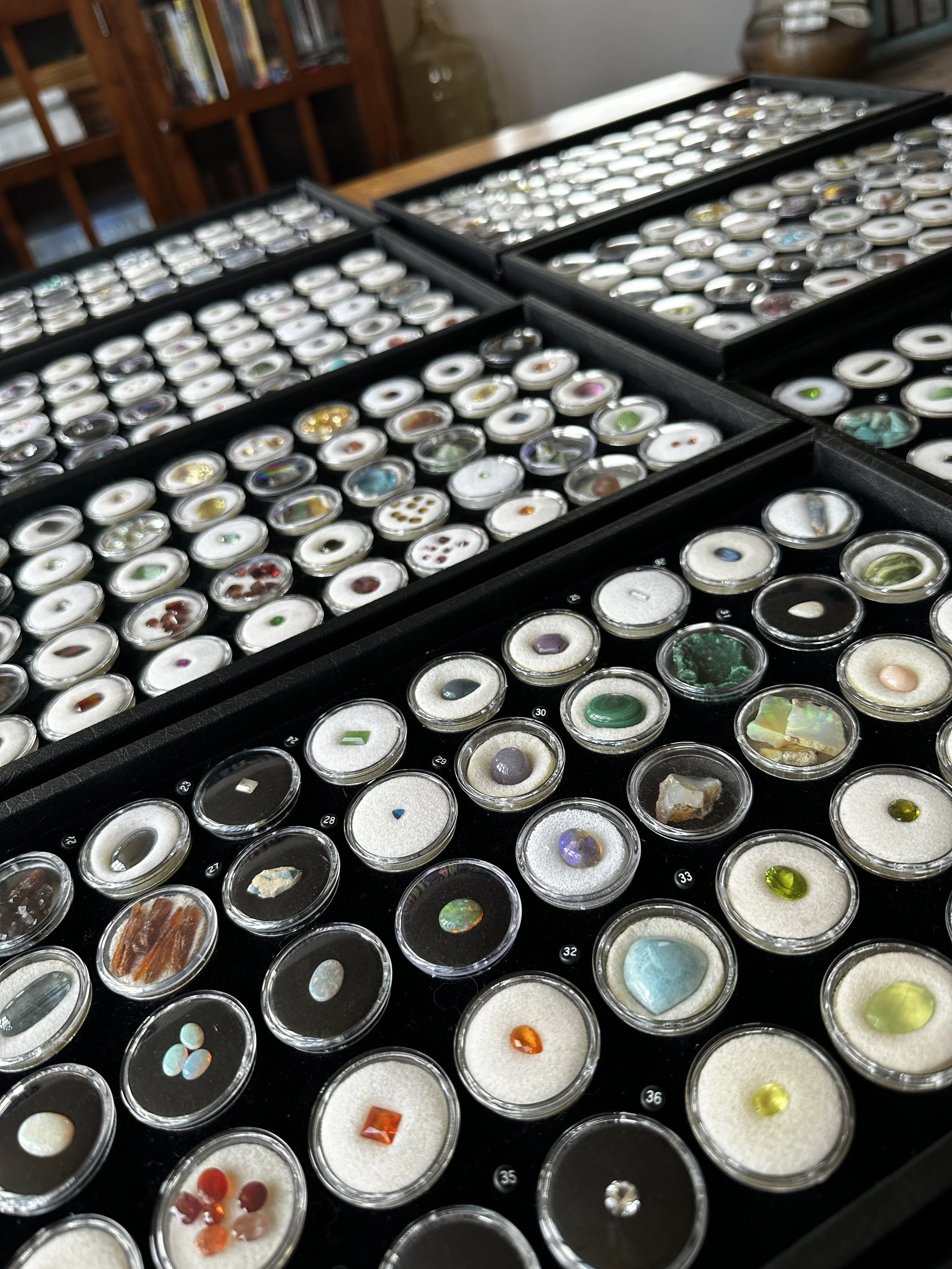
So we decided to use small round jeweler containers set in padded covered cases to store our growing collection. On the back of each round is the type, date, size, source, and cost of each stone. I also enter each purchase in a giant spreadsheet that helps me see how many stones we have of various types and how much we have invested over the years [over 400 stones at a cost of a little over $18K!]
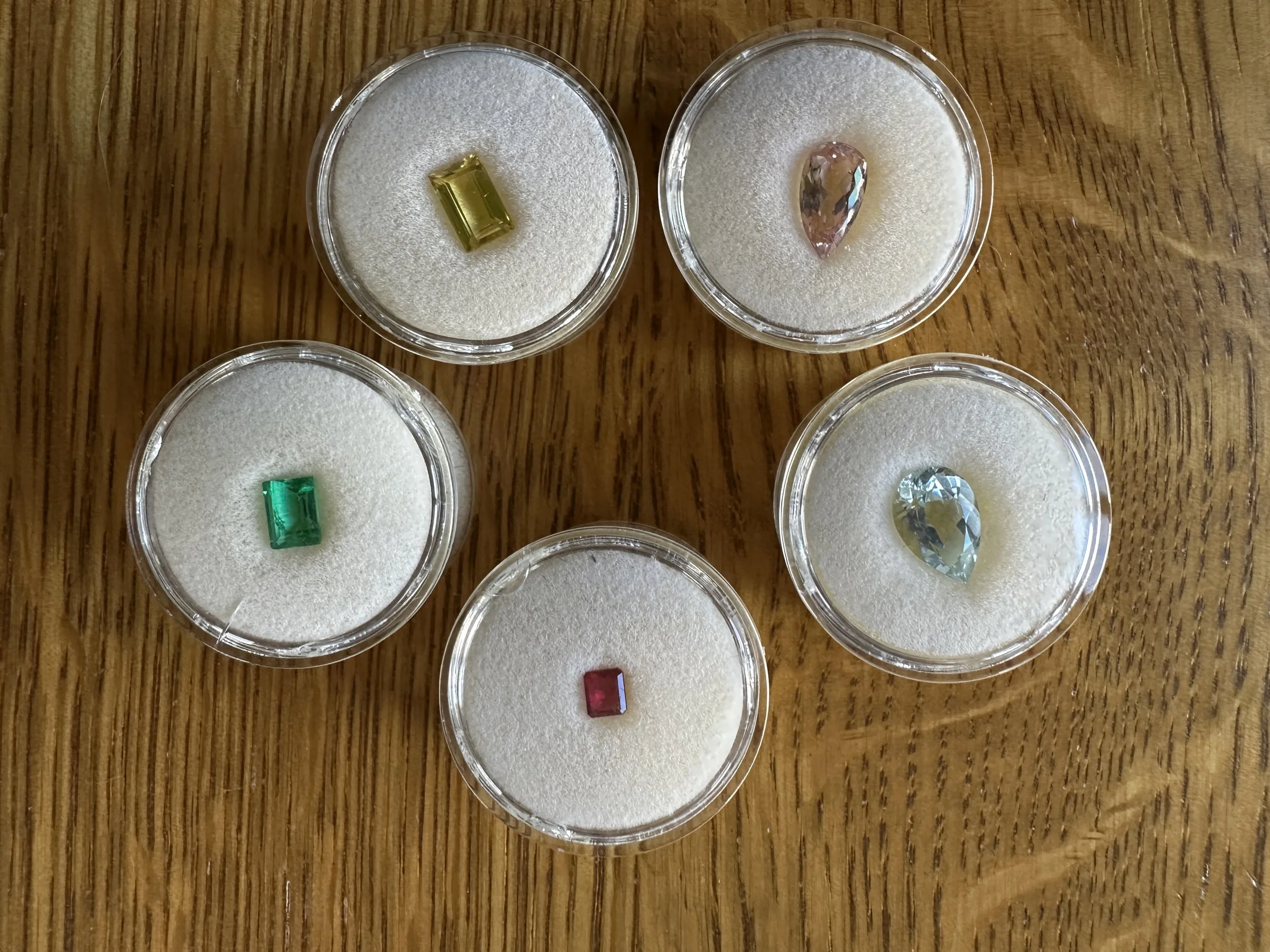
Sometime in the past 10 years I completely reorganized the collection to be sequenced alphabetically by species. This wasn’t really to be as purist as it sounds - I just legitimately think it is super interesting to see that light blue aquamarines, bright green emeralds, and light pink morganites are all part of the Beryl family, along with red and golden beryl varieties, as shown below.
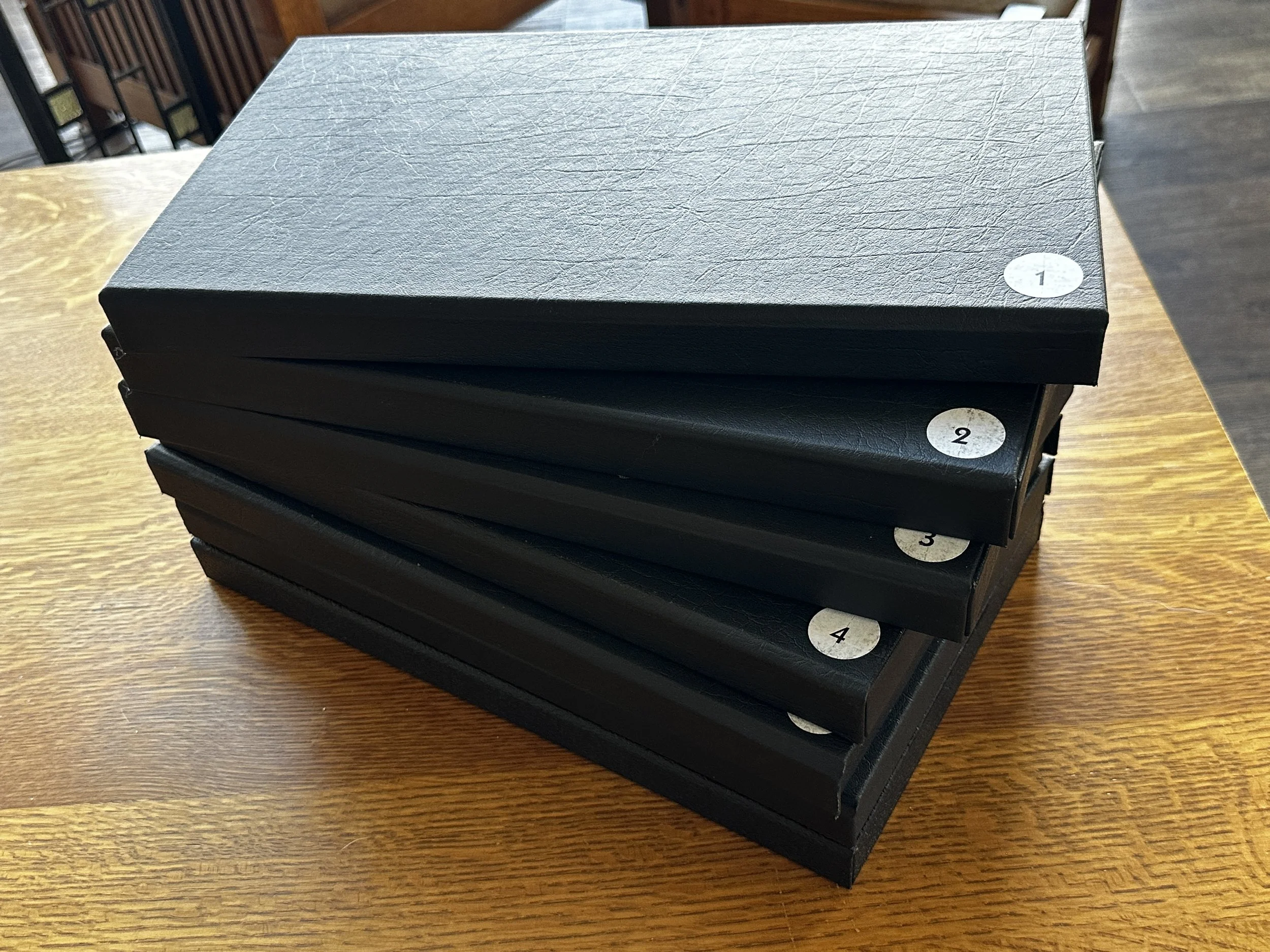
Inside my cases everything is meticulously categorized and numbered with tiny little map pins. However, that also means that every time I buy a new stone I have to make space in whatever case holds that variety (and subsequently move stones down the line.) it’s quite an ordeal, though I only add things a few times a year. And yes, I realize I COULD leave empty space at the end of each case. But right now my seven cases are 100% occupied. So later this year I will buy case #8 and spread things out so I’ll have at least 5 empty spots in each case, a gift for my future self.
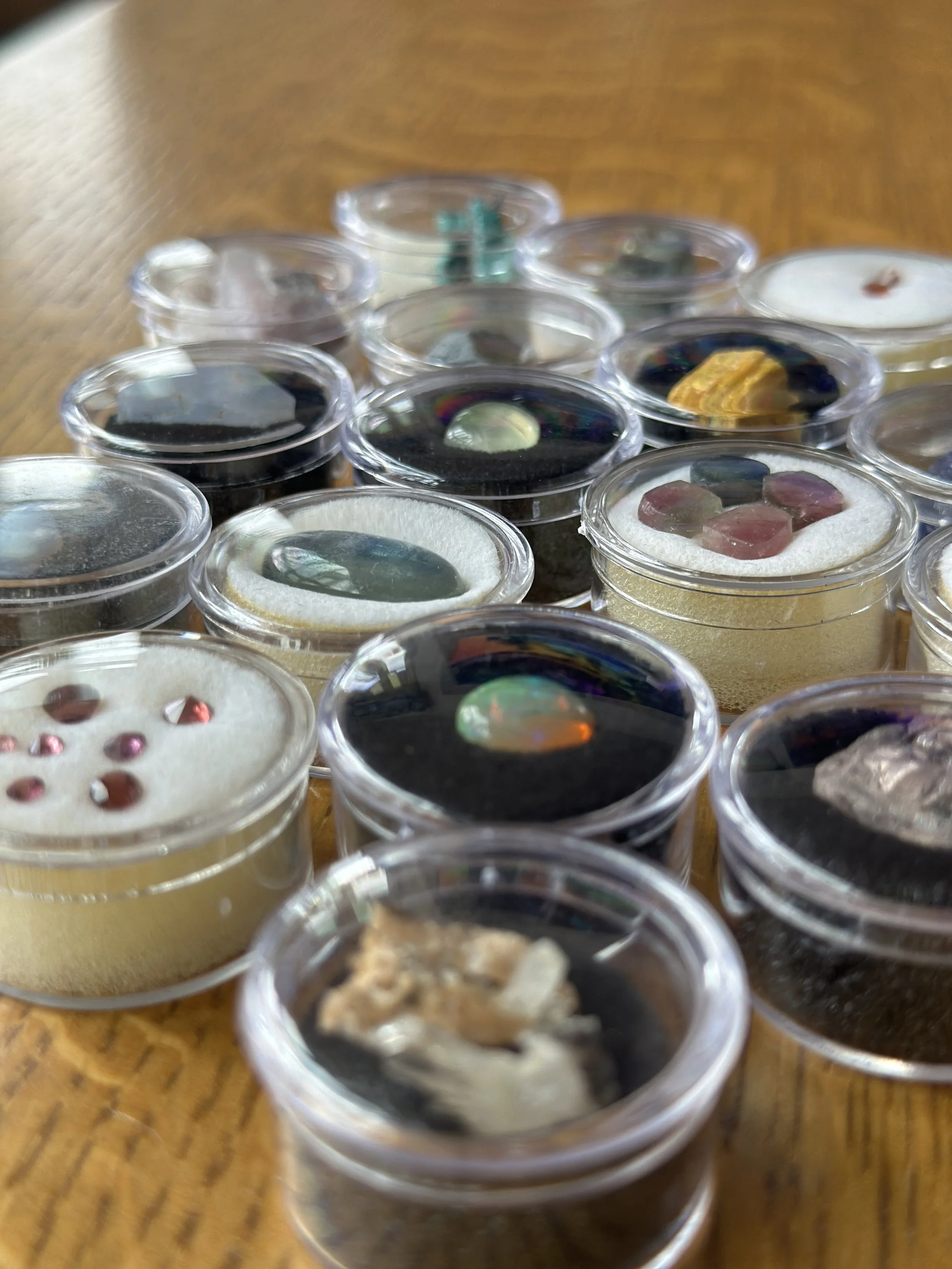
Here is what we were fitting in the cases from today’s visit to the local Gem Show.
I have really enjoyed adding “rough” specimens of some of my faceted cut stones, something I started doing a few years ago. It is neat to see them side by side. The challenge is that the rough versions are typically much larger than my little gem cases.
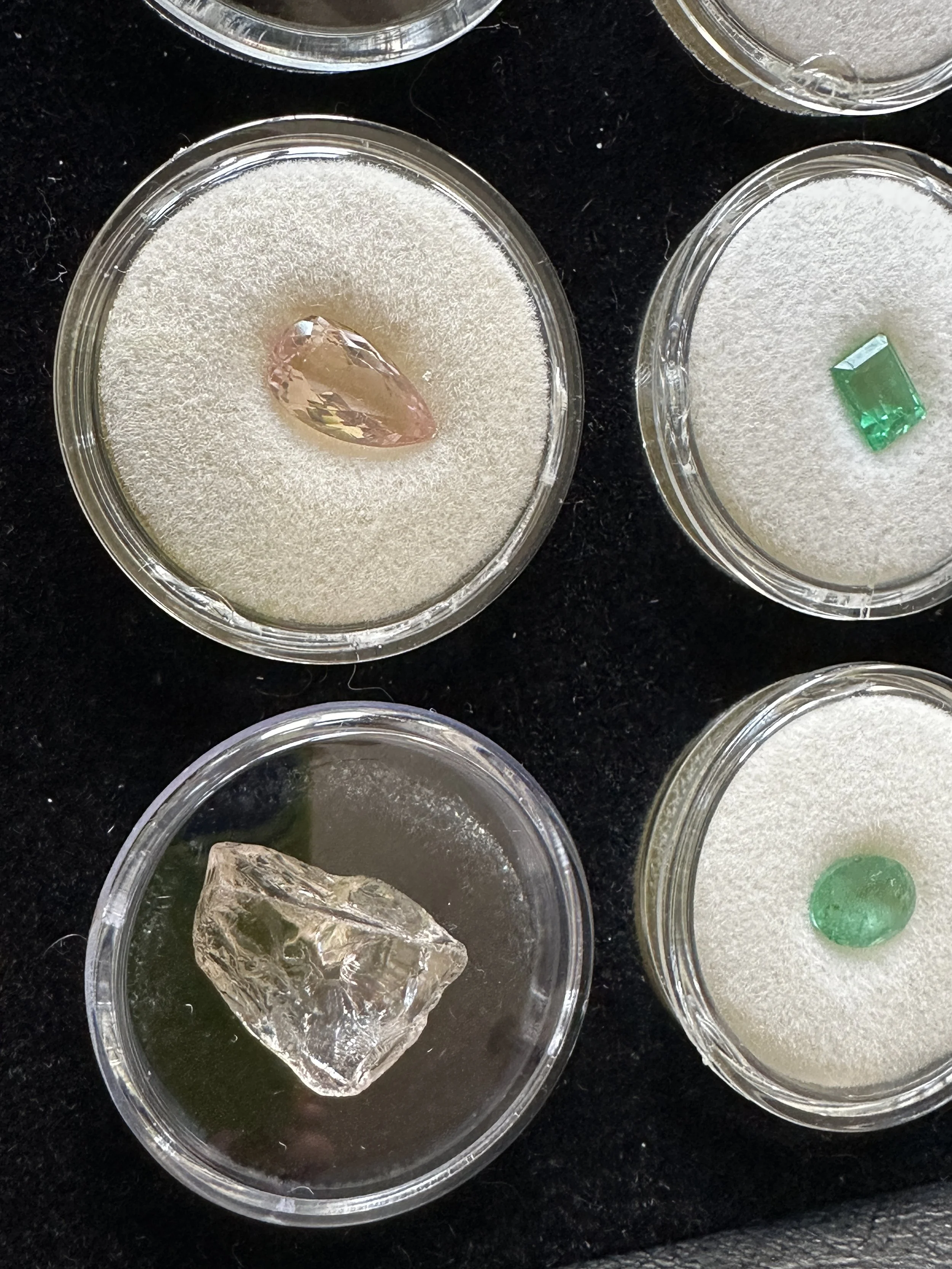
A faceted morganite above; an example of a rough morganite below. Also pictured: The emerald popped out of my engagement ring in upper right! We both laughed at how TINY it looks outside of its setting!
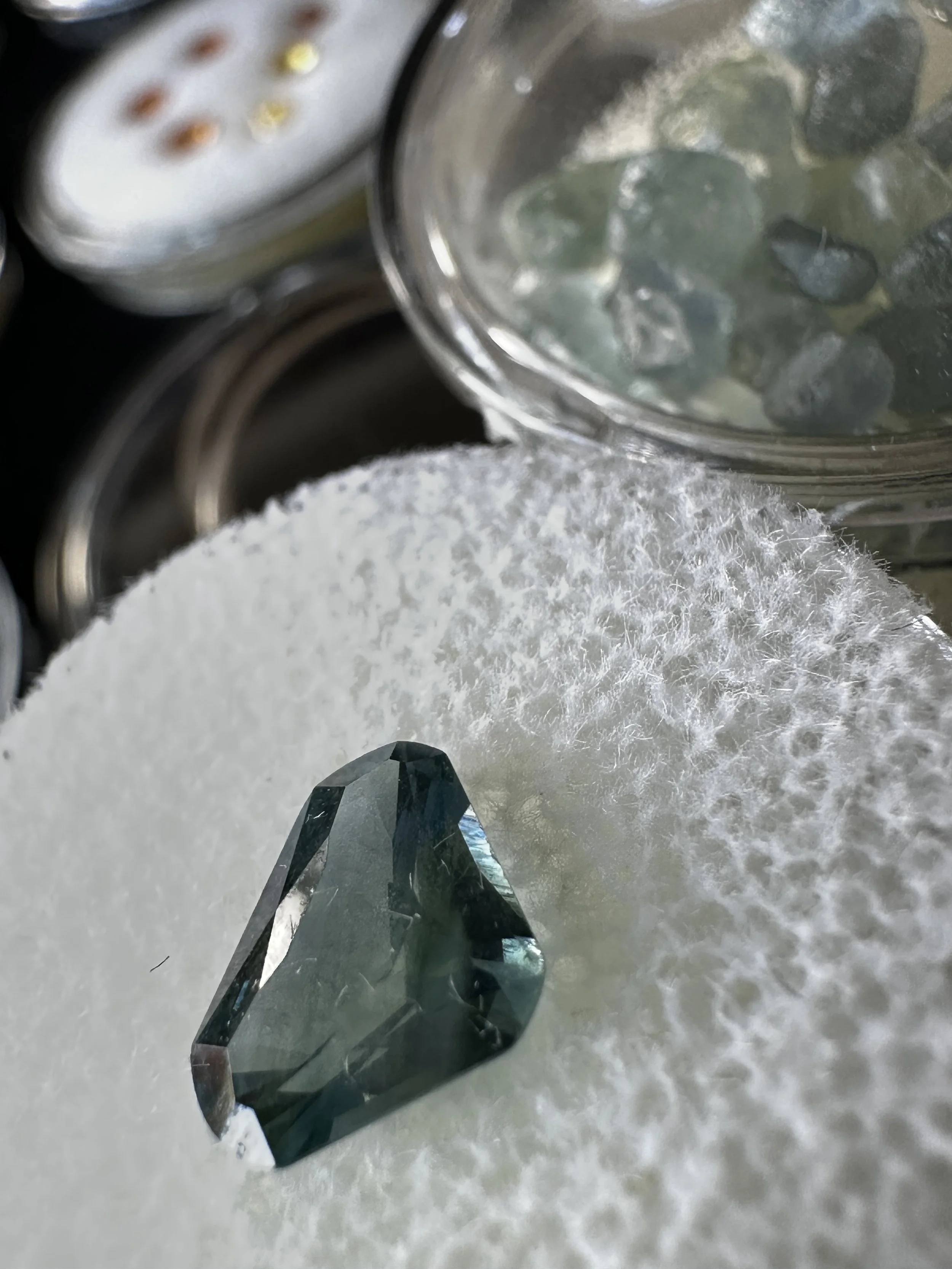
A gorgeous faceted (irregularly shaped) Montana sapphire and some small examples of the different color varieties in rough form behind.
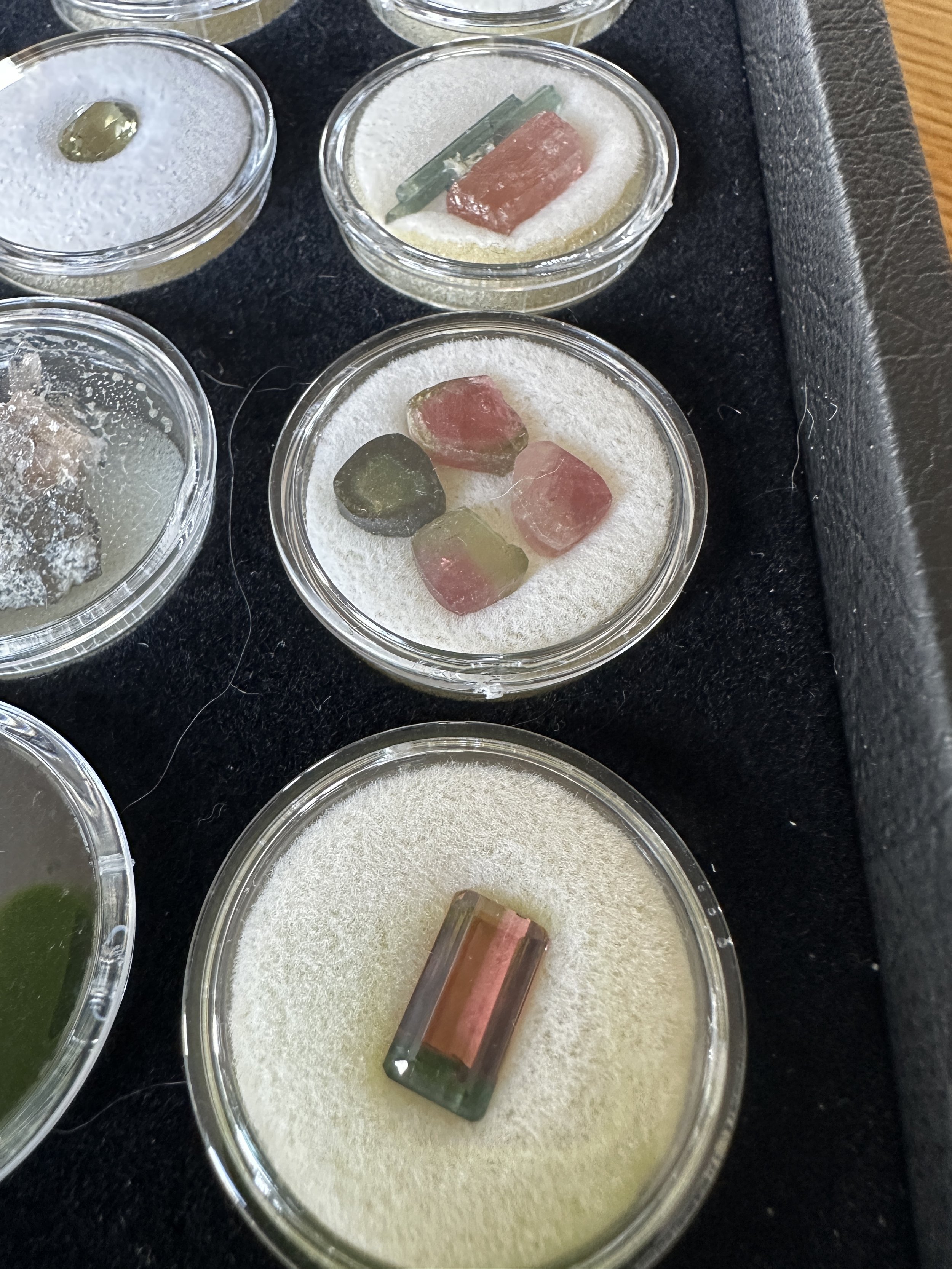
I like this trio of “watermelon” tourmalines: faceted, sliced rough, and crystal forms.
Here are each of the seven cases:
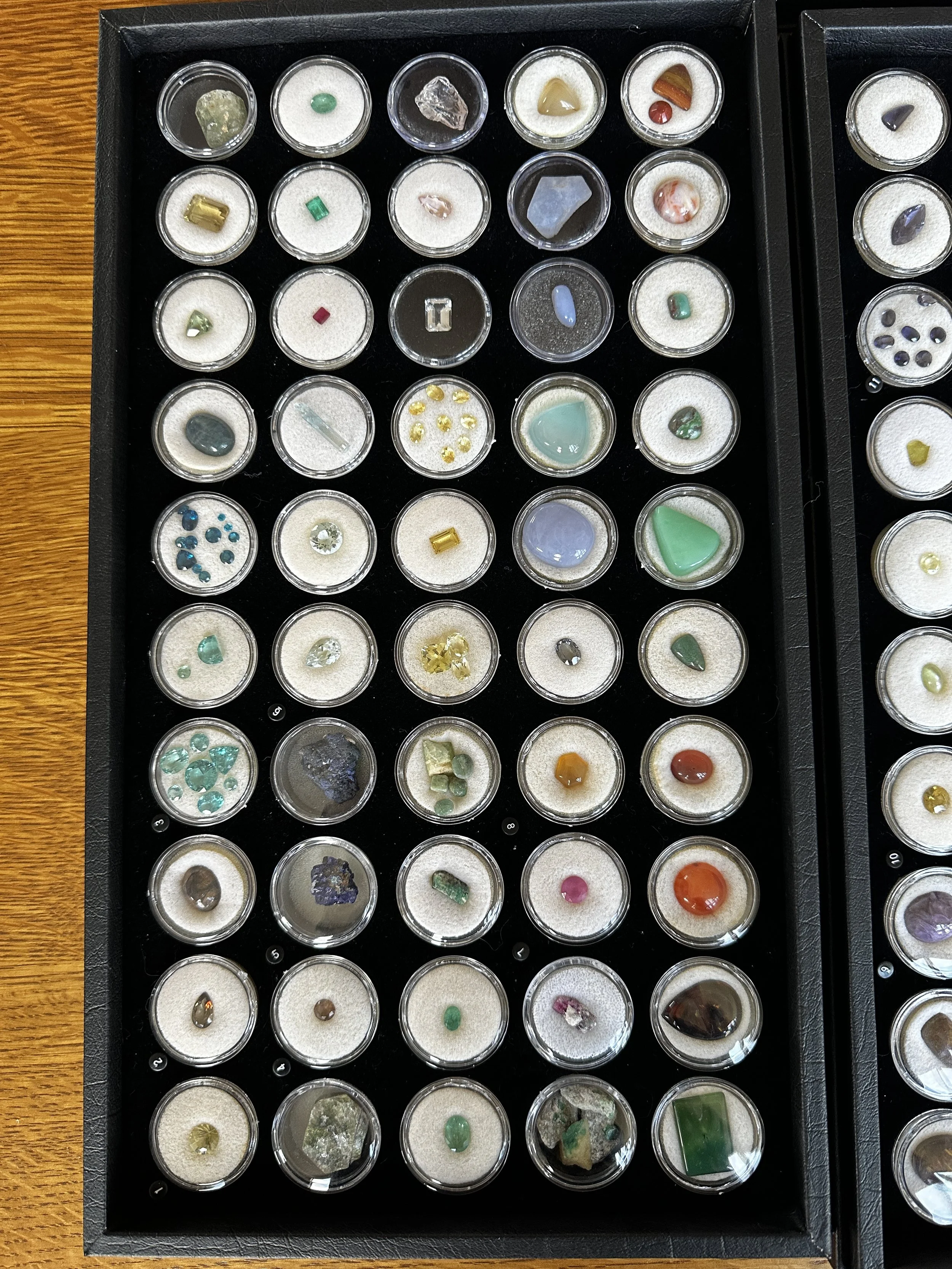
Case #1. You can see the variety - faceted (cut/transparent), cabachons (opaque/polished), and rough forms. In the upper right are two of our new stones, Ellensburg blue agates (one cut/polished, the other in rougher form.) These are only found in central Washington and are actually incredibly rare. They are a type of chalcedony (from the quartz family).
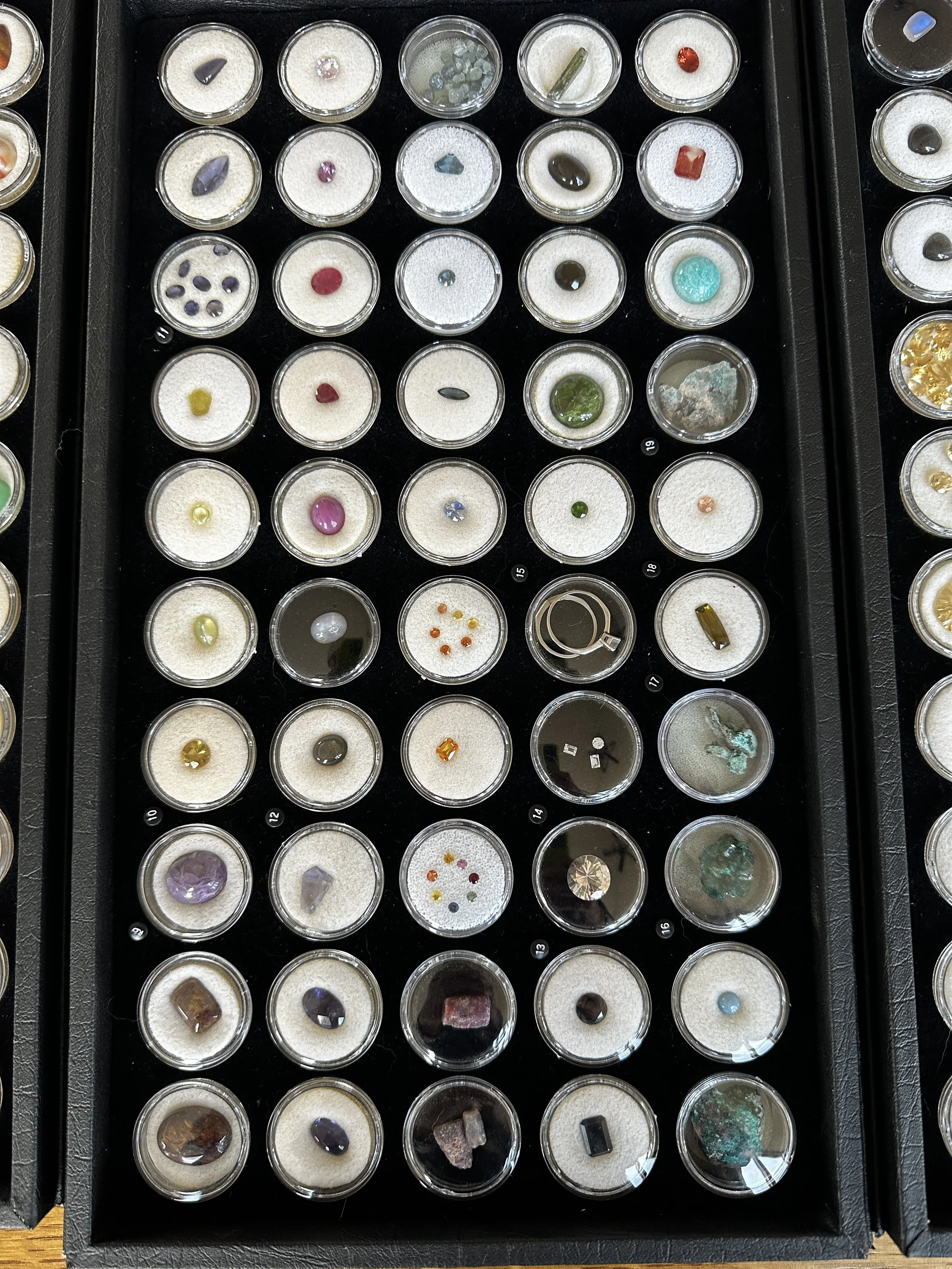
My favorite stones in Case #2 are #11, iolite. This blue-violet color is quite rare (later you will see our tanzanite, a much more expensive blue-violet stone.) But iolites are readily available and inexpensive. It is also interesting to note that #12 is the corundum family, which includes rubies and sapphires. We only have a few low-end rubies, but look at all of the different colors sapphires come in!
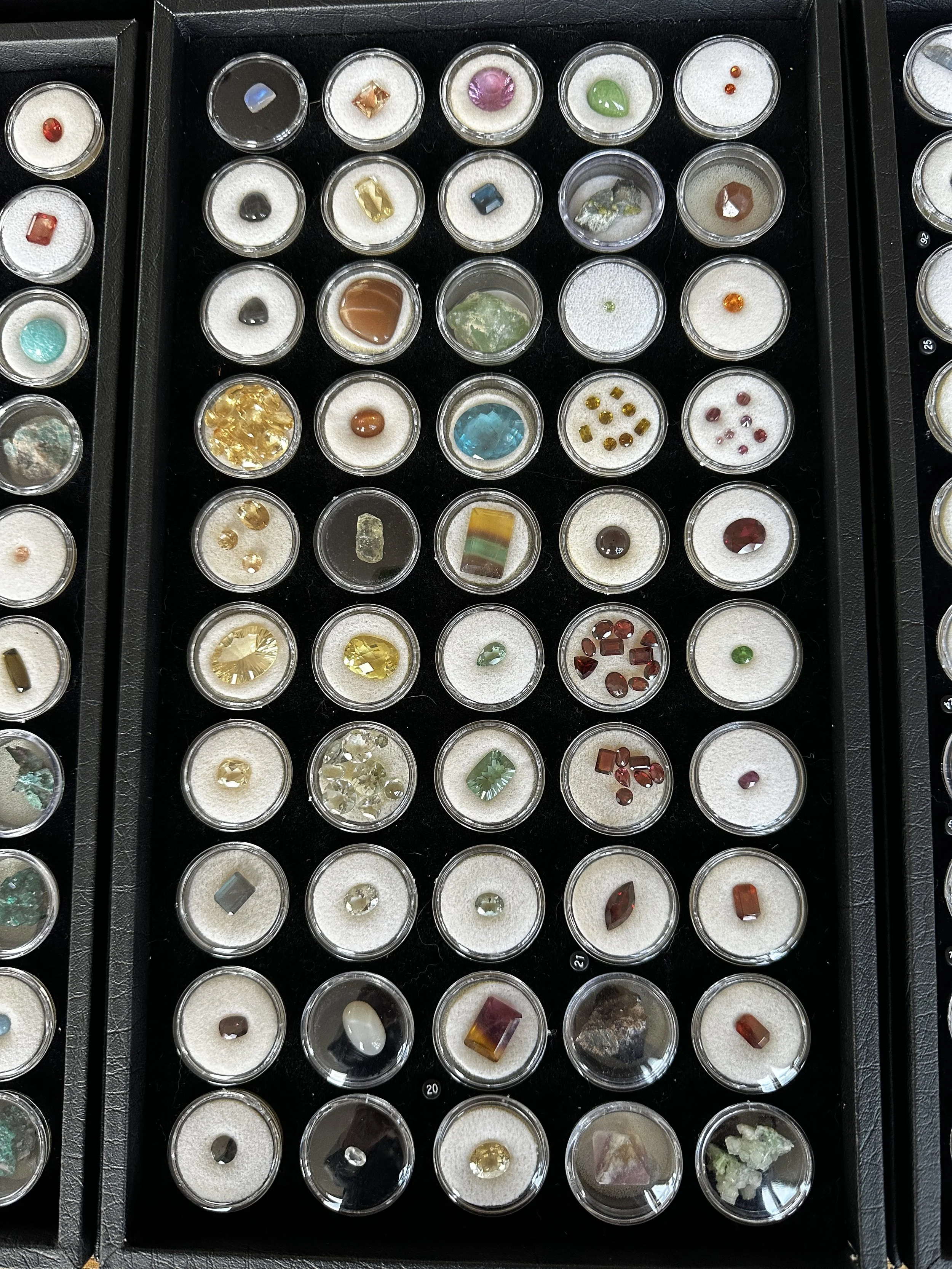
Case #3. My favorite stone in this case doesn’t actually show very well in this picture, but it is the little round green tsavorite garnet on the right-hand side. You think garnets are red, but again, the color variety is fascinating. And tsavorites have a really unique, vital green color. (And they are pricey, thus the very tiny specimen!)
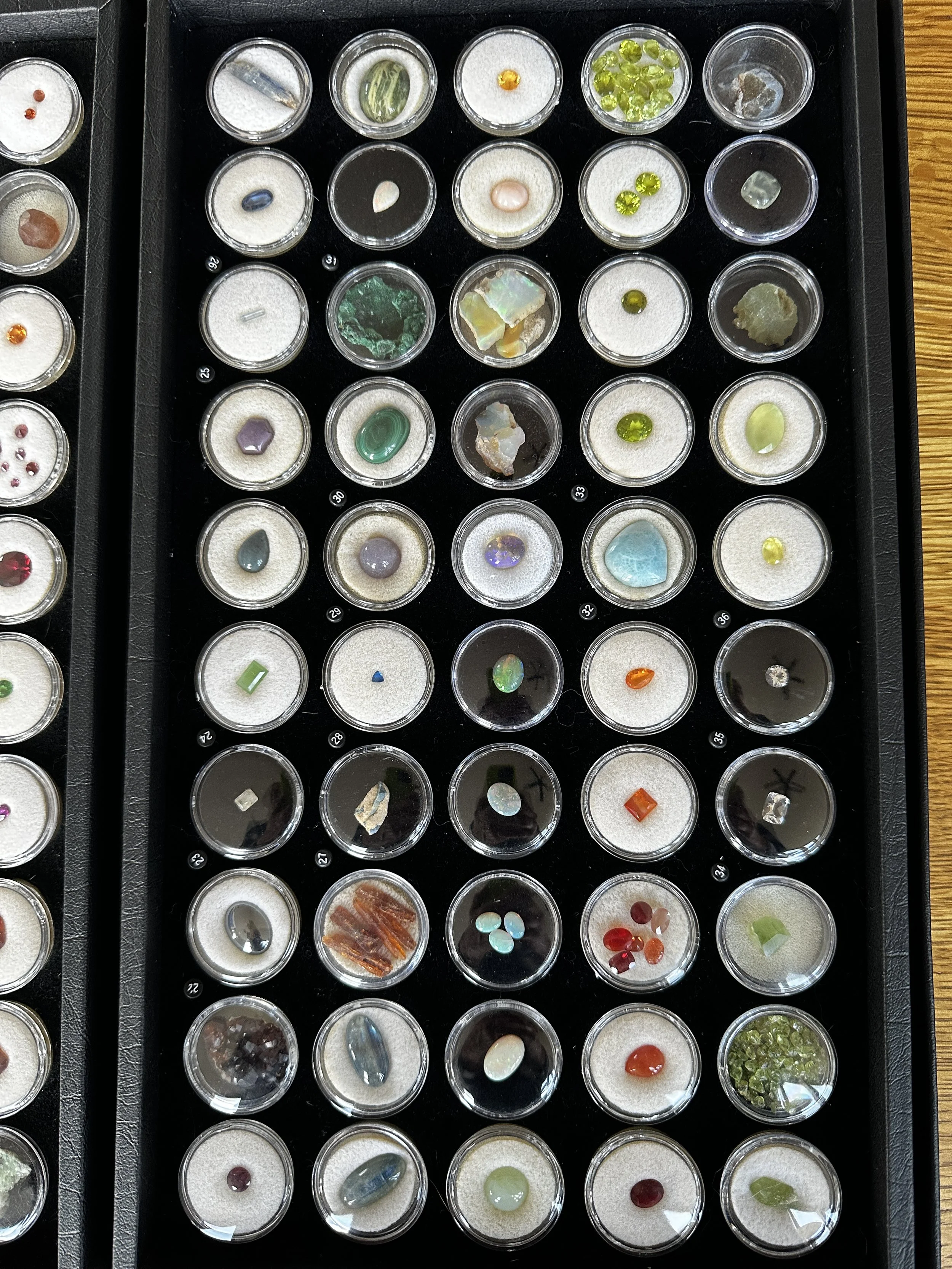
Case #4. My favorite is probably the gorgeous oval green fiery opal we bought today! (right in the center) But look at all of the cool rough lots in this case, too.
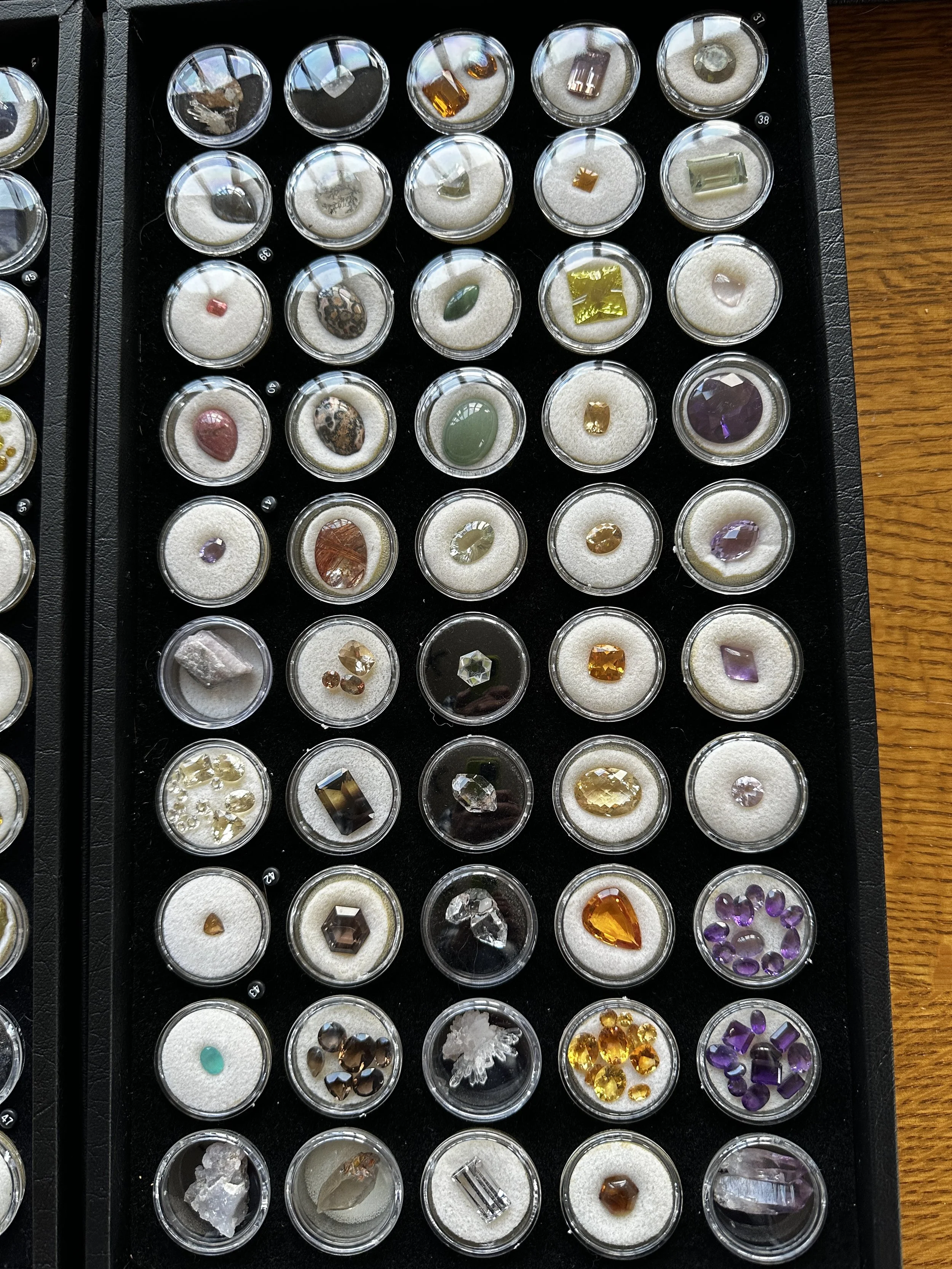
What I love about case #5 is that the easily-recognizable amethysts are the same family as the gorgeous orange-gold citrines right next to them. Lots of quartz in this case!
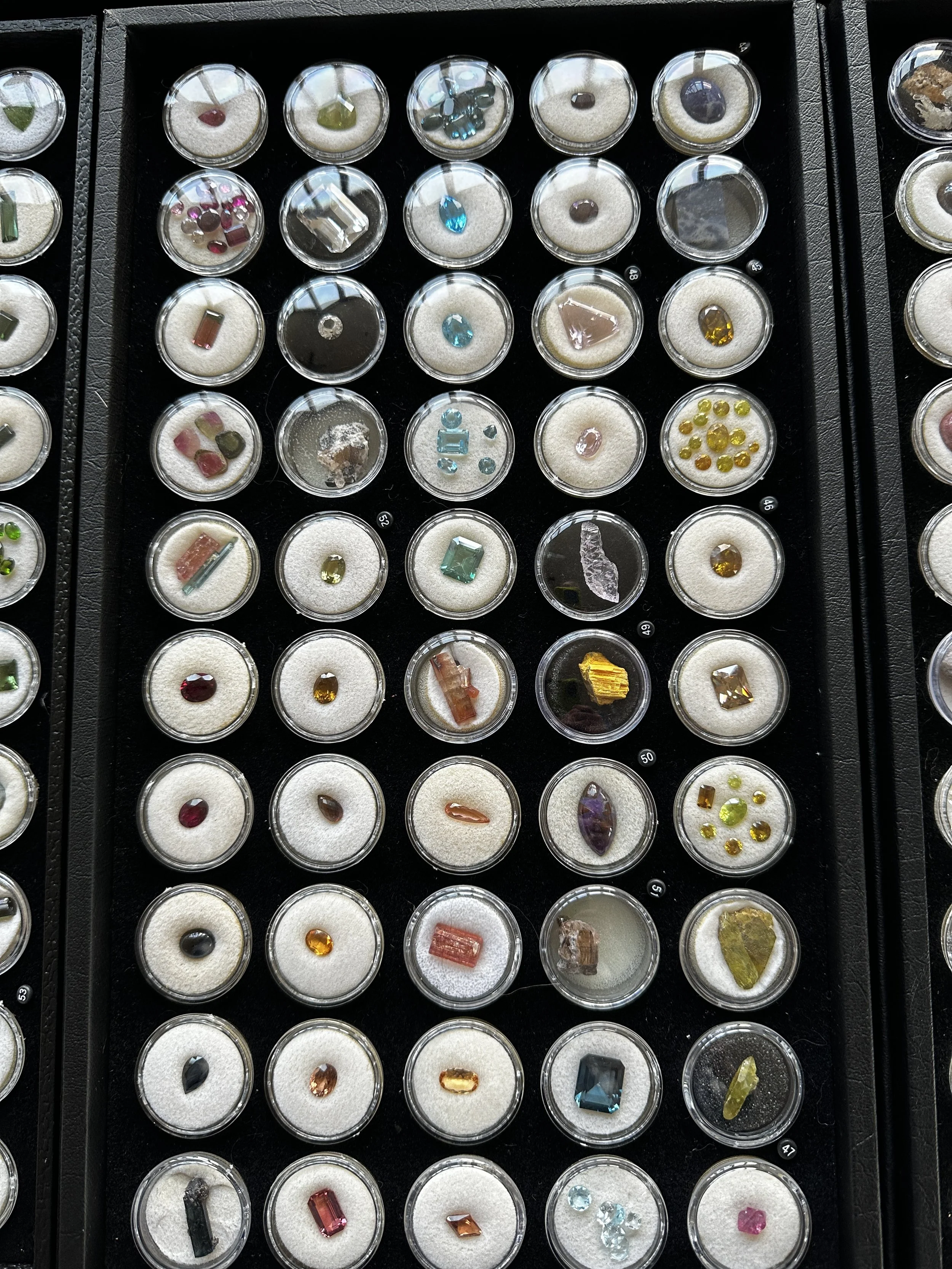
Case #6 holds one of our very favorite stones, the sphene (#46). This case also starts our extensive number of tourmalines, the stone we have the most of (and that comes in the widest variety of colors!)
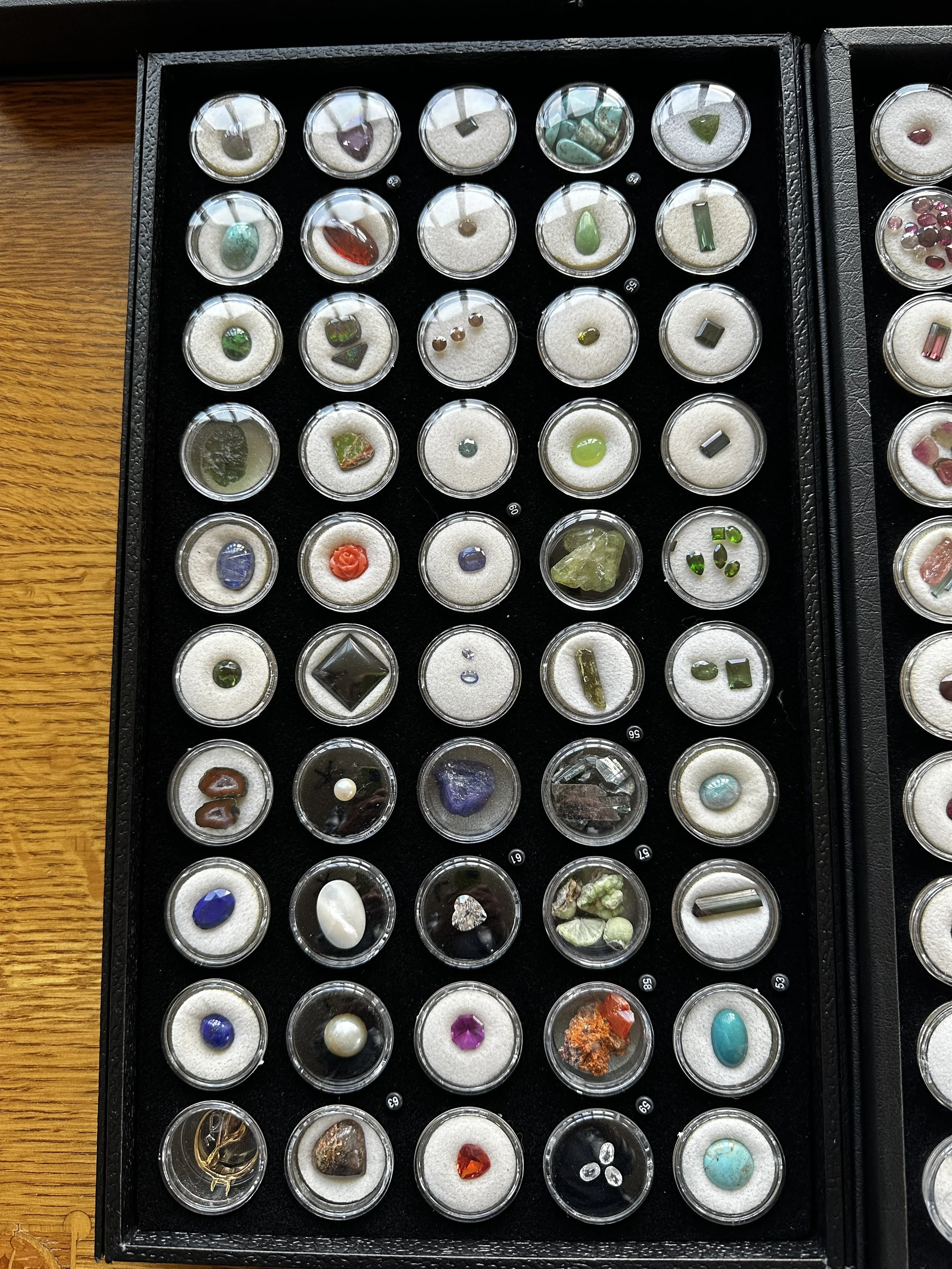
Case #7 holds another one of our favorite stones, the oval tanzanite in #60. But it also contains some of our odder items, both lab-created and organic rocks. It also holds the gold setting from my engagement ring!
Our stones range from a few dollars to $1,800 (for the tanzanite). We just buy what we like. Here are some of our very favorites.
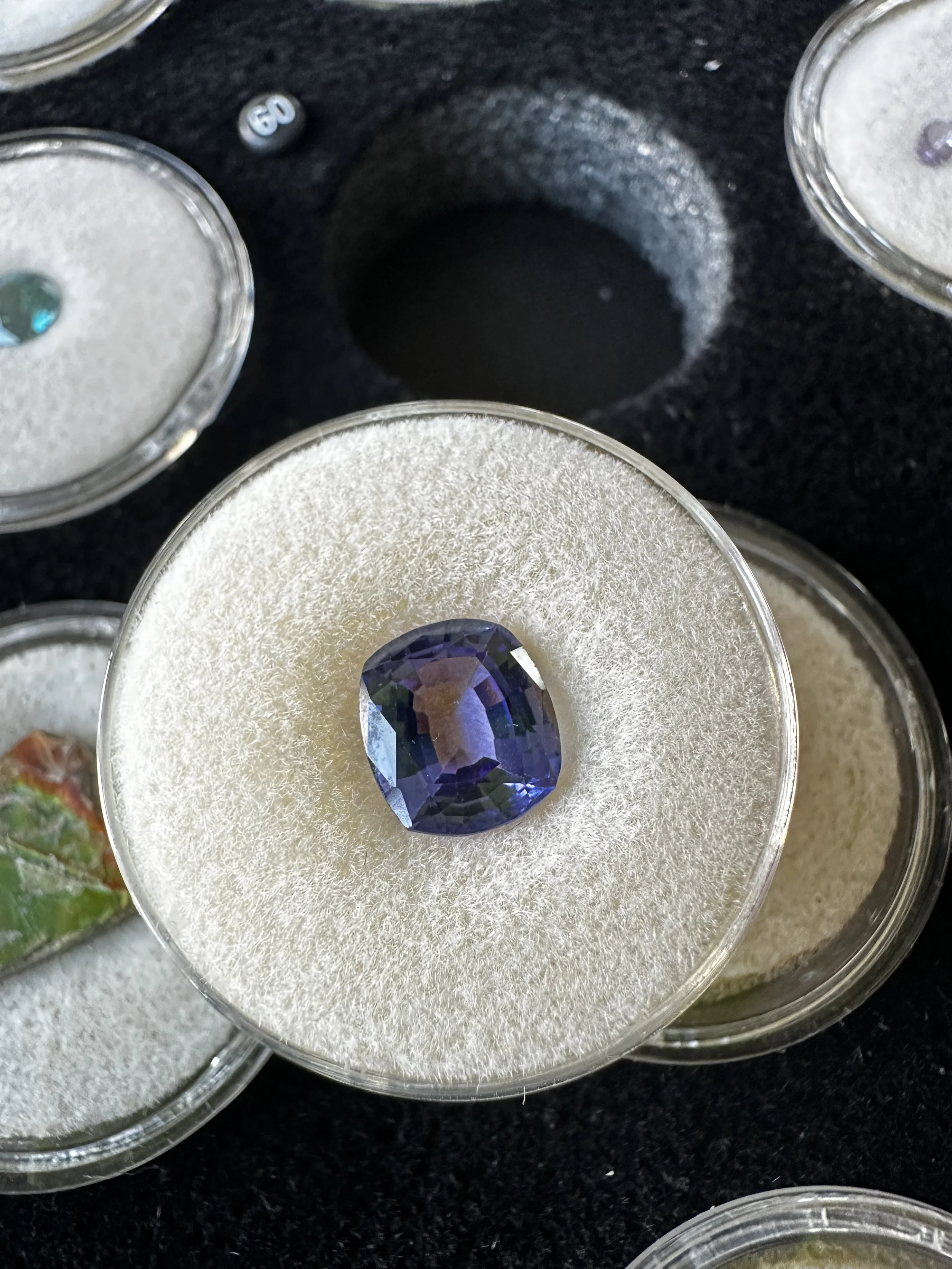
A close-up of the tanzanite, yum.
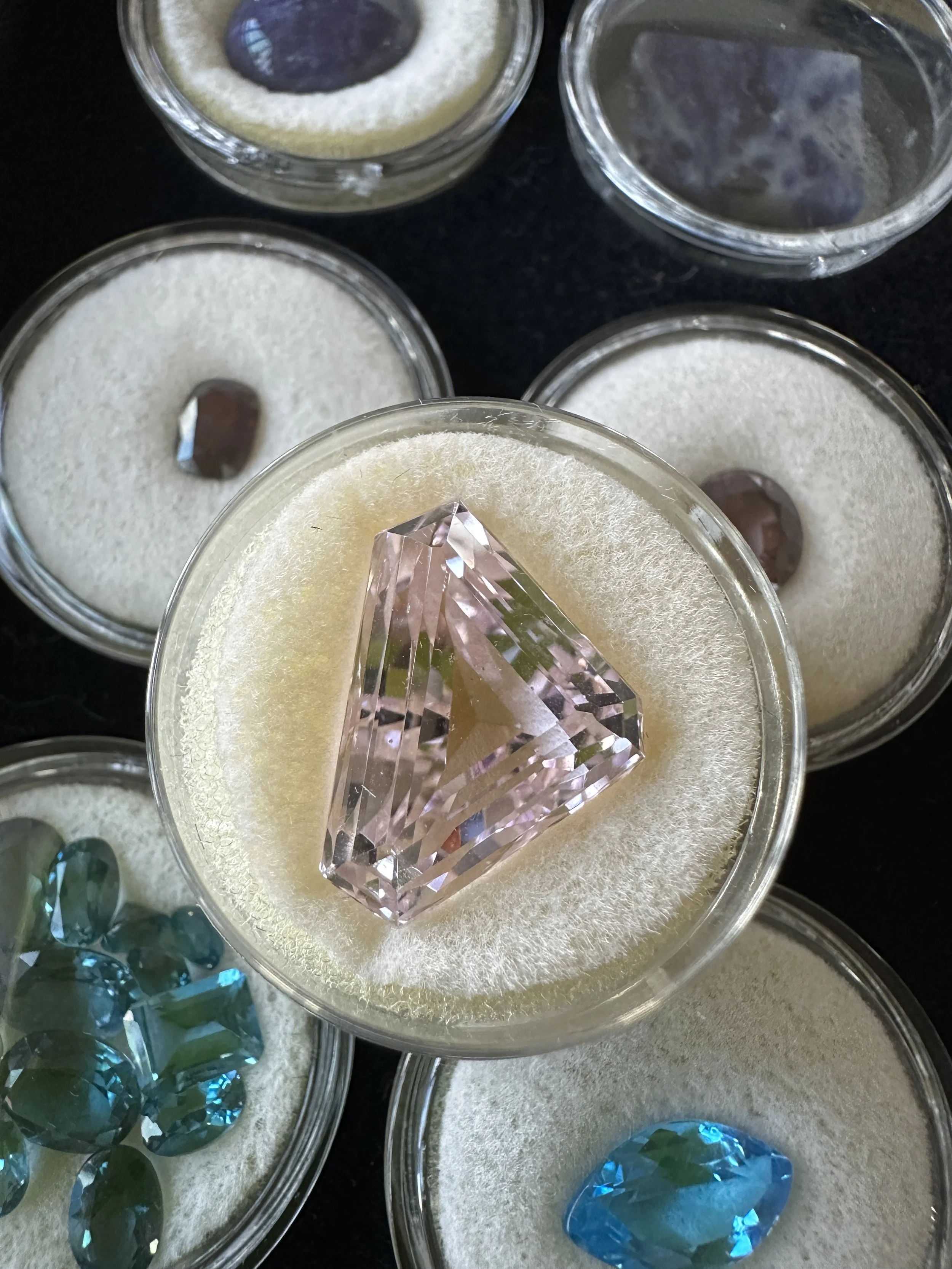
A sentimental favorite - our trillion-cut kunzite, purchased in the little gem/jewerly store North Carolina just past Rabun Gap, where we purchased so many of our collected items.
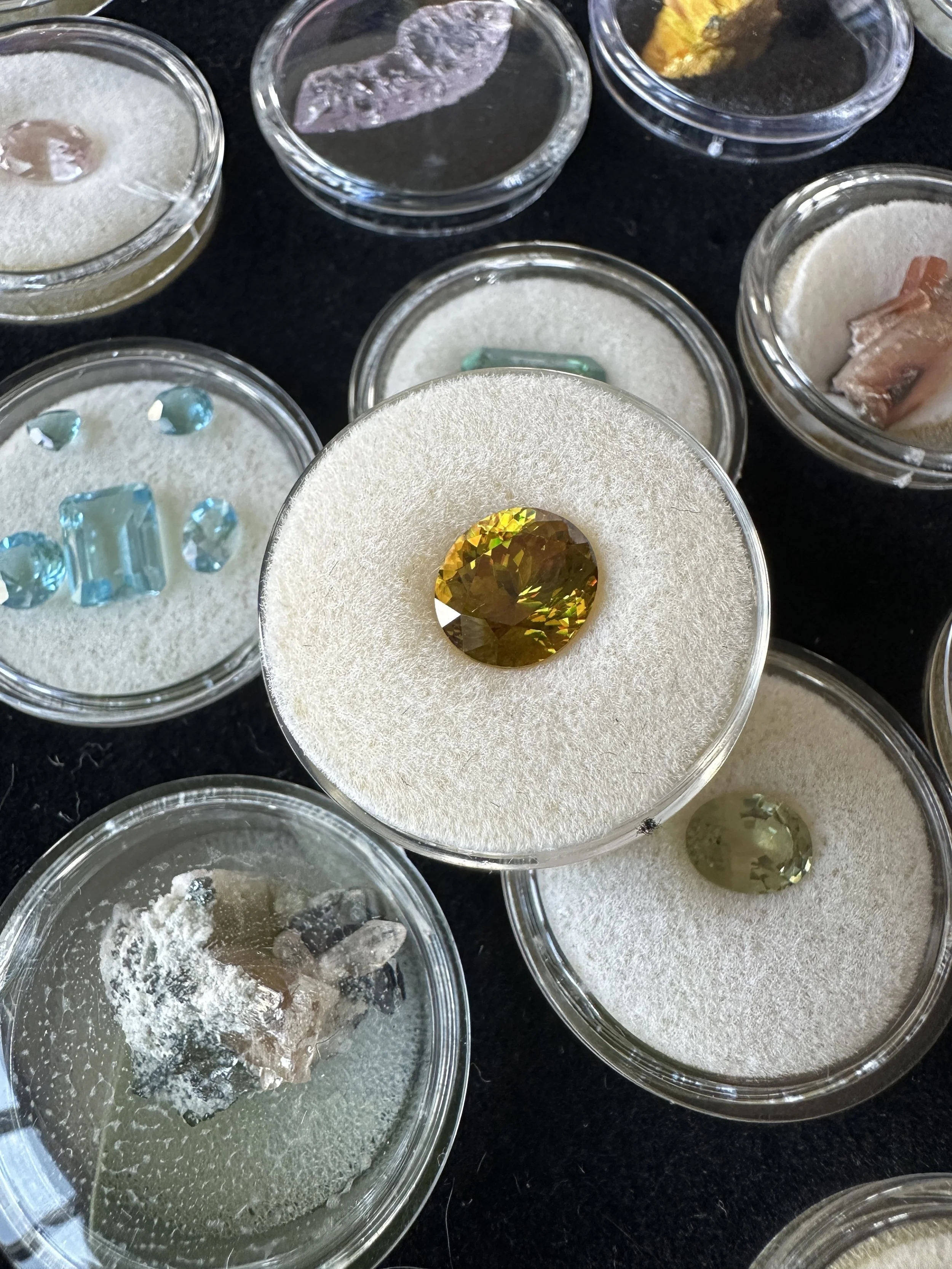
This is our winner: the sphene. You just cannot imagine how much fire this little gem puts out.
I had actually started the Gemological Association of America’s gemology course when I decided to pursue my doctorate and had to give it up. But I still absolutely love this hobby and intend to increase my knowledge again sometime in the future. It feeds my inner geologist, and I also love the irony that I own/wear ZERO actual jewelry (not even a wedding ring), but have all of these gorgeous stones instead!
Honestly, what a great little hobby!