I’m not sure if “Water Wise” is a national program or just a Spokane thing, but it certainly resonates up here in the desert-like conditions of the Inland Northwest. And the precarious water conditions of the Red Hawk Farm well.
The idea is simple: focus on planting native species that, once established, survive and thrive in low water conditions.
I honestly have not yet even studied this practice, but our local Master Gardener program promotes it quite a bit at the annual plant sales and demonstration gardens. So I have started dabbling.
This 40’ bed was previously a potato patch. It is not tied into any of the irrigation systems, nor is it landscape fabric’d due to its super irregular and utterly random planting positions.
I started it last year by relocating a few perennial that had been temporarily positioned in other beds. I added some bulbs (around here bulbs have to be fenced or they are instant deer dinner) and reused the potato bed’s straw mulch. Then I started adding other miscellaneous low-water perennials.
No plan other than pure experimentation. I was also inspired by Montana’s gardens on the opposite side of the house, where she has basically built a very rambling creative garden on a sloped area that used to house garbage cans.
The rest of my garden beds are designed to be tidy (eg rectangular, covered in landscape fabric with predrilled holes over parallel irrigation lines). Now, I like rangey plants like cosmos and borage and amaranth, so it ends up being random in its own rectangular way.
But this low water bed, while still rectangular (no anarchy in the fenced garden), everything in it is experimental and super random.
I just remulched it with a fresh bale of straw that the goats weren’t using, so I thought I would attempt to document each one of the perennials I am testing within. I realize there’s not a lot of color here - for now it’s a bunch of green blobs on messy, unsettled straw. But you have to have some vision to run an experiment like this. Btw, most of these plants I know nothing about really other than their low water nature. It is fun following their growth and seeing what survives and what these different plants actually look like.
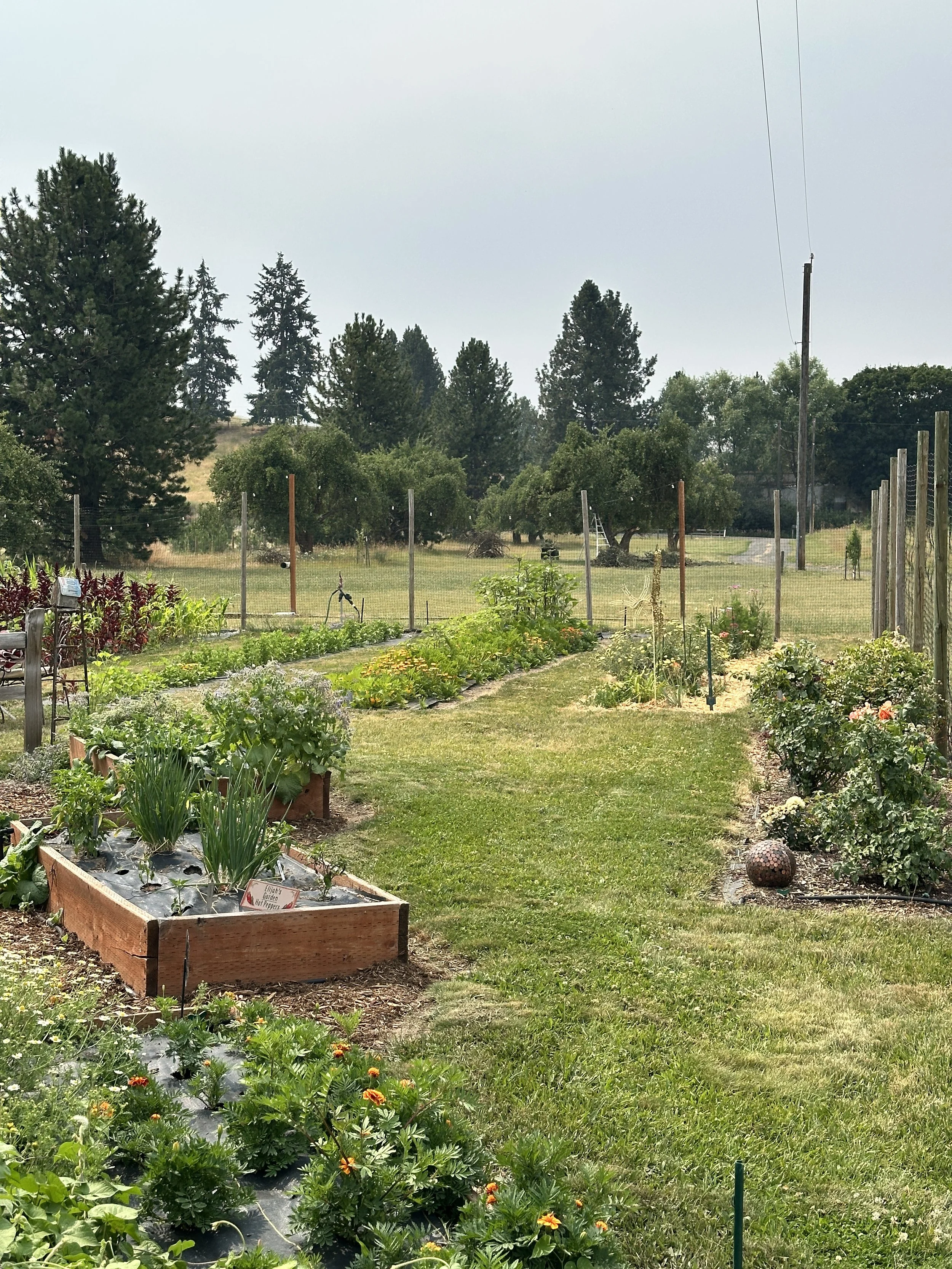
Walking in the garden, this bed is the one to the far right.
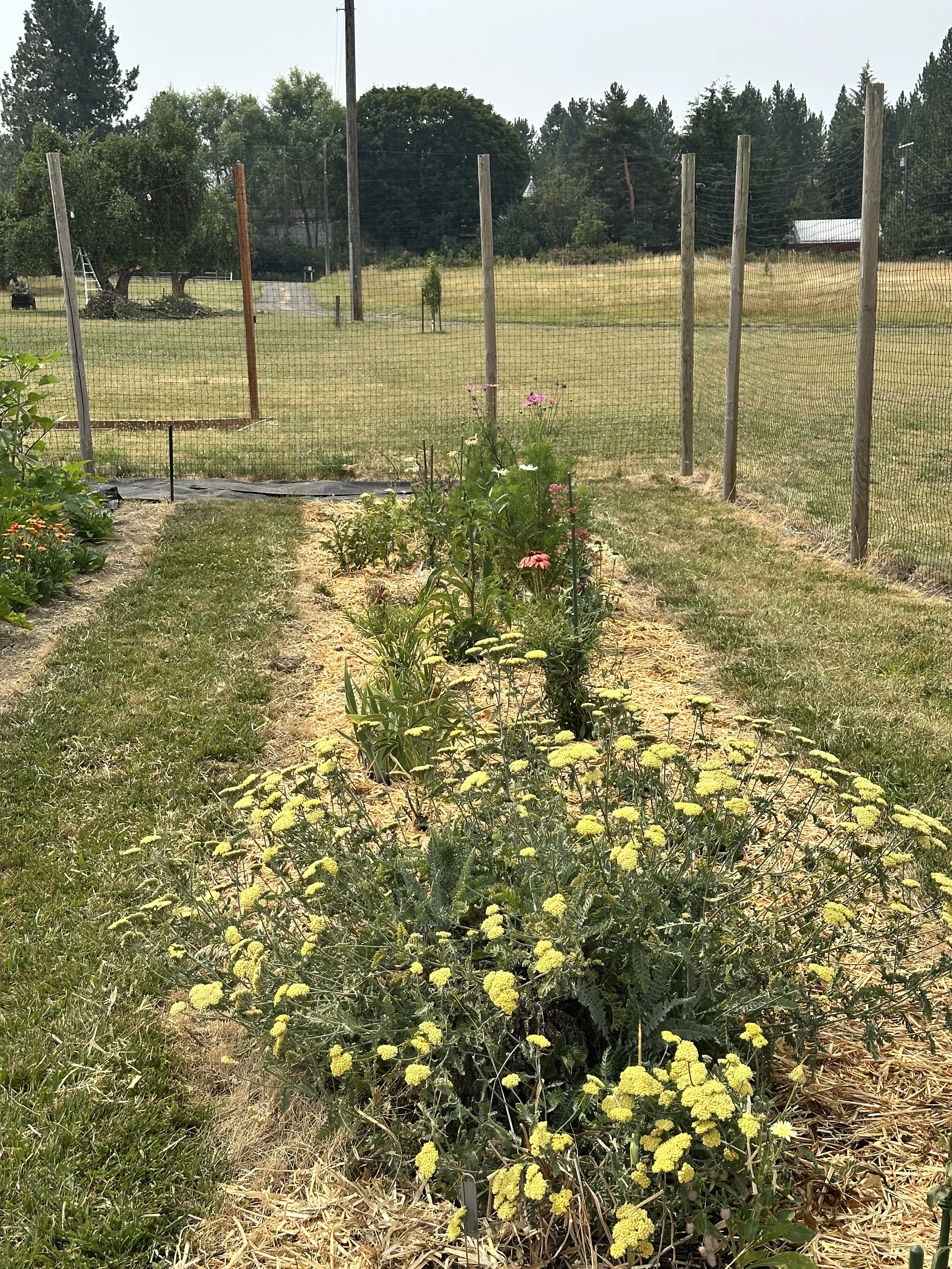
It’ll take a mow or two for those straw edges to straighten out a bit. But prominent in this photo is my yellow Yarrow, which I transplanted last year.
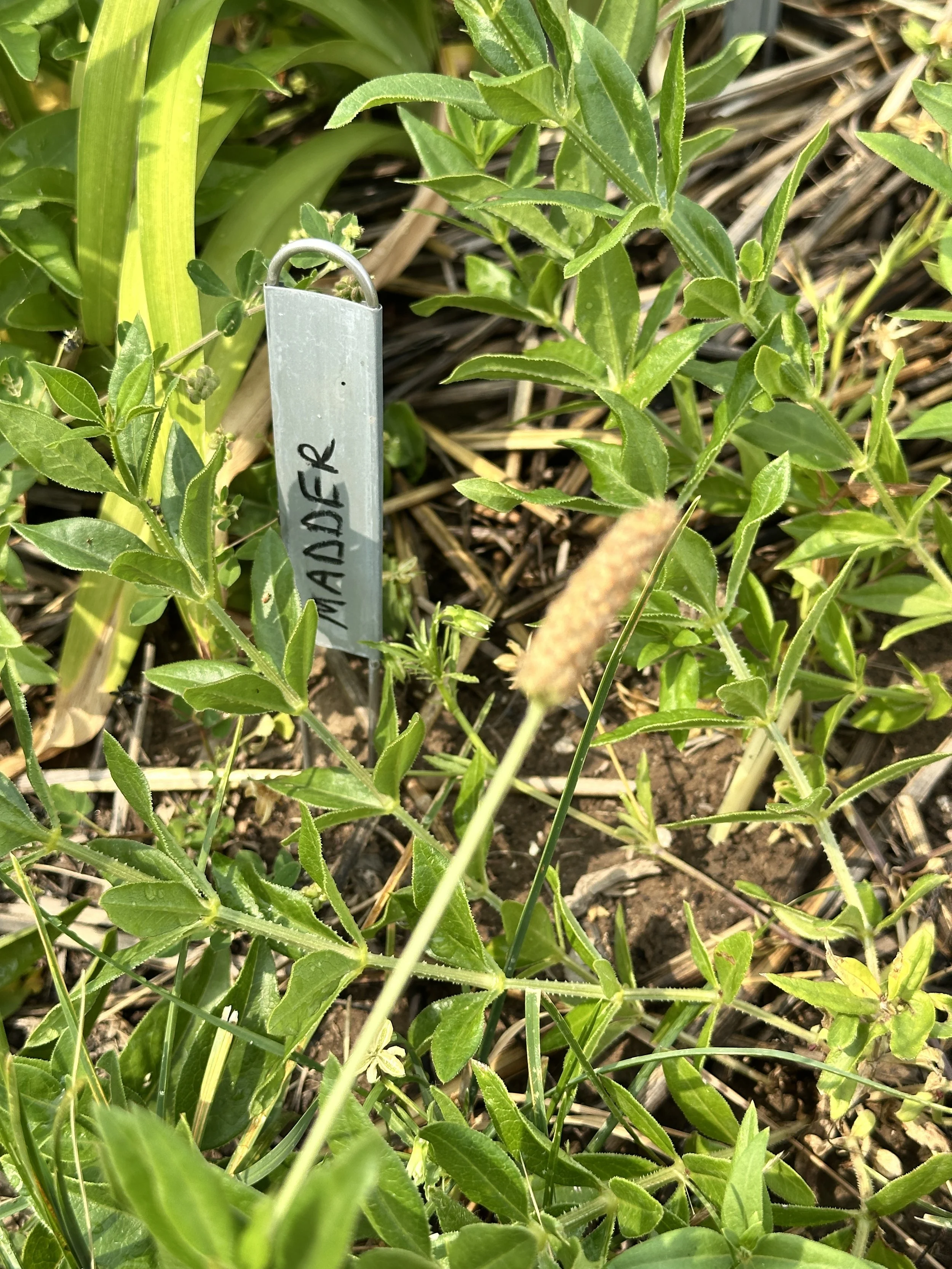
I was pretty good about remembering to label everything as I went, and thank God for that! This is a close-up of one of the original transplants into this bed, madder. Madder is used in natural dying, as its roots produce a dark red-orange color. But you have to let it grow for a few years before attempting that. I think we will dig some of those roots up next year and see.
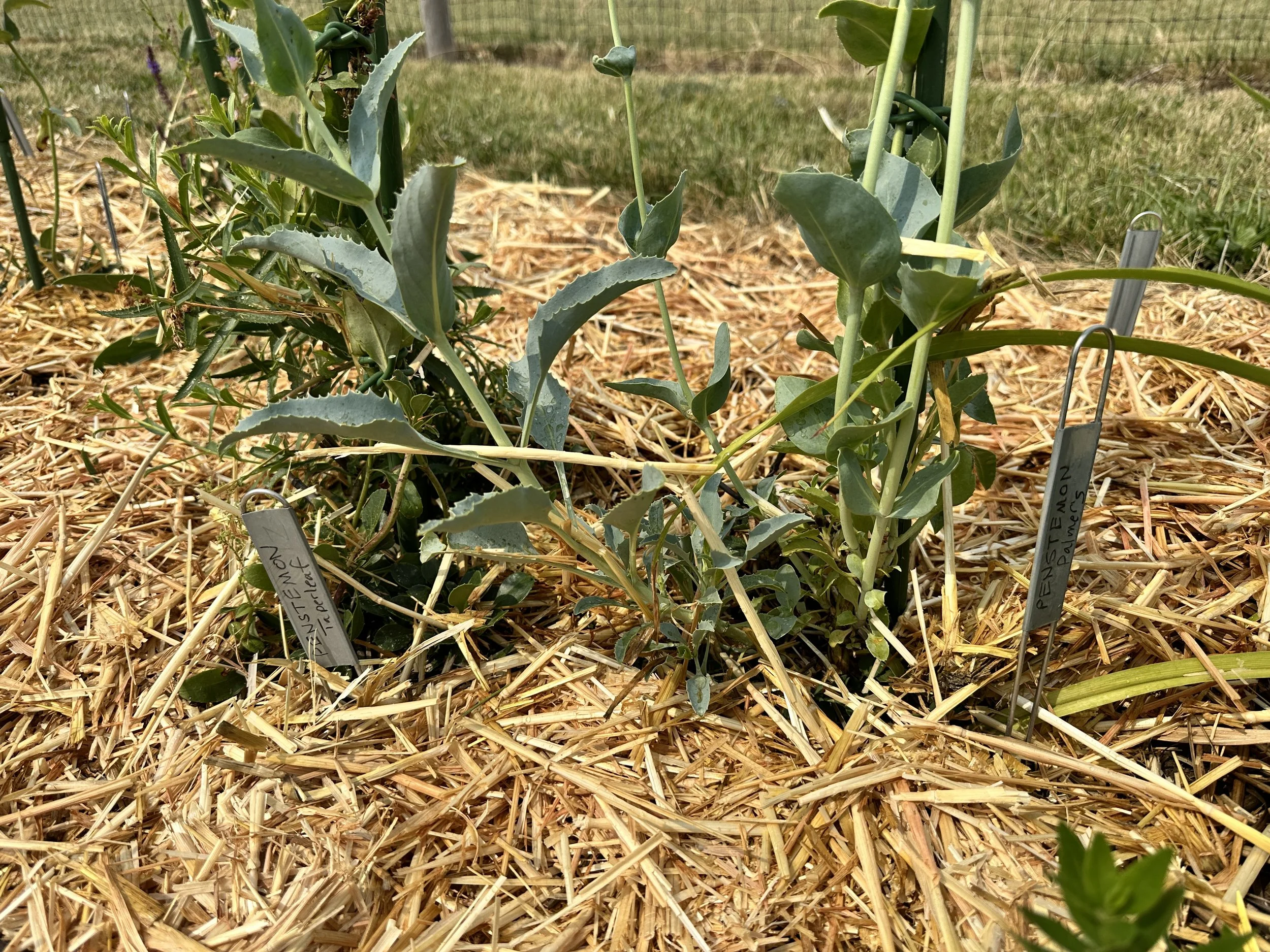
These are two of my Penstemon, also called “beard-tongue”. I planted several varieties this year - it looks like these are Taperleaf on the left and Palmers on the right. Somehow I have never even heard of this plant, and yet I keep bumping into it over and over this year. I guess in attempting to capture the name tags I actually cut off the pretty blooms on one of them. I can also see that I need to get a few stakes out here to give these guys a little support.
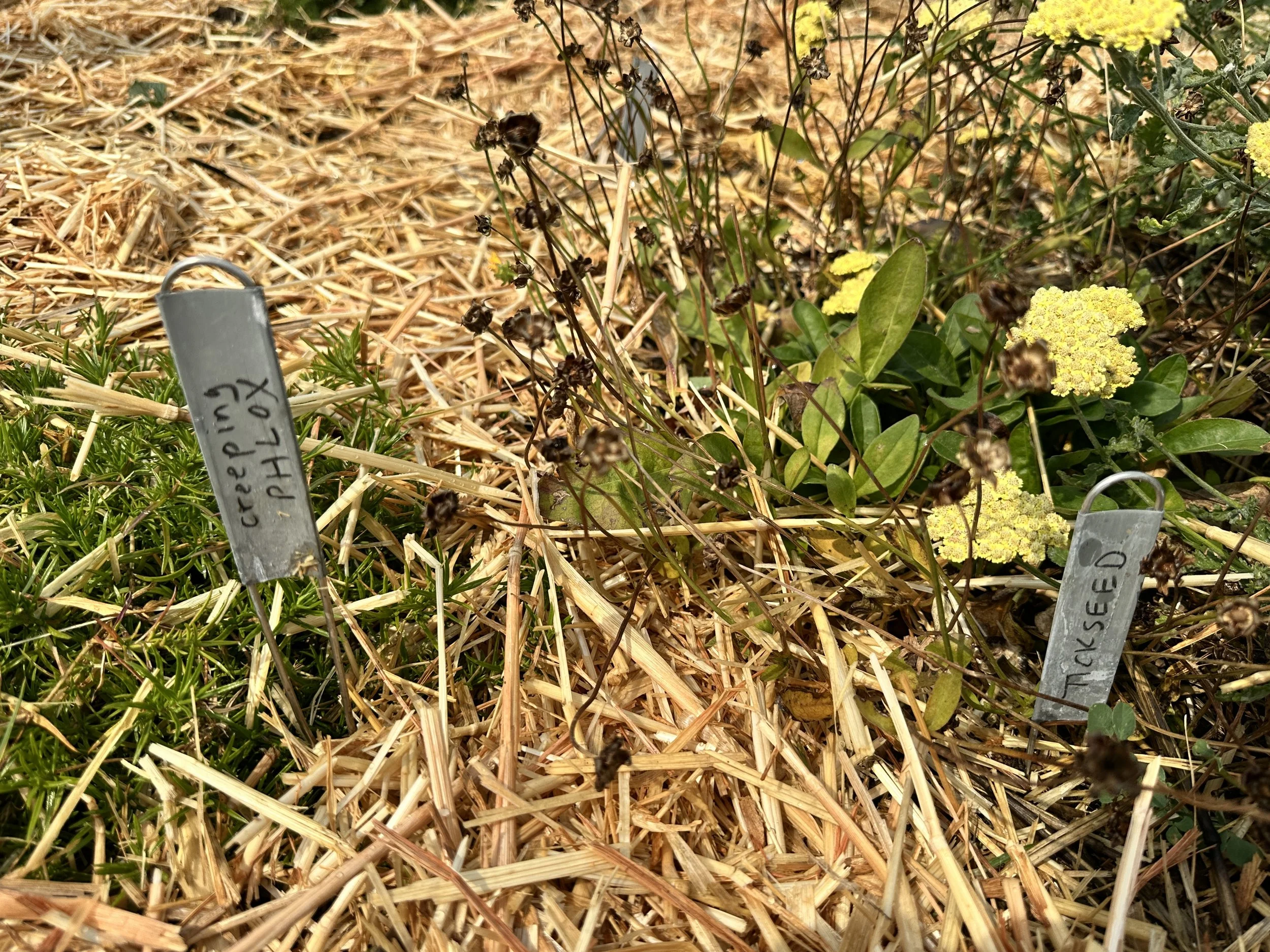
Creeping Phlox and Tickseed, aka Coreopsis. The Phlox isn’t quite creeping just yet, but it is healthy and doing fine (if I’d quit smothering it with straw!) The Coreopsis is being somewhat smothered by the yellow Yarrow on the right. It had small yellow flowers for awhile, but now it looks like it is in some kind of rebuilding stage. The smooth oval leaves are its. Because the Yarrow is growing so much, I think I’ll need to relocate the Tickseed this fall, give it a little more room to roam.
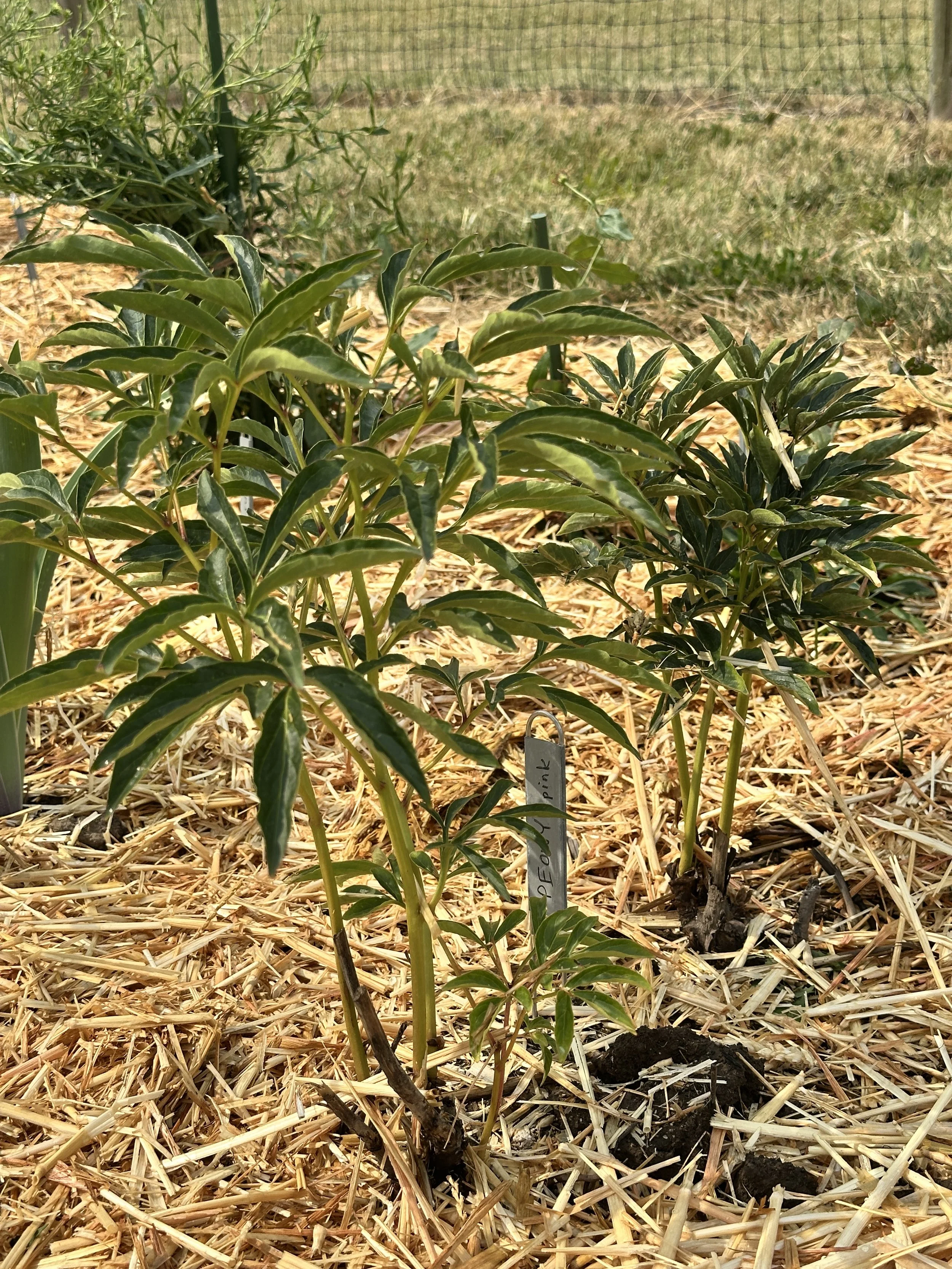
Two Peony plants I got from Whitworth. Our landscaping crew does a plant exchange/giveaway each spring, and while I know nothing about growing peonies (other than I suspect they are high maintenance), they are in this bed for now. I don’t think these are necessarily “low water” plants, so we will see how they like the new digs.
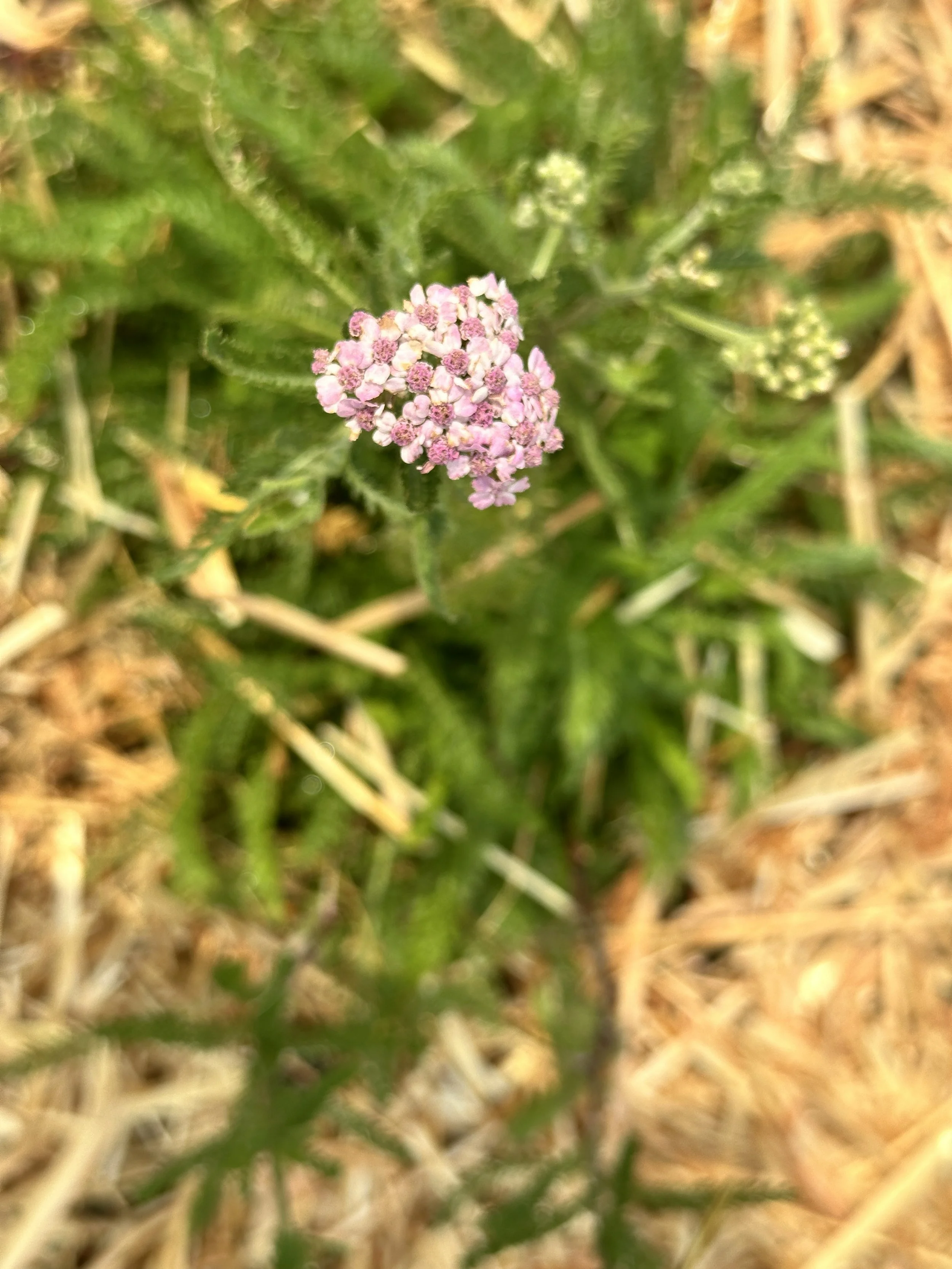
One of the many baby Yarrow plants I planted in this bed. I think this one came from the grocery store actually. I love the little pink flowers.
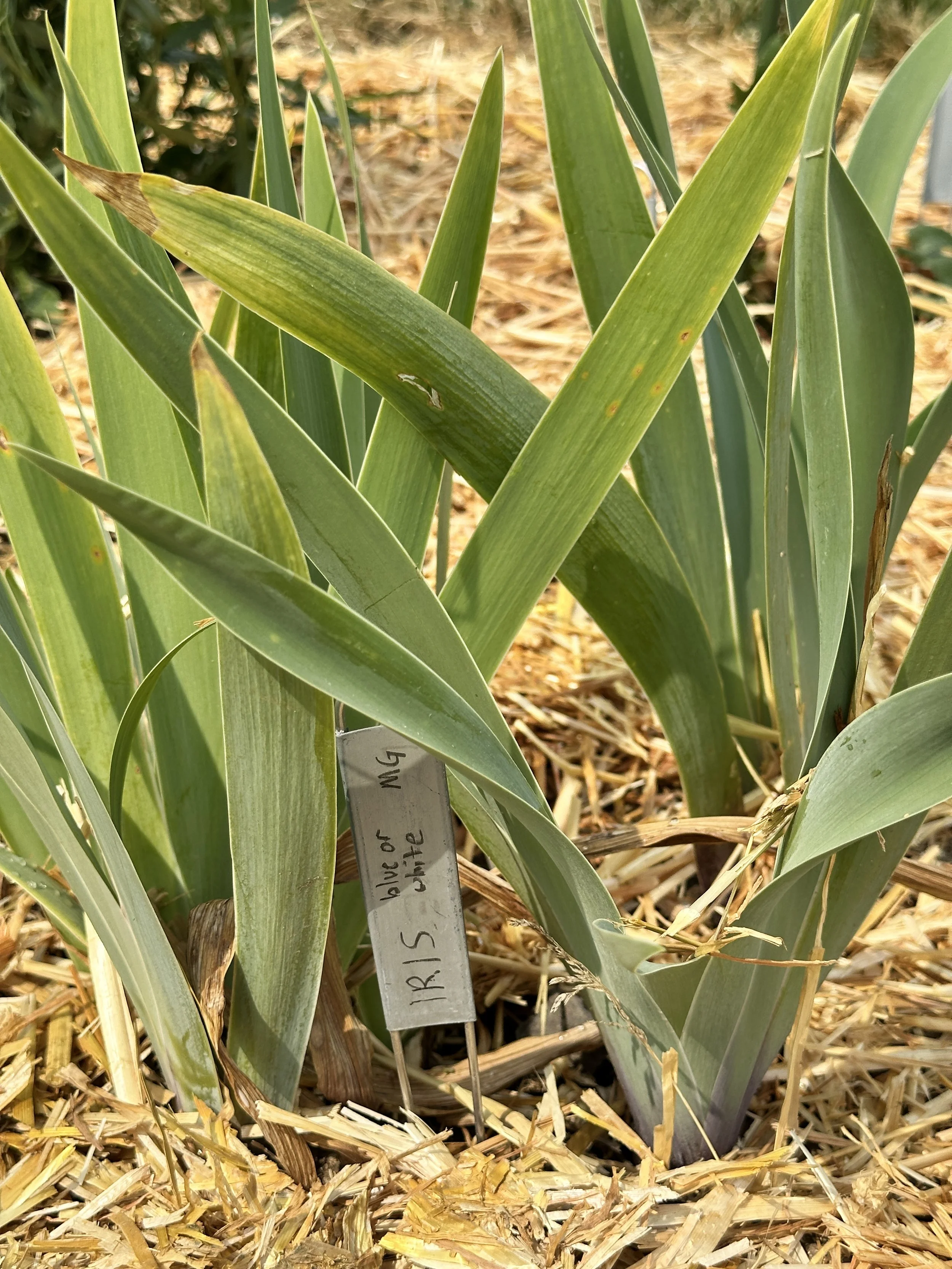
I love this label - Iris “blue or white”. Now that’s specificity! I guess we’ll find out. (“MG” = Master Gardener bulb sales). I should note that I have lots of bulbs marked throughout this bed, because they are all hiding underground during the off-season. These irises did not bloom this year - I suspect that is not unusual for iris tubers.
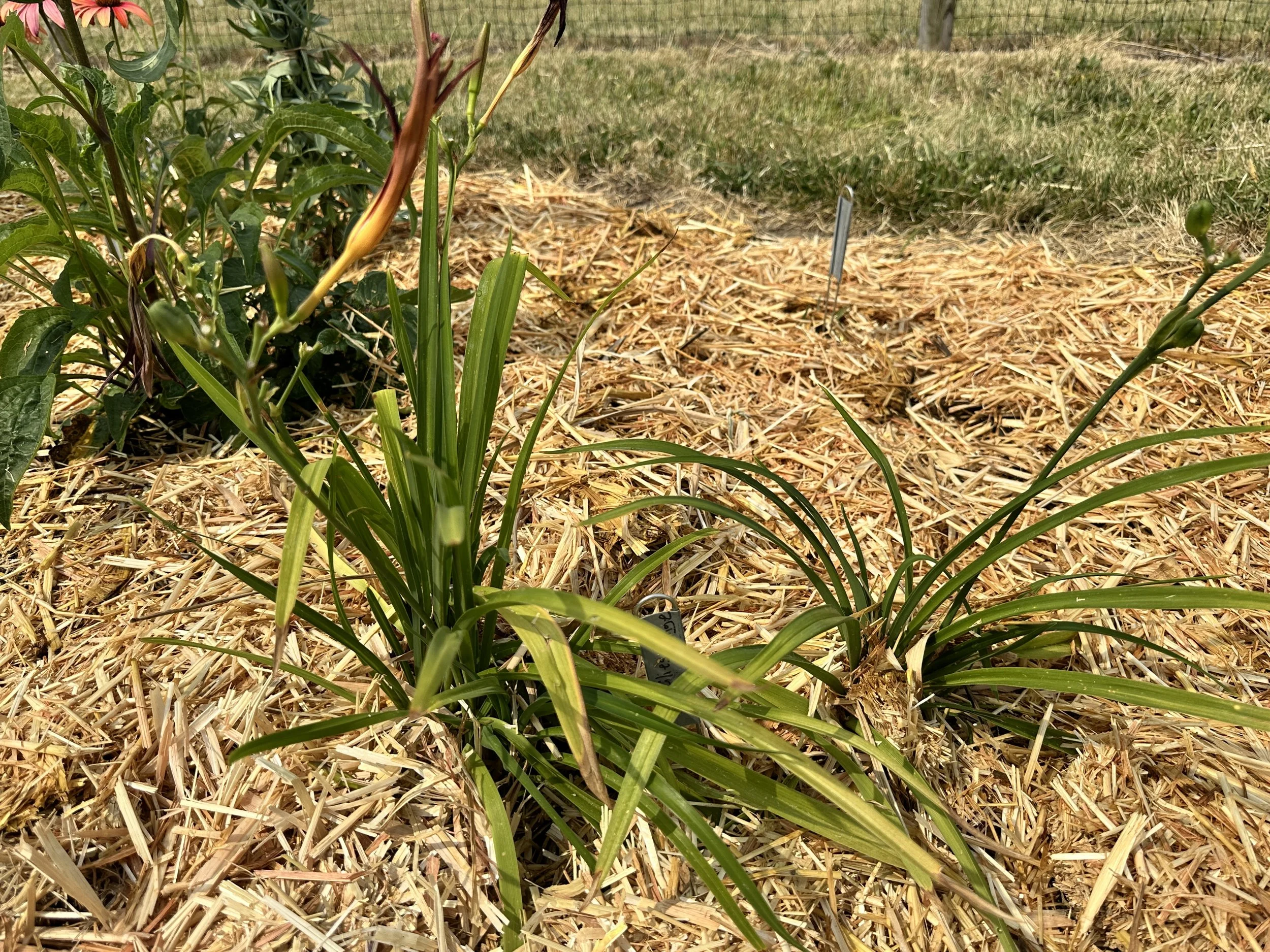
I can’t read the sign, but I think this is just a common orange-red Daylily. Pretty blooms actually last a long time.
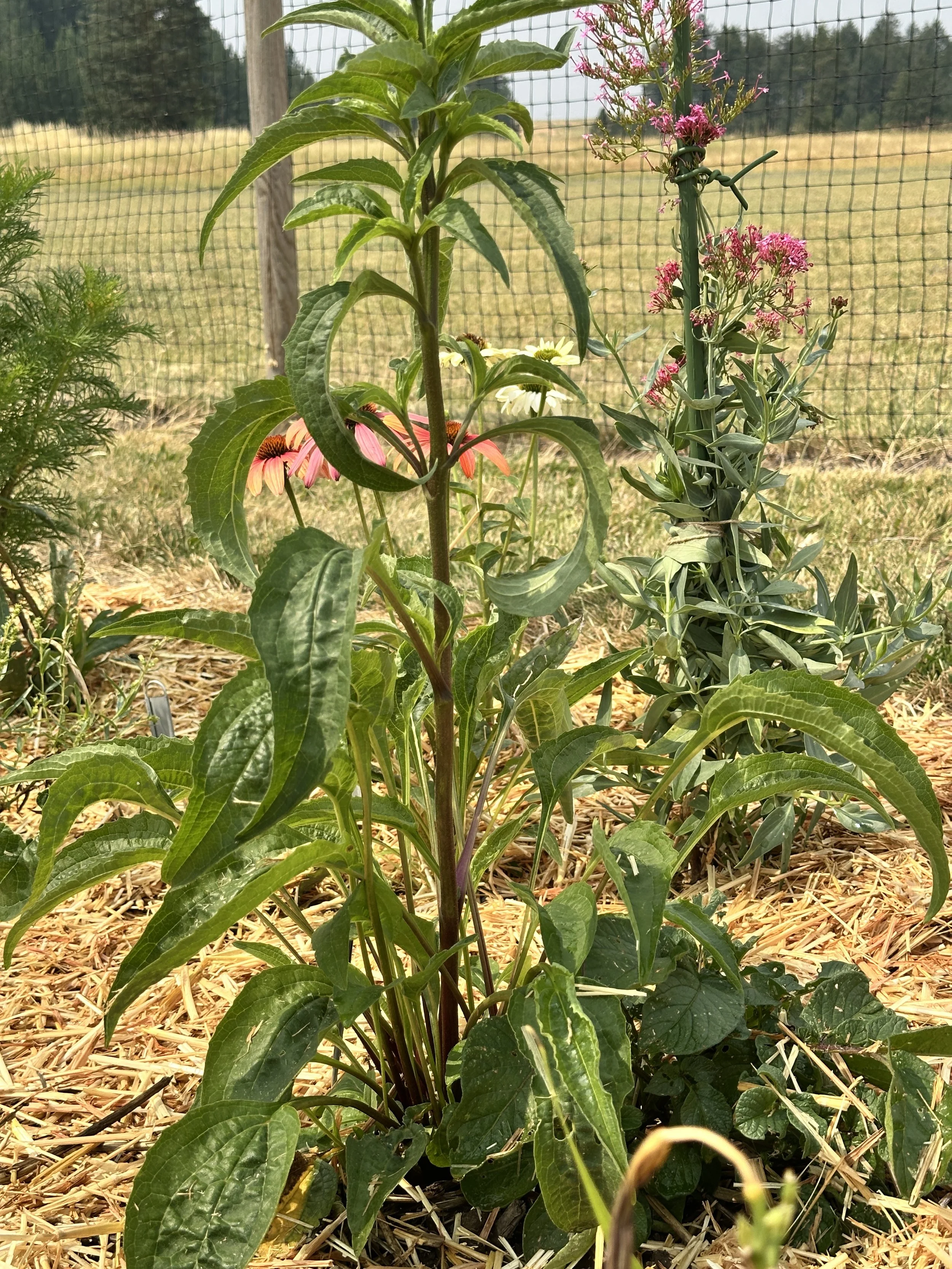
I love this pollinator, both for the flowers it will soon have, but also for its strong structure. This is one of my Echinacea, or cone flowers. I have several in different colors. This will be a good one for some herbal projects.
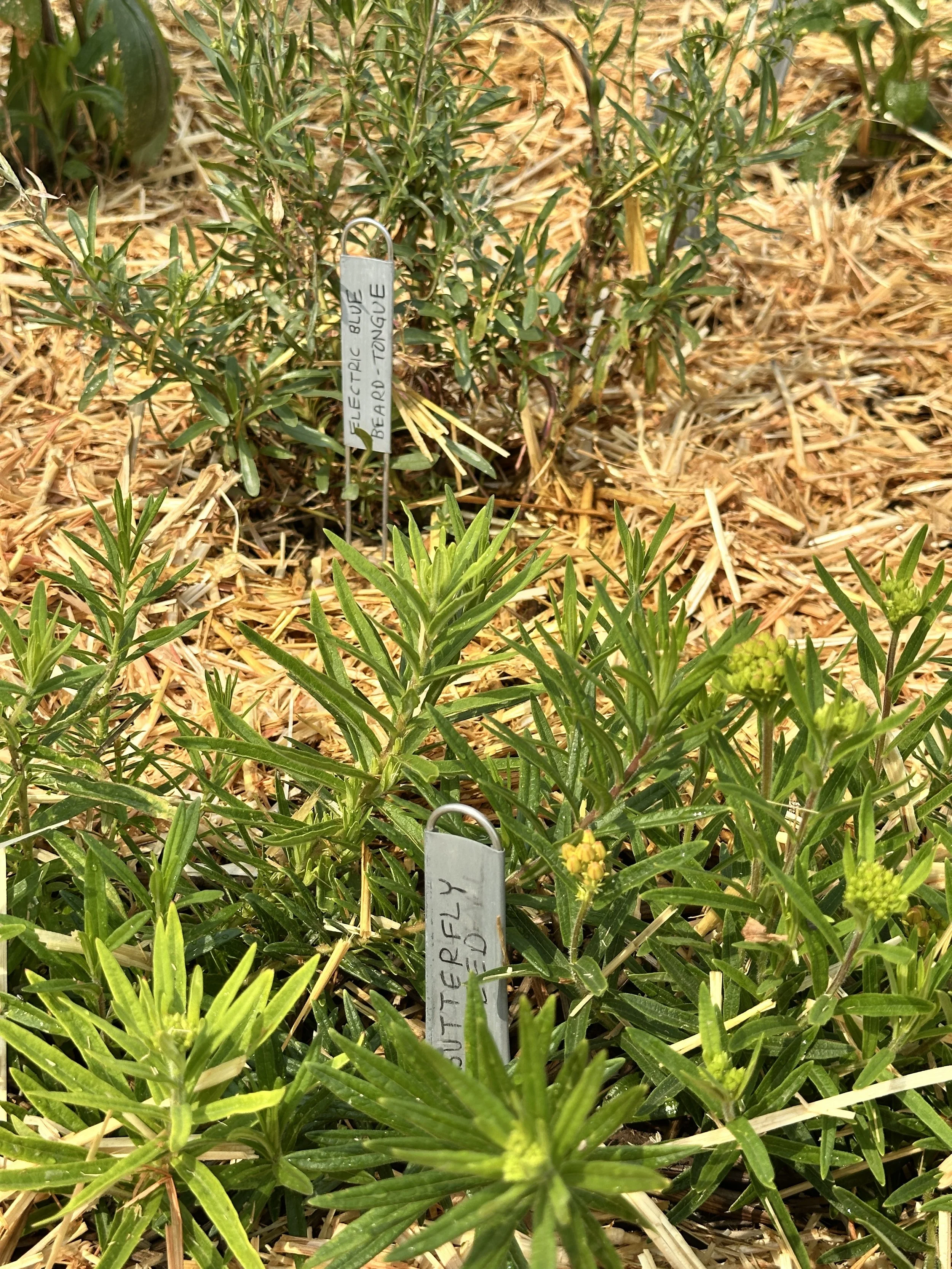
So the top plant is another variety of Penstemon (Beard-Tongue), called Electric Blue. Should be interesting. The lower plant is Butterfly Weed, aka Butterfly Milkweed, another great pollinator.
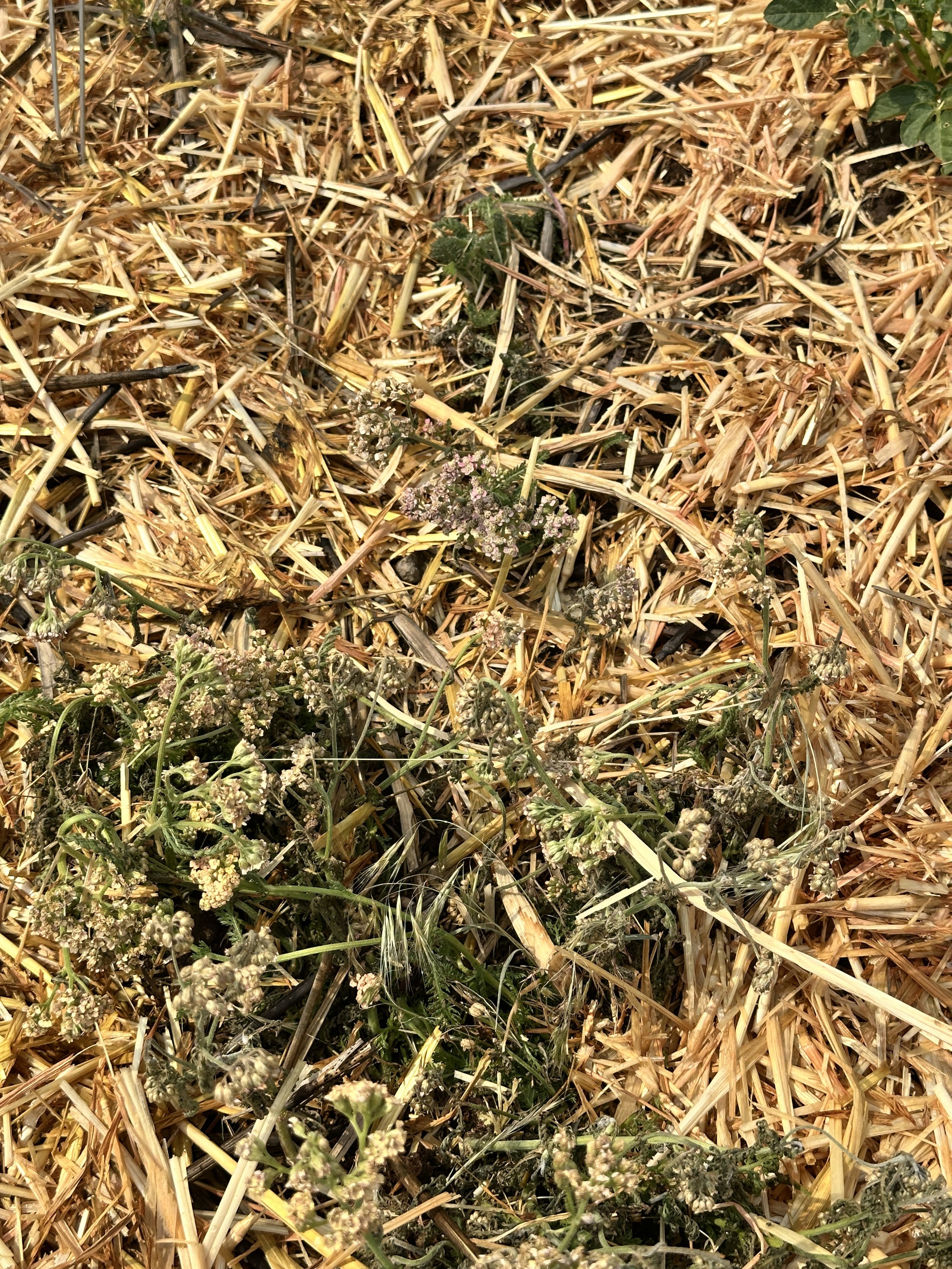
This is what a newly-transplanted pink Yarrow looks like on Day 2: Still pouting a bit about being pulled from its nice, safe crack along the driveway gravel. I’ll give it a few more days of water, and it will perk up. Yarrow is a tough field weed!
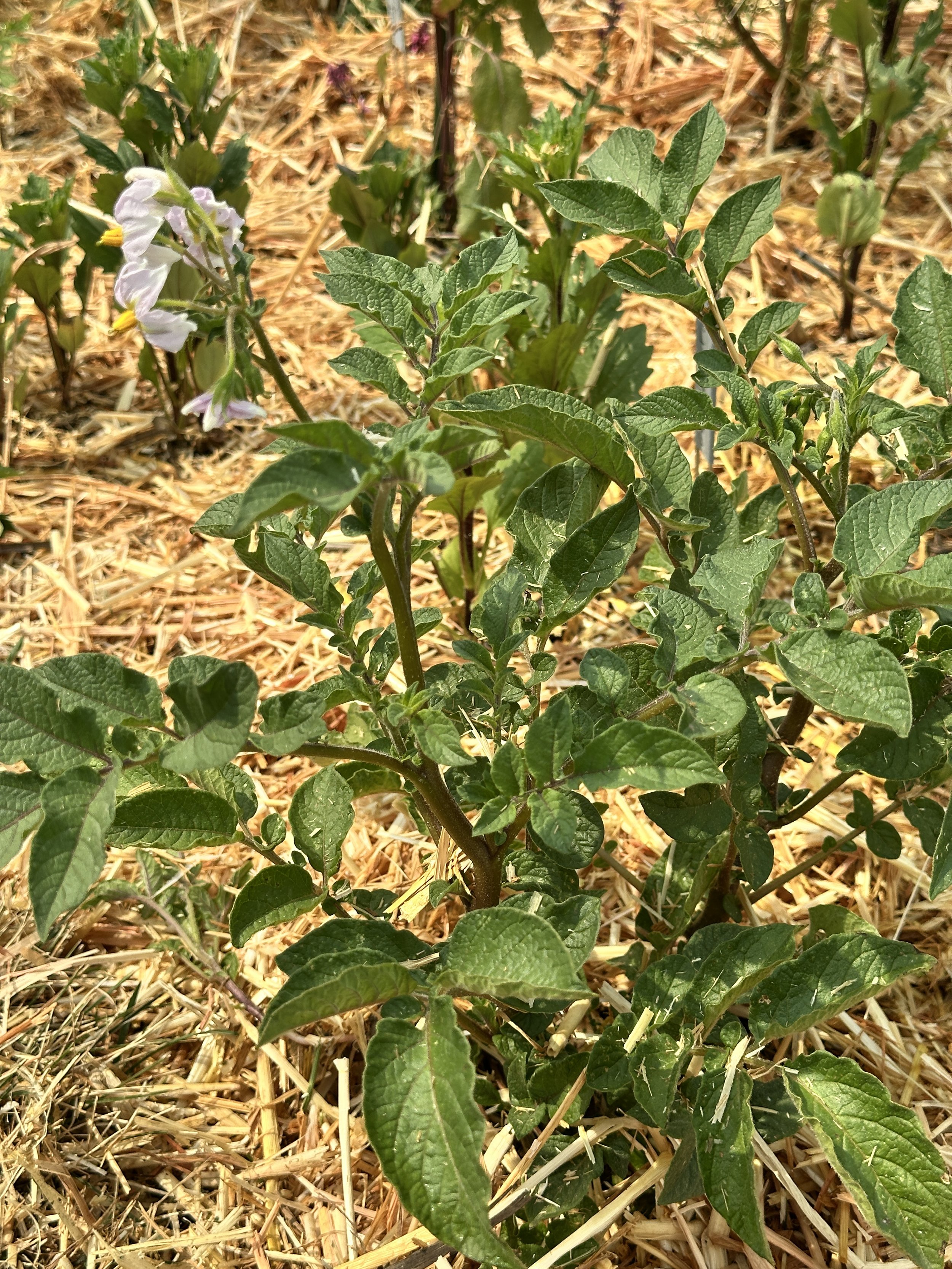
This is actually a lone Potato plant, apparently unharvested from last year’s use of this bed. I suspect with the light purple on the flower that there are little Purple Viking potatoes growing underneath the surface! There are a few random potatoes here and there in this bed.
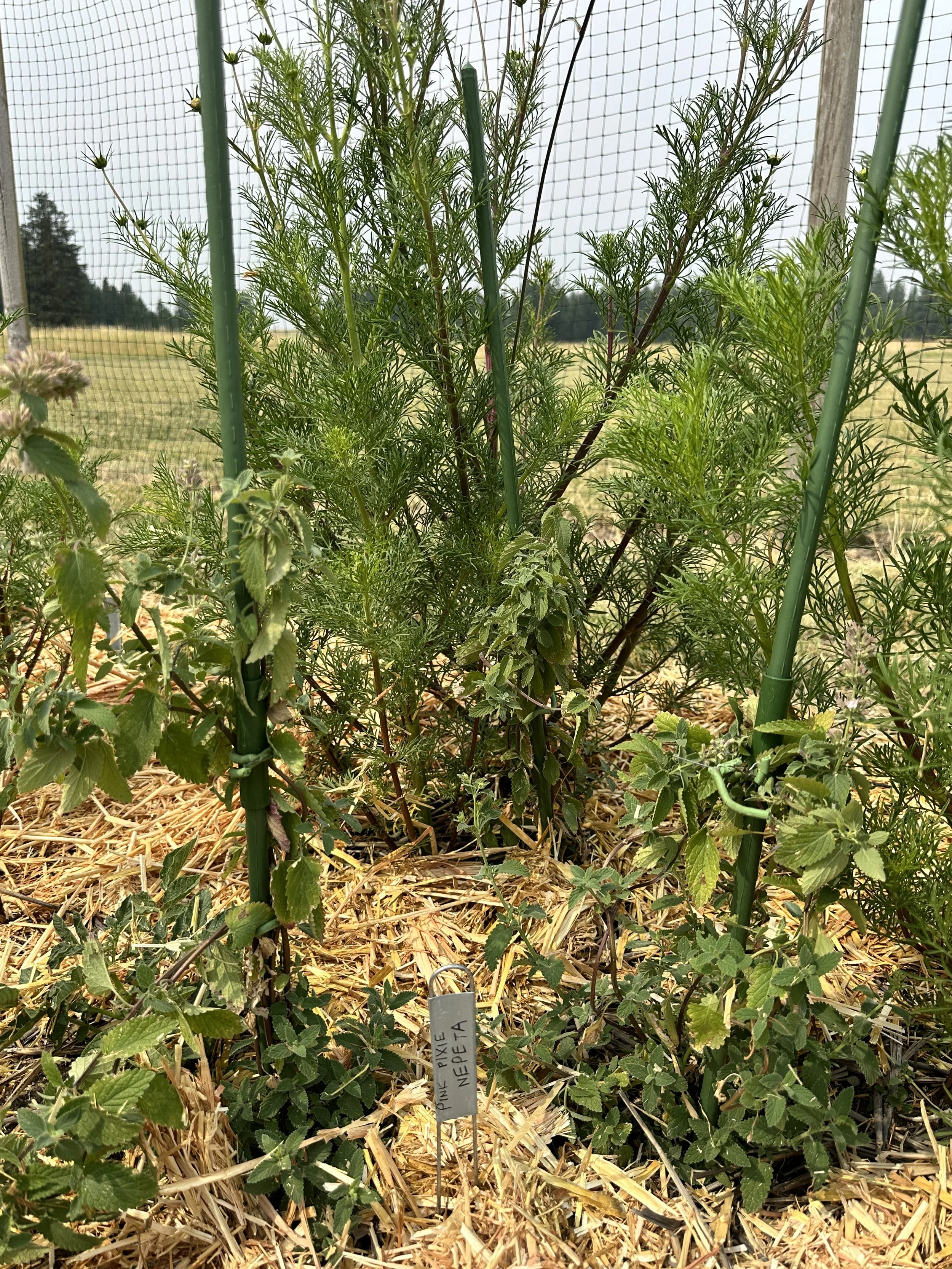
Okay, there is a lot going on in this picture! First, the large, fernlike plants dominating the background are Cosmos flowers, self-seeded in this dry, unexpected place from plants growing elsewhere in the garden last year. I always plant Cosmos, and when they pop up they are unmistakable. So we will see what color these end up being. In the foreground are two Pink Pixie Nepeta, aka Catmint. Chester is not a garden cat, so I’ll have to make him up a little pouch of dried leaves from this plant and bring it inside to see if it lives up to its name.
I should also point out how much I LOVE my adjustable-height garden stakes. They come in sections with connectors, so you just add as many sections as you need as plants grow. Nice Amazon find.
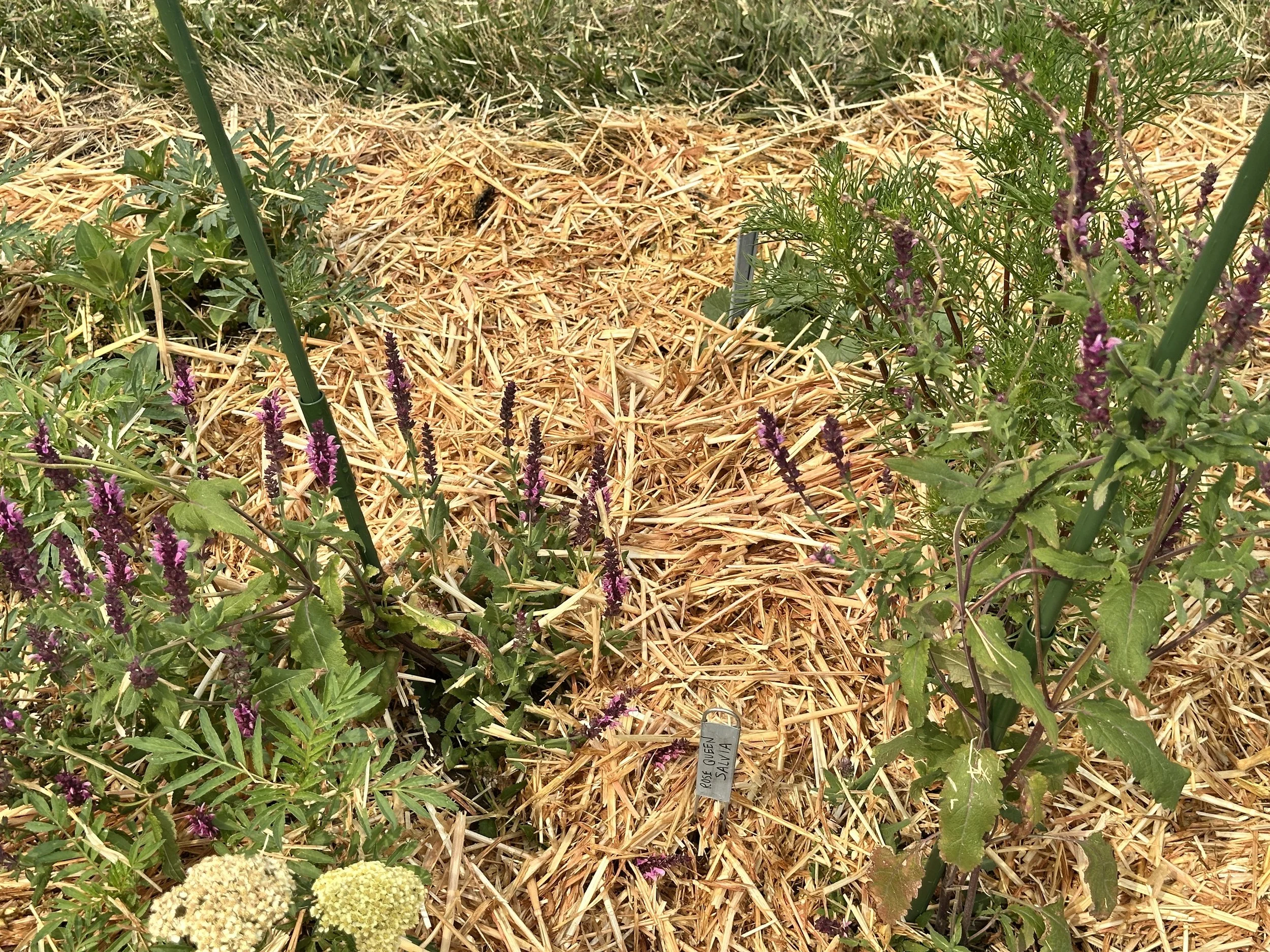
These are two Rose Queen Salvia plants. VERY hardy, love being neglected. I think they are a distant relative of the mint family, though I don’t think they are as invasive as mint. Pretty purple flowers all summer long. I can’t remember if these ones were transplants from last year or planted fresh this year.
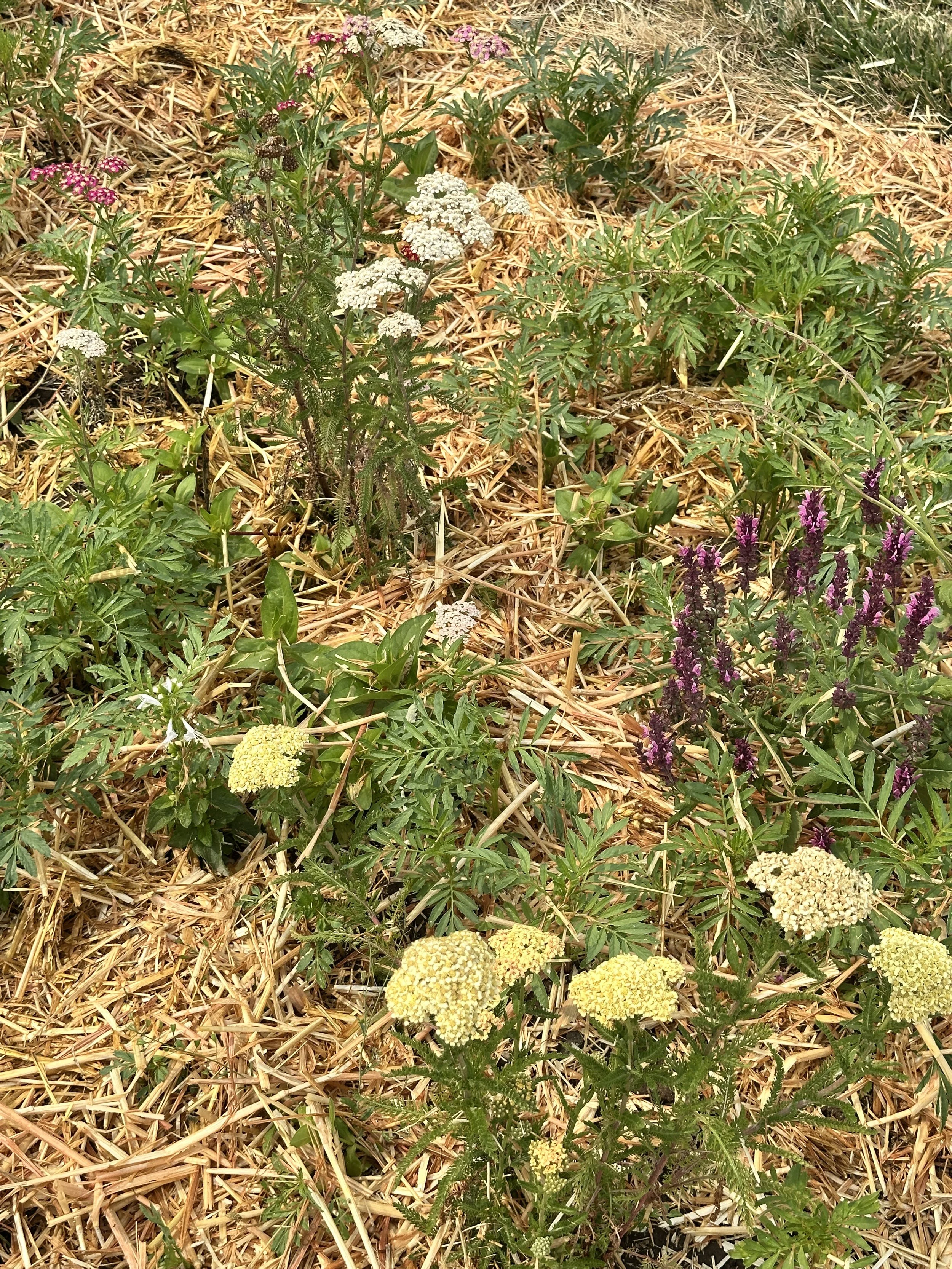
Here we see a couple more rescued Yarrow plants, light yellow in the foreground and a mixed plant behind, also pictured below.
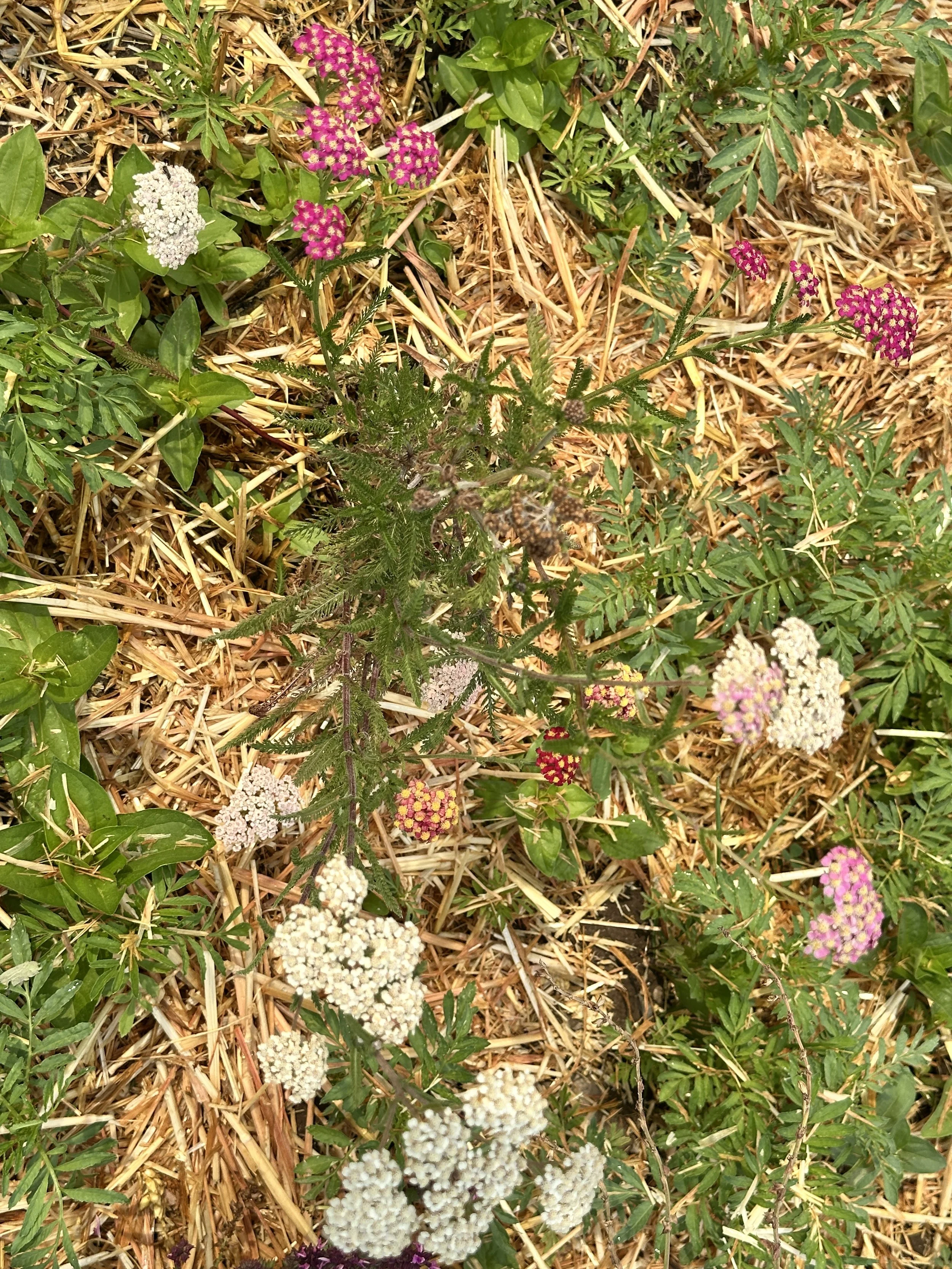
Look at all the cool colors on one Yarrow plant. I LOVE Yarrow.
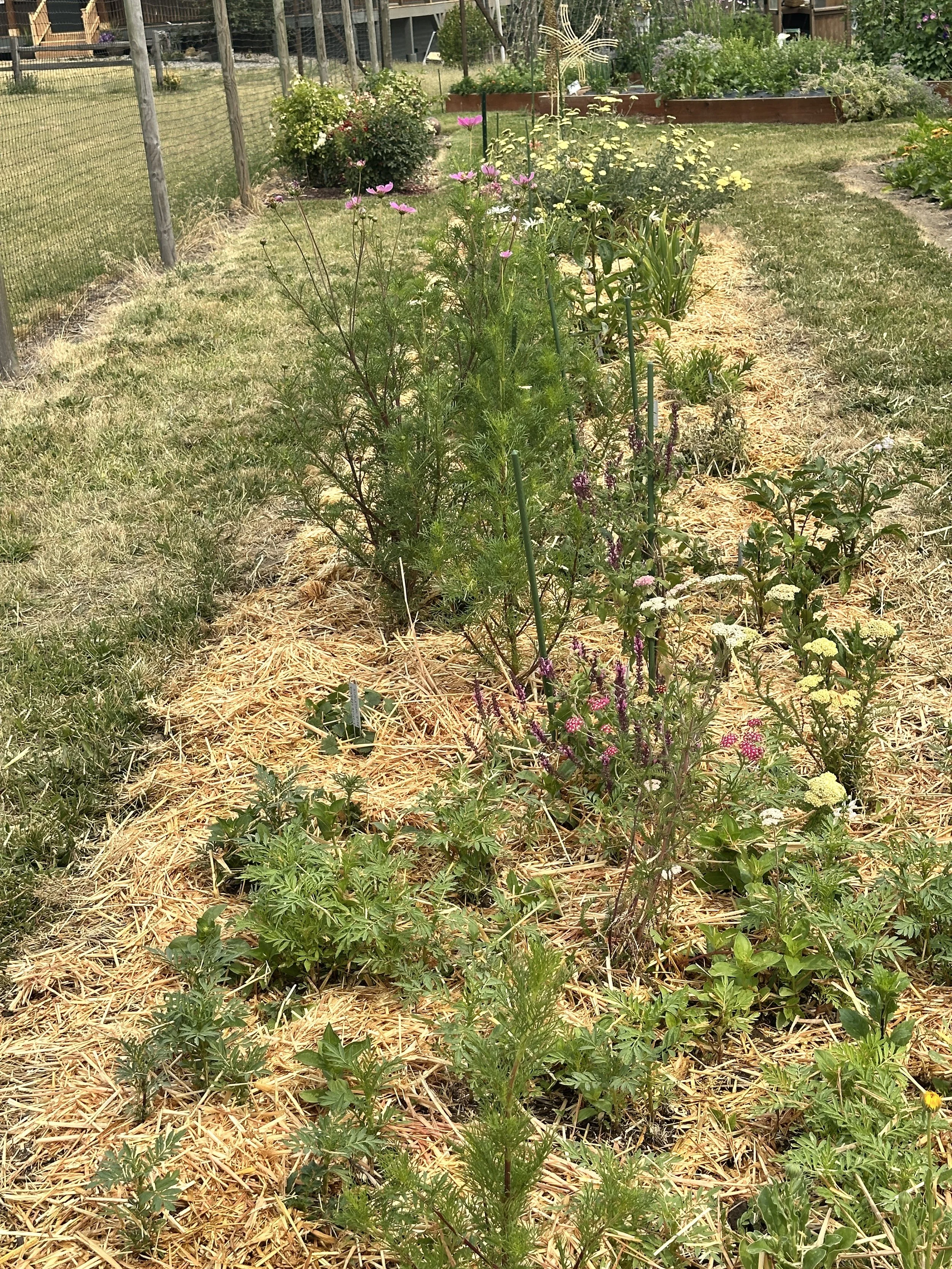
This is the far end of the bed, and since I didn’t have any more perennials to plant here, I just sprinkled some random Zinnia and Calendula (Marigold) seeds. I also see at least one volunteer Cosmos in the front middle.
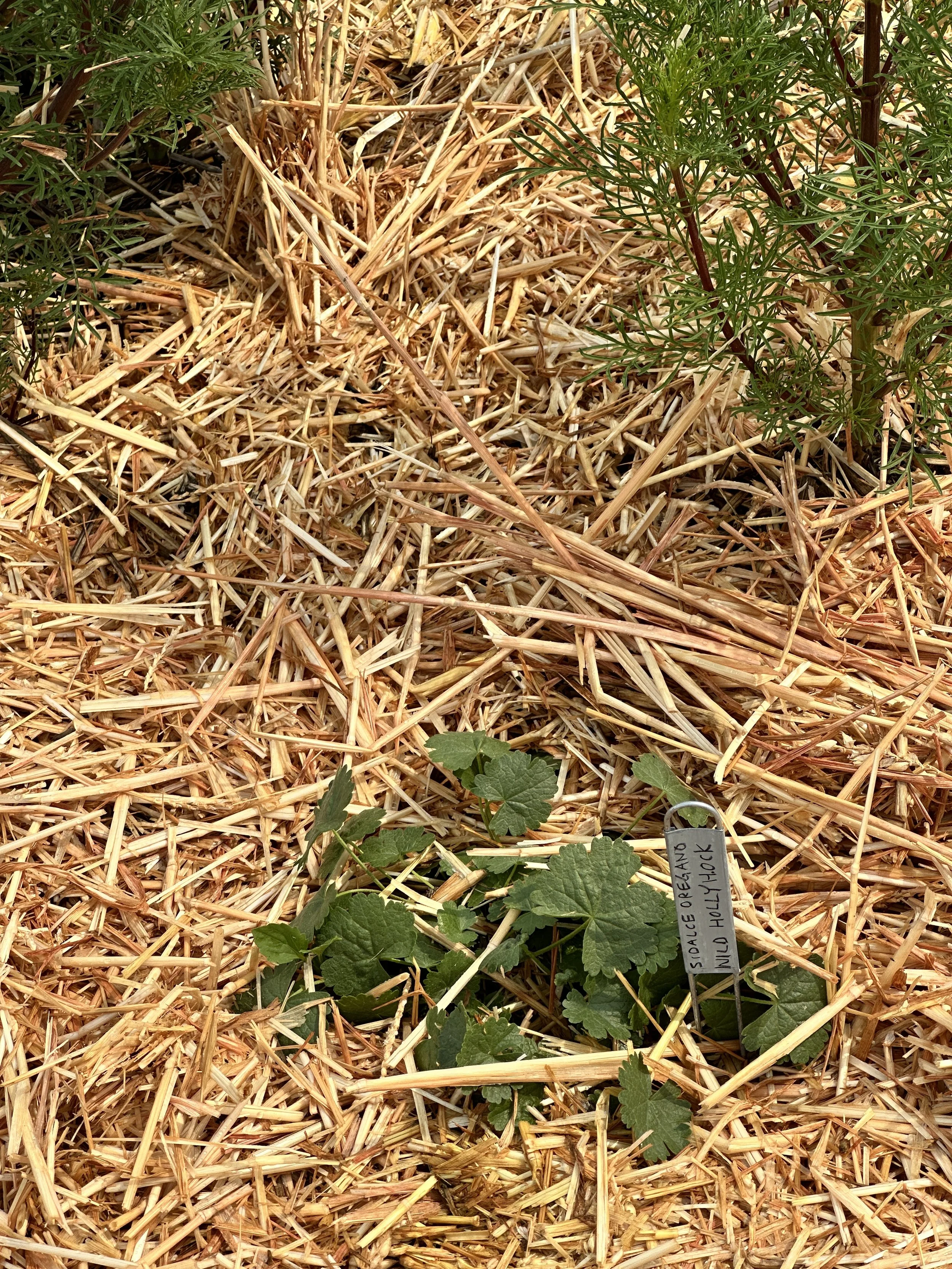
This is a Sidalcea (miniature) Wild Hollyhock. I used to grow Hollyhocks from seed when the kids were little. I remember making little Hollyhock “dolls” with tiny Montana. But out here, the deer LOVE Hollyhocks. I probably should find a place to grow more within the safety of the garden walls next year, but for now I am experimenting with this mini.
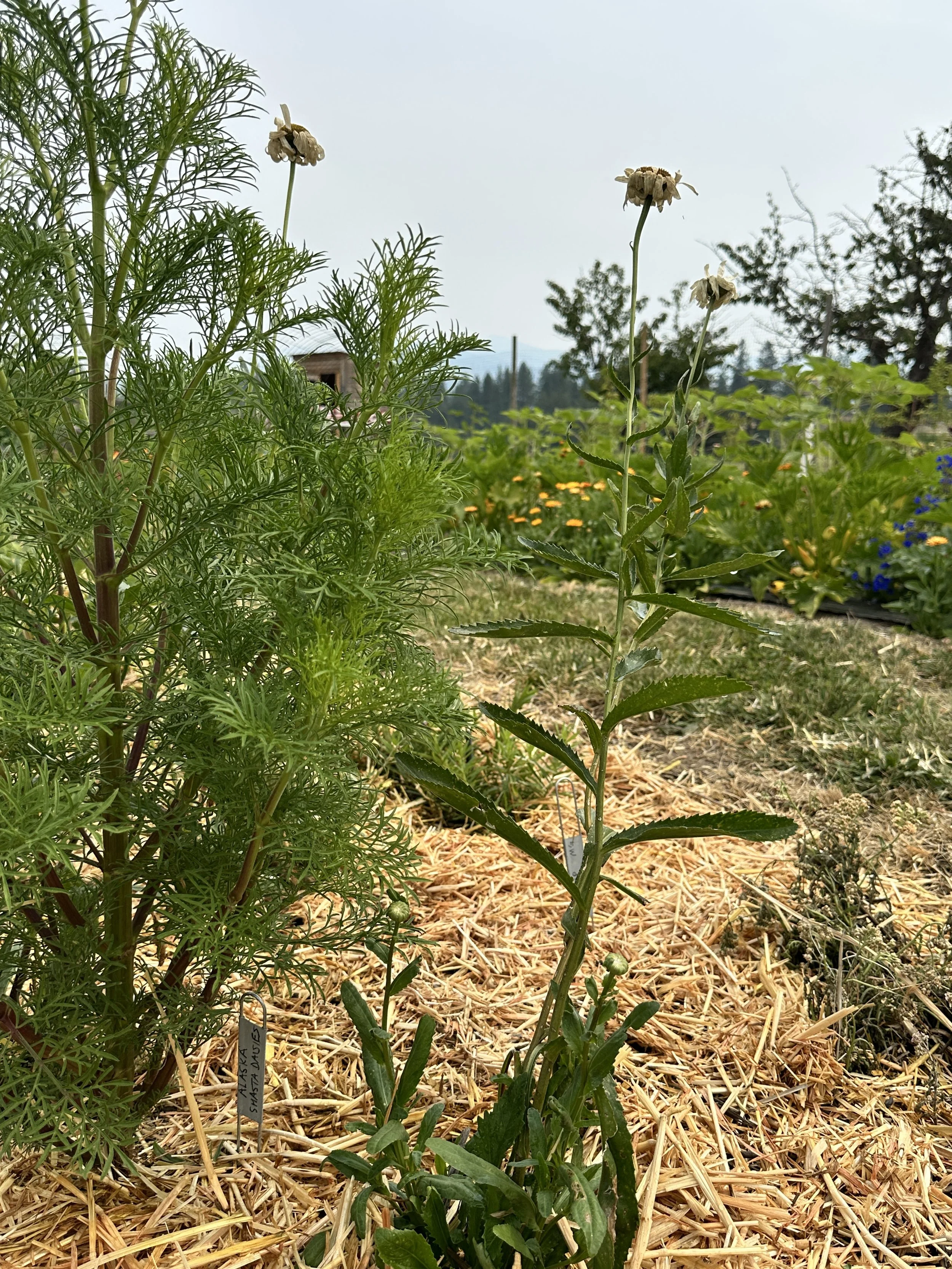
These are two Alaska Shasta Daisies (getting a little bullied by another of the volunteer Cosmos plants). I love their strong stems that do not require staking.
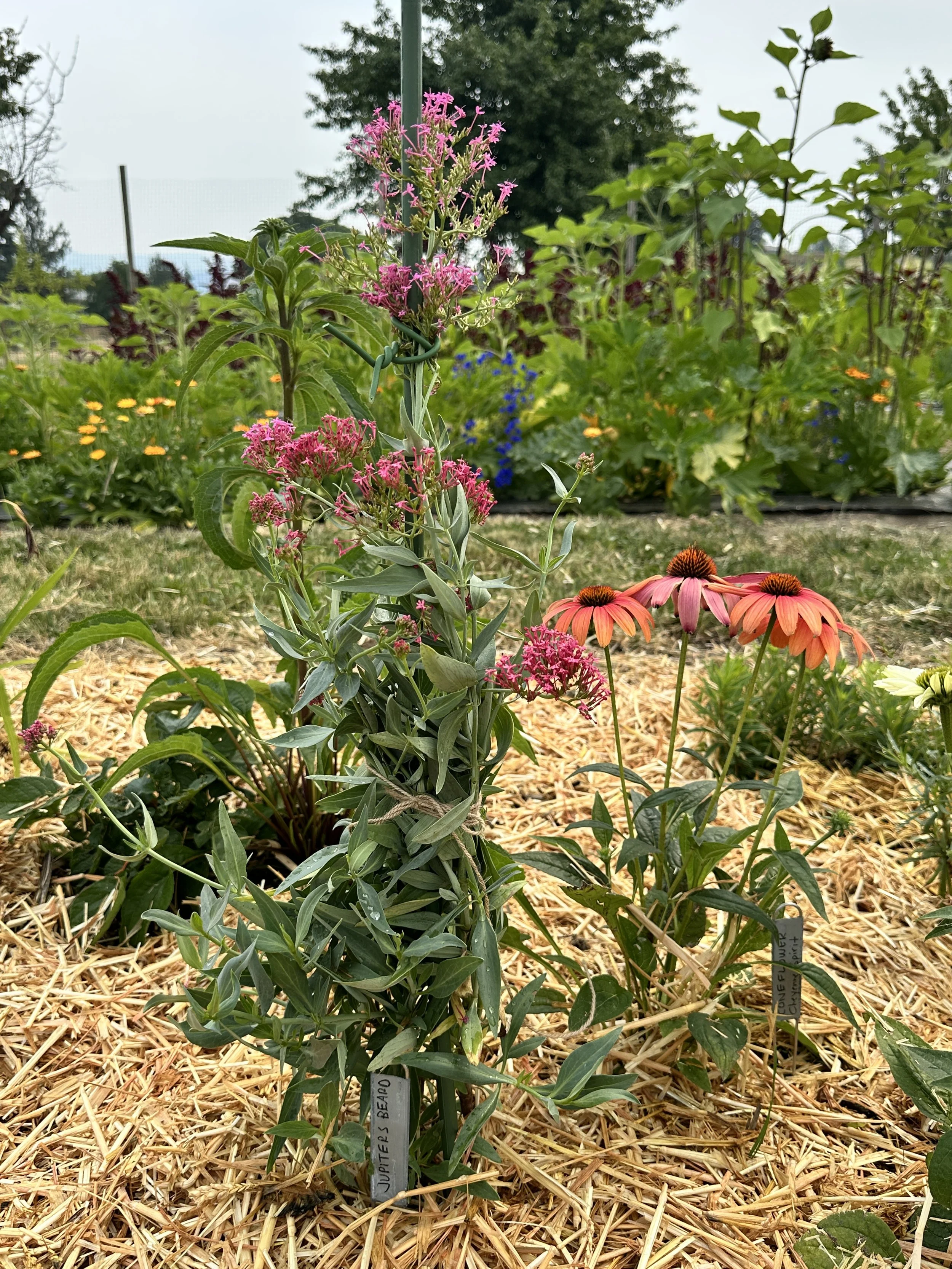
This cool plant is Jupiter’s Beard, aka Red Valerian. Love this pop of color that just happens to be planted by the equally-colorful Echinacia.
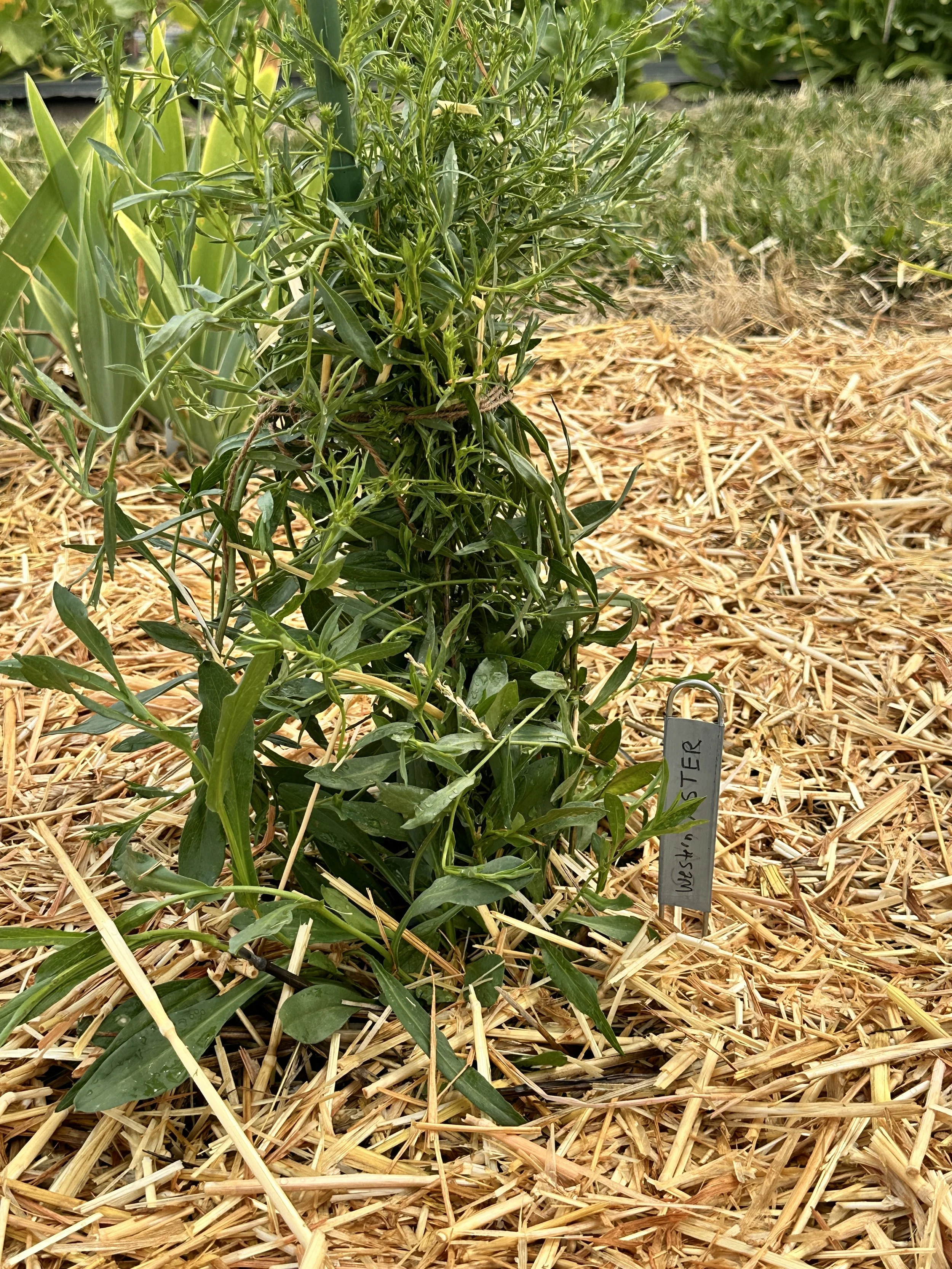
I just bundled up and staked this Western Aster. I’m excited about this plant, as it should do well here. But it wasn’t really growing UP and is honestly a tangled mess on the stake. So we’ll see what comes next for it!
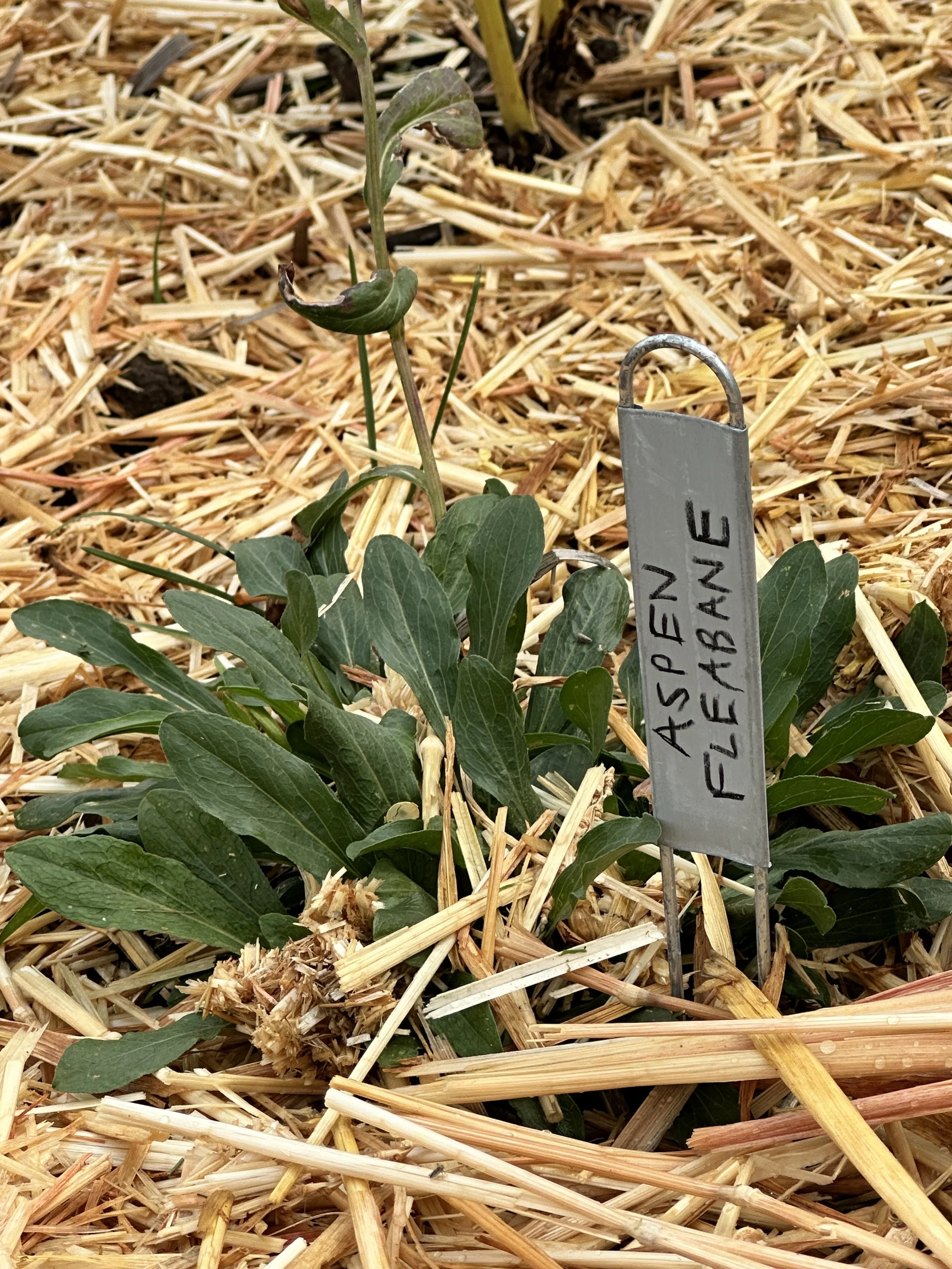
Another bad photo job, cutting off the flower while attempting to zoom in on the label. This is an Aspen Fleabane, which has so many other names, including: Showy Fleabane, Showy Daisy, Garden Fleabane, Dainty Daisy or Oregon Fleabane.
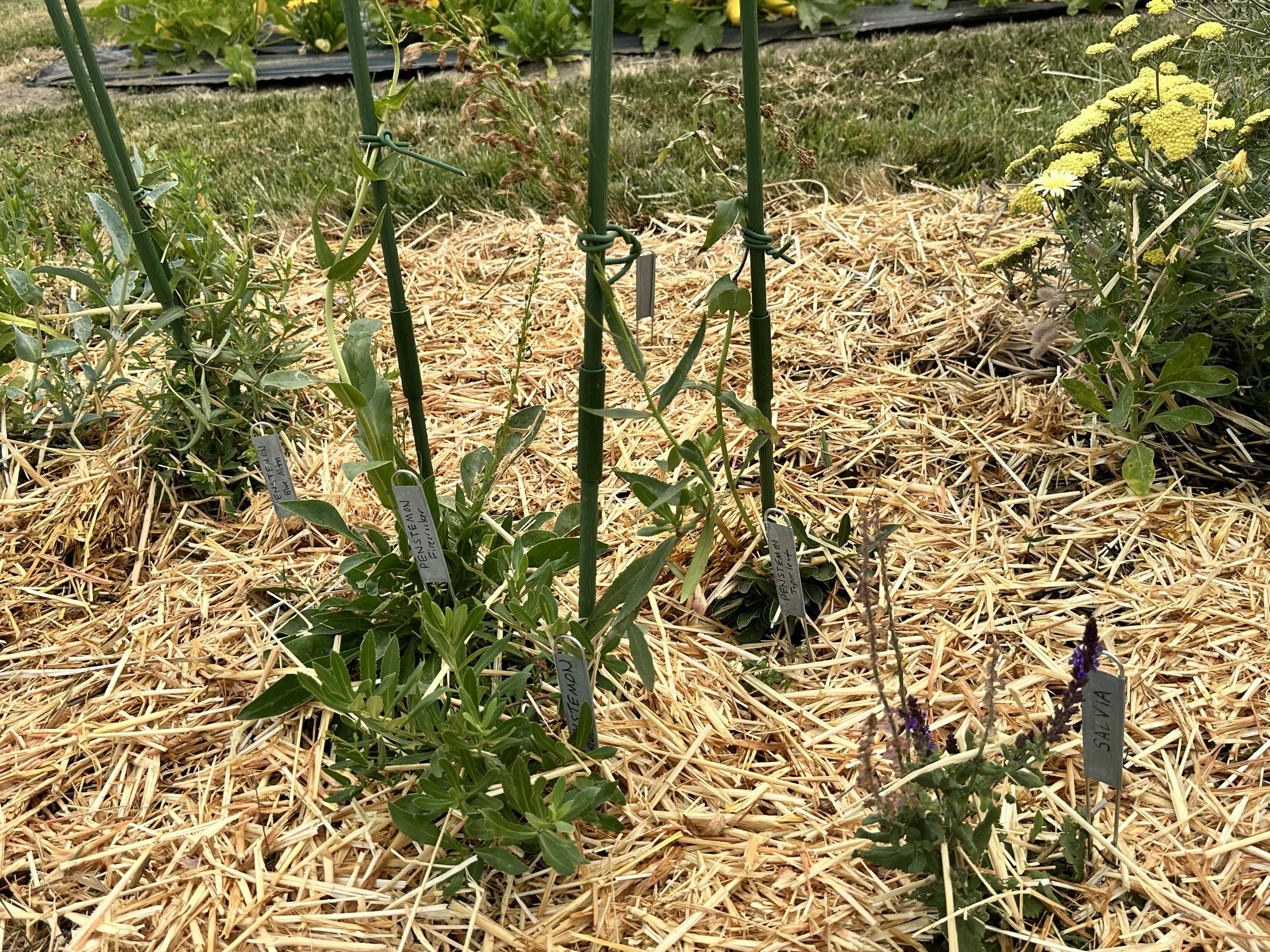
More of those new find-of-the-year, the Penstemon family, including two Blue Mountain, a Firecracker, and a Taperleaf. Also another nice little Salvia plant, which I’m surprised hasn’t grown a bit more by now.
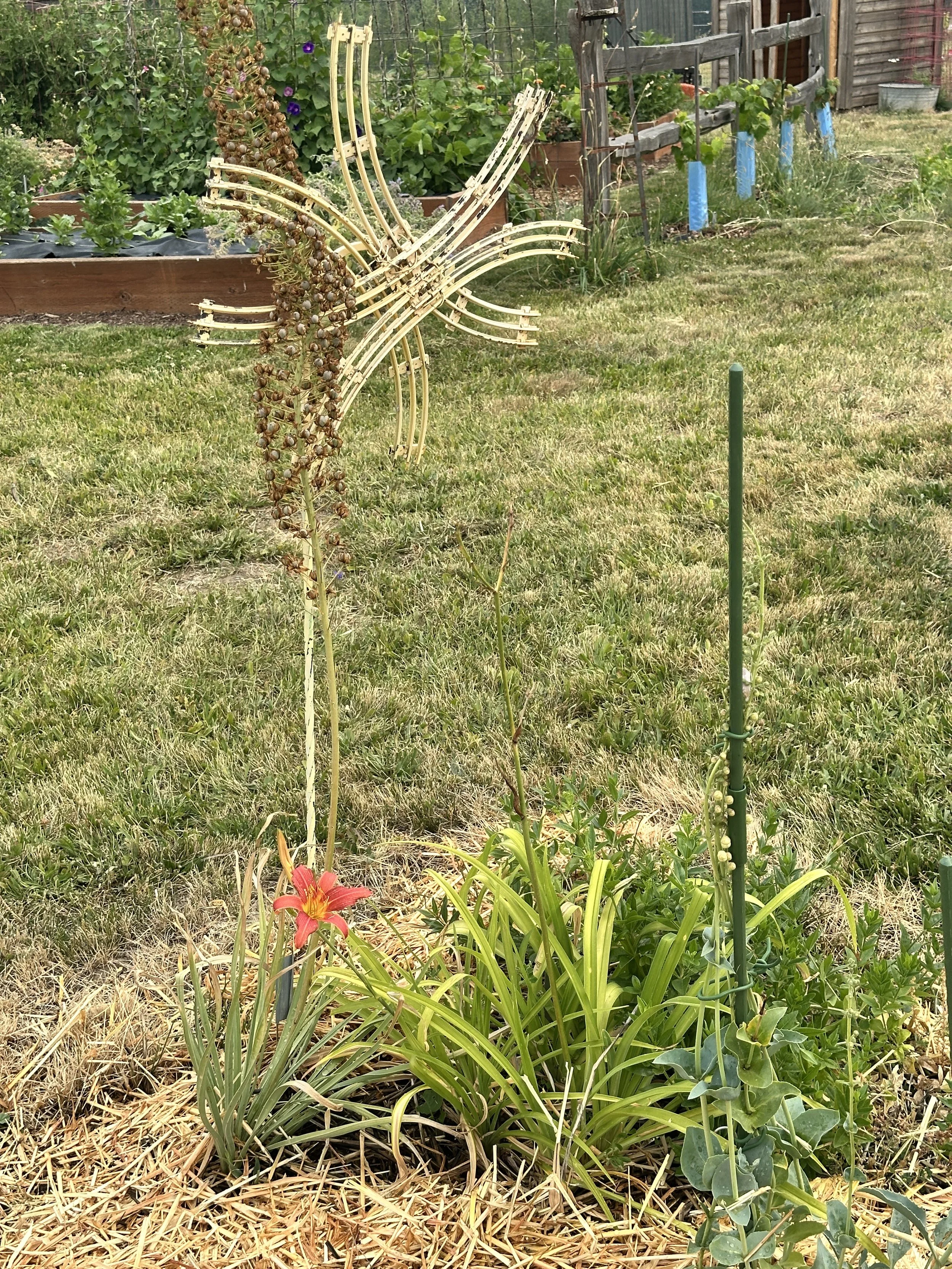
That tall, cool-looking plant entangled in my model railroad track garden structure is a Foxtail Lily. That one giant bloom was yellow, and the bees loved it. At its base are more common orange Daylilies.
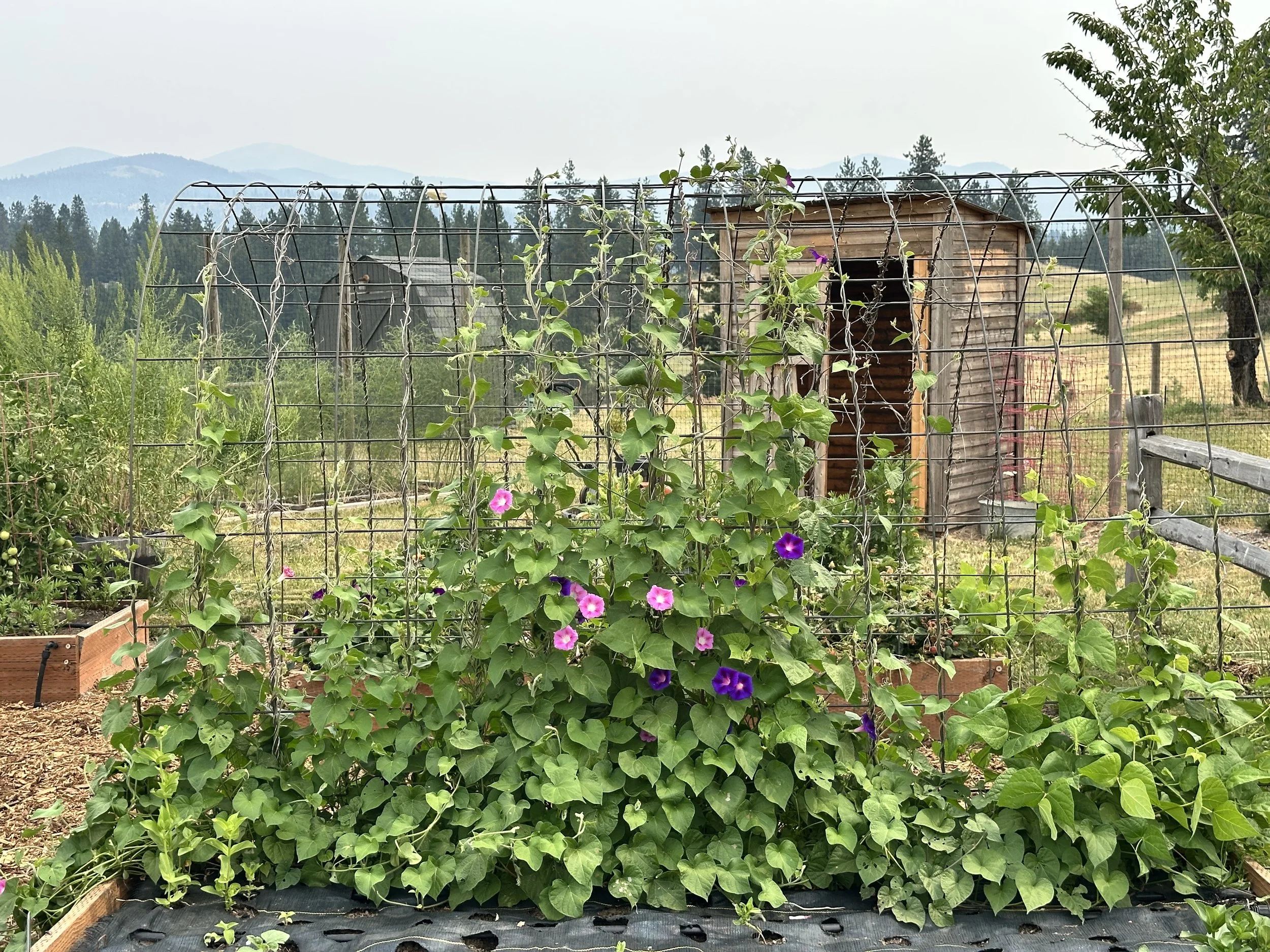
Not part of the perennial bed, but I just noticed these happy Morning Glories starting to make their climb on one of the trellises. This year I am trying to pay attention to which colors/varieties of Morning Glories do the best, so I can zero in on them next year. Morning Glories are also active self-seeders, and as a climbing plant, they can make quite a mess if they land in the wrong place (see: my strawberry bed). But they grow so beautifully on the cattle panel trellises.