Equipment planning for 2027 apiary
I was not terribly unhappy about not having to worry about beehives this year, but we will start two brand new colonies next year. I went through all of my supplies in the beekeeping equipment shed, and pulled out a few things that can be sold, and set the rest up as two proper hives - Yellow and Blue.
I am also moving the apiary from behind the greenhouse to over by one of the apple trees by the beekeeping equipment shed. This is not only more practical when I need something from the shed, but it will also allow me to orient the front of the hives to the ideal east (versus the north from the greenhouse location.)
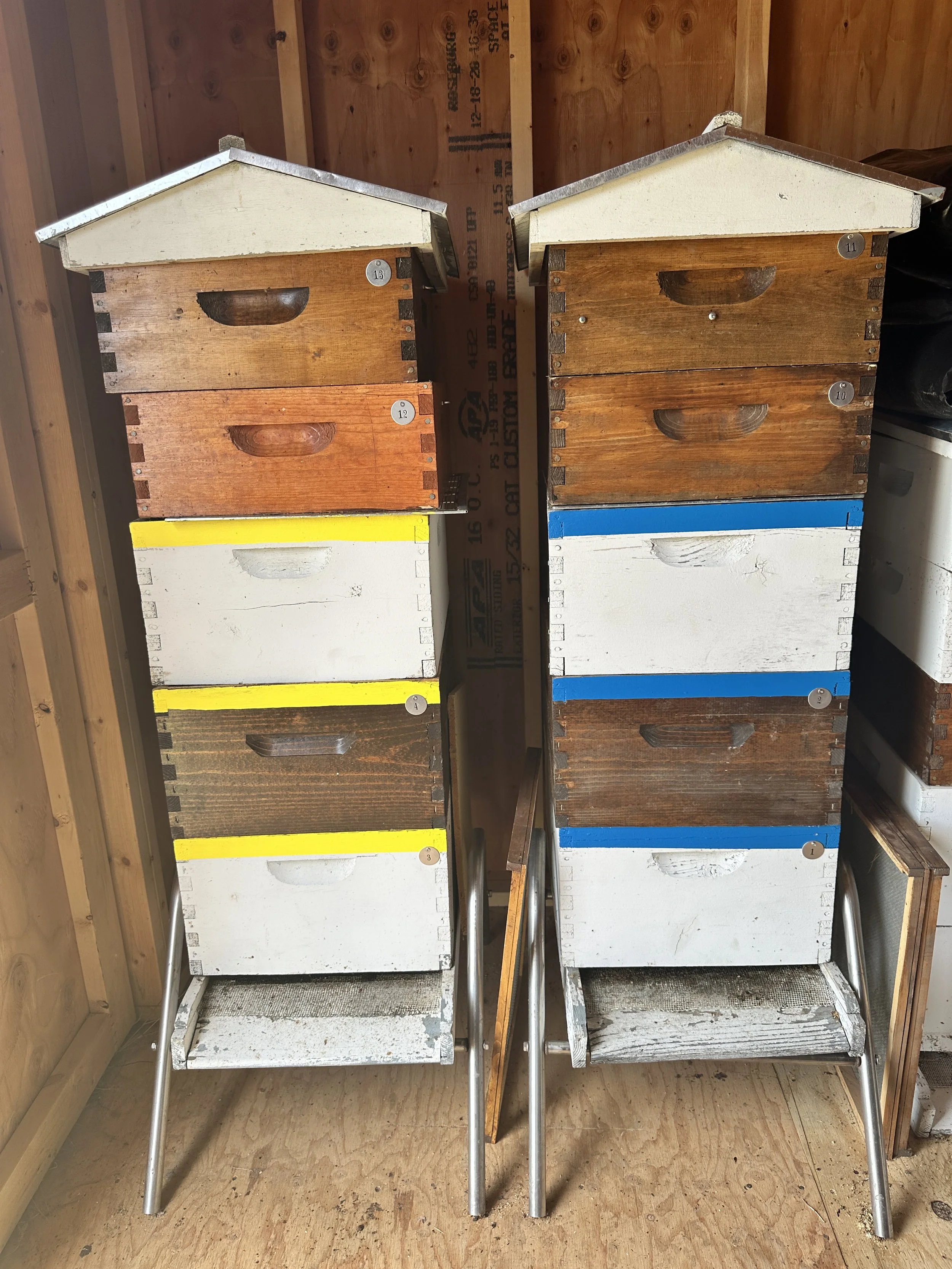
Bee boxes and frames are all cleaned up and properly labeled - the deeper brood boxes are single digits, and the honey supers start at 10. I love how Montana stained half of the boxes, love the way it looks. I have a third set of hive equipment, but that is just extra, and I am not intending on starting a third hive.
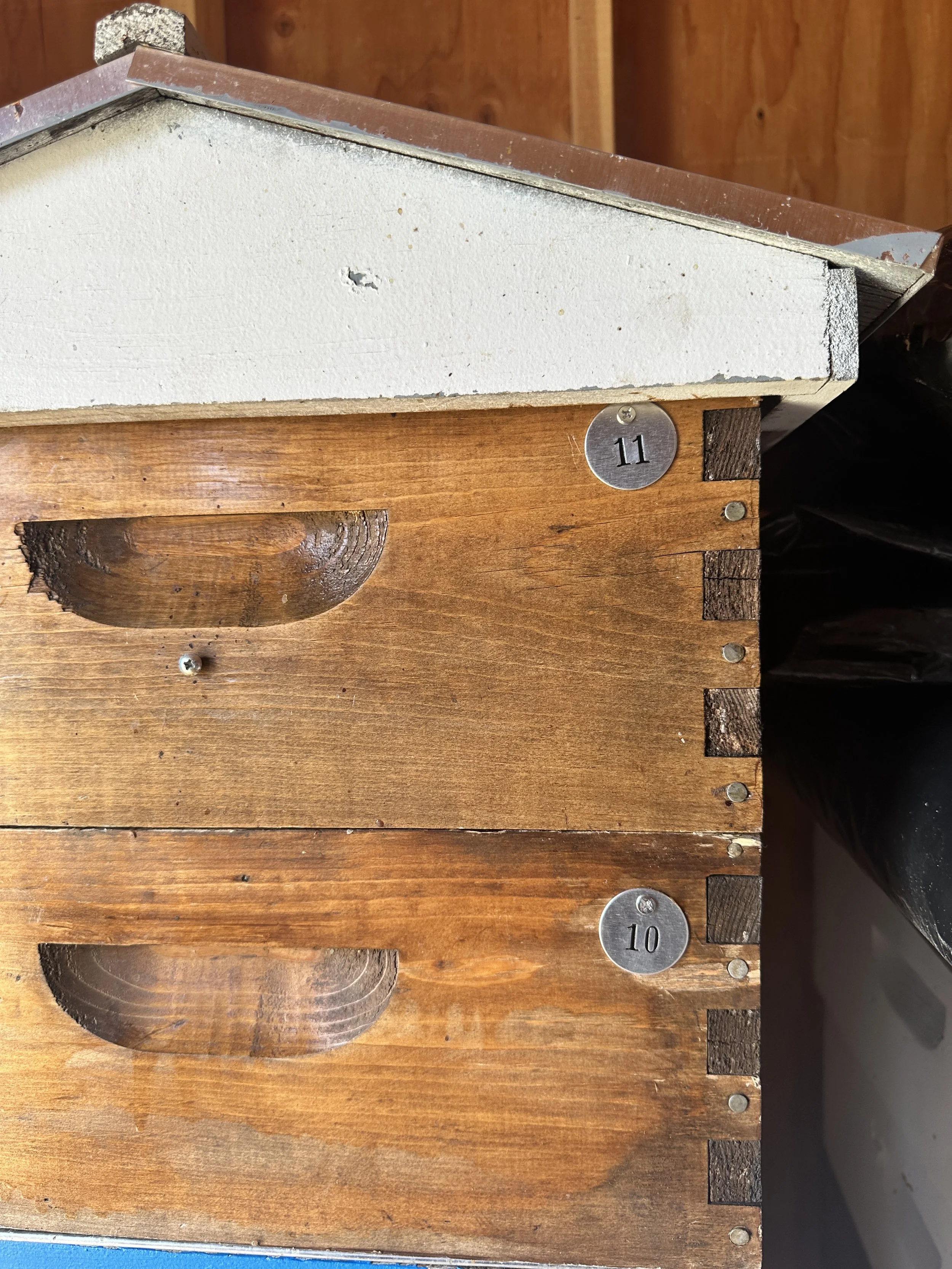
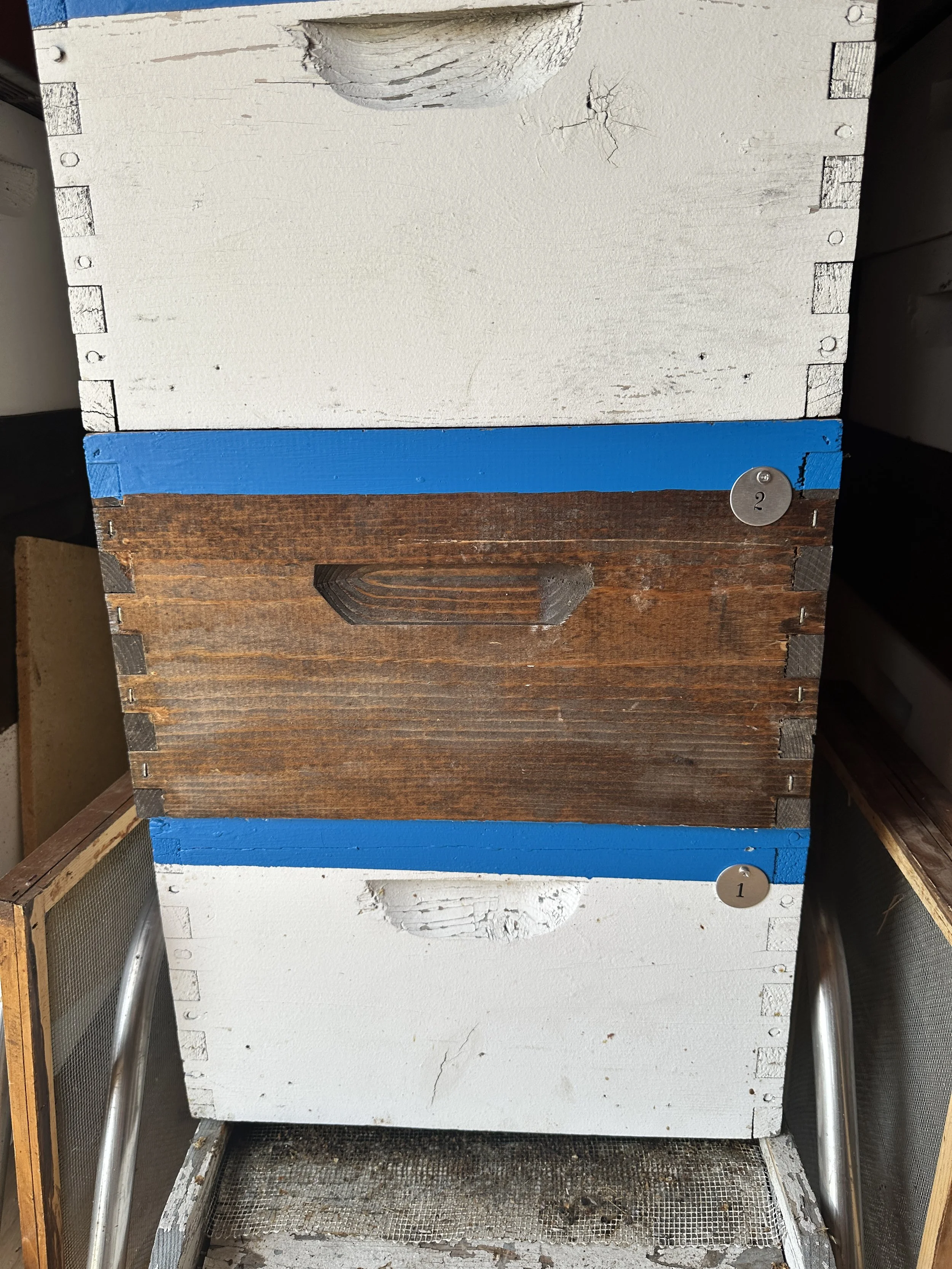
The un-numbered painted deep boxes between the brood and the super boxes is where their bottles of sugar water are set when used - bees depend on that supplemental food once it is no longer freezing and before things start blooming up here.
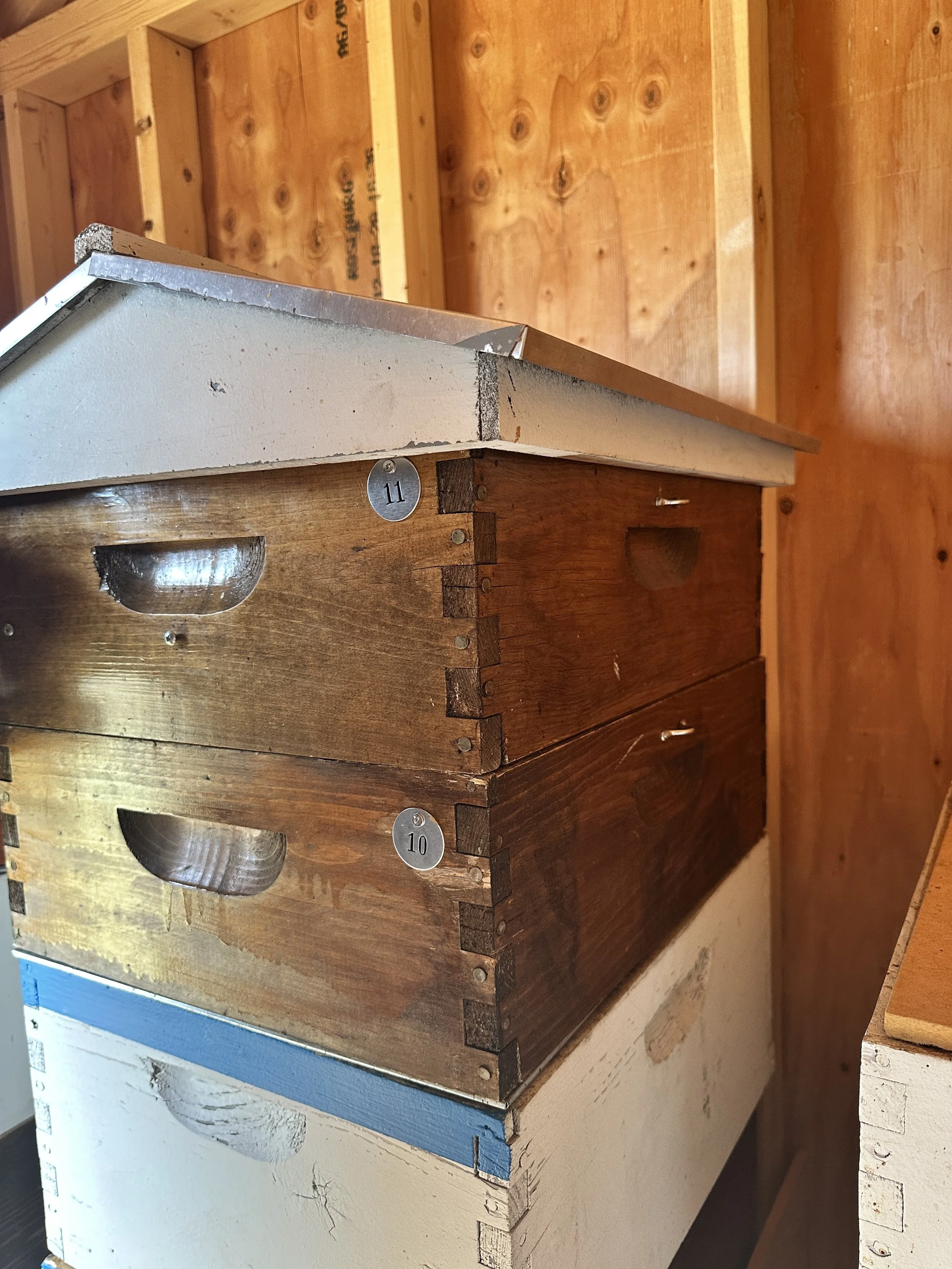
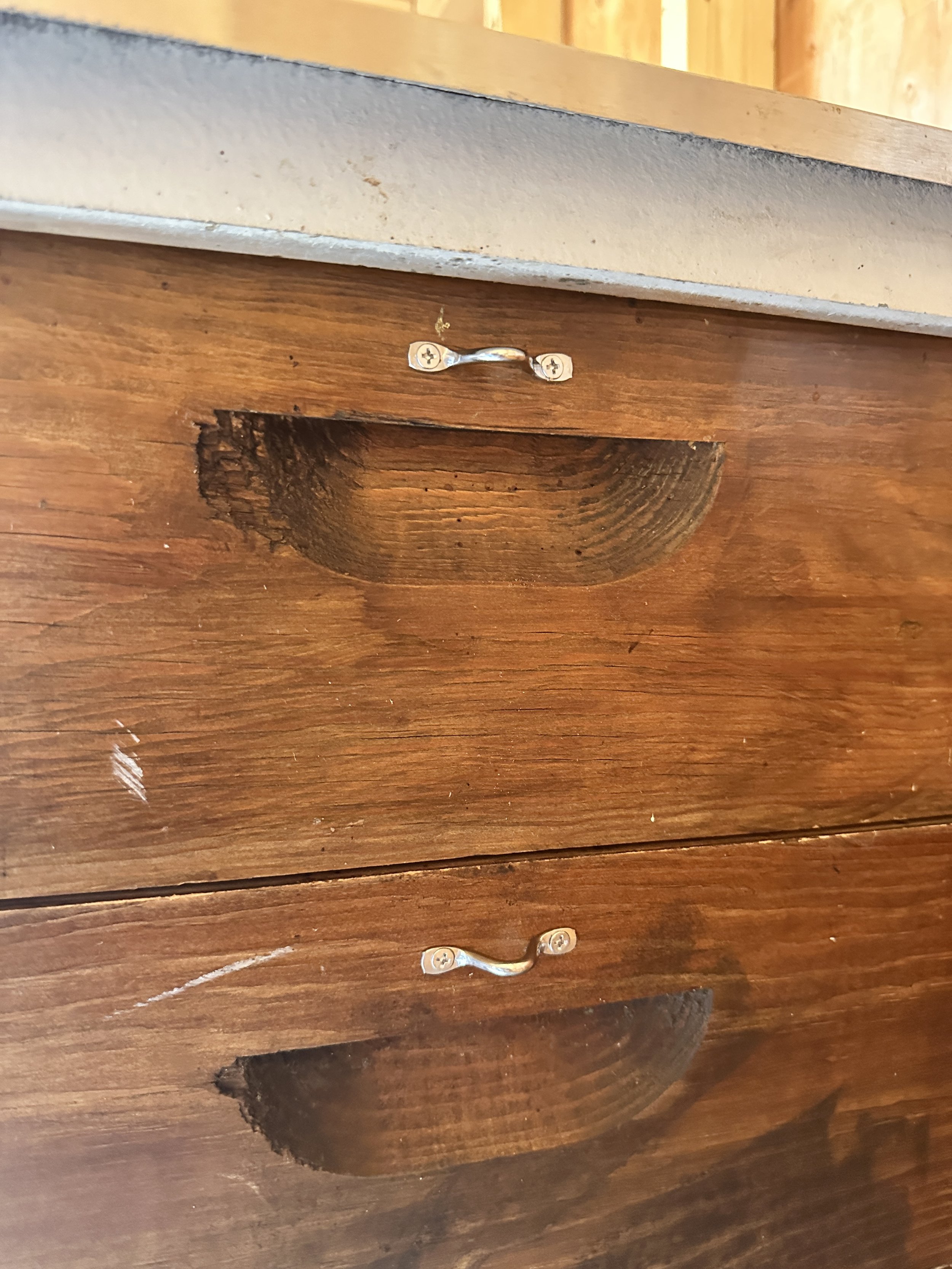
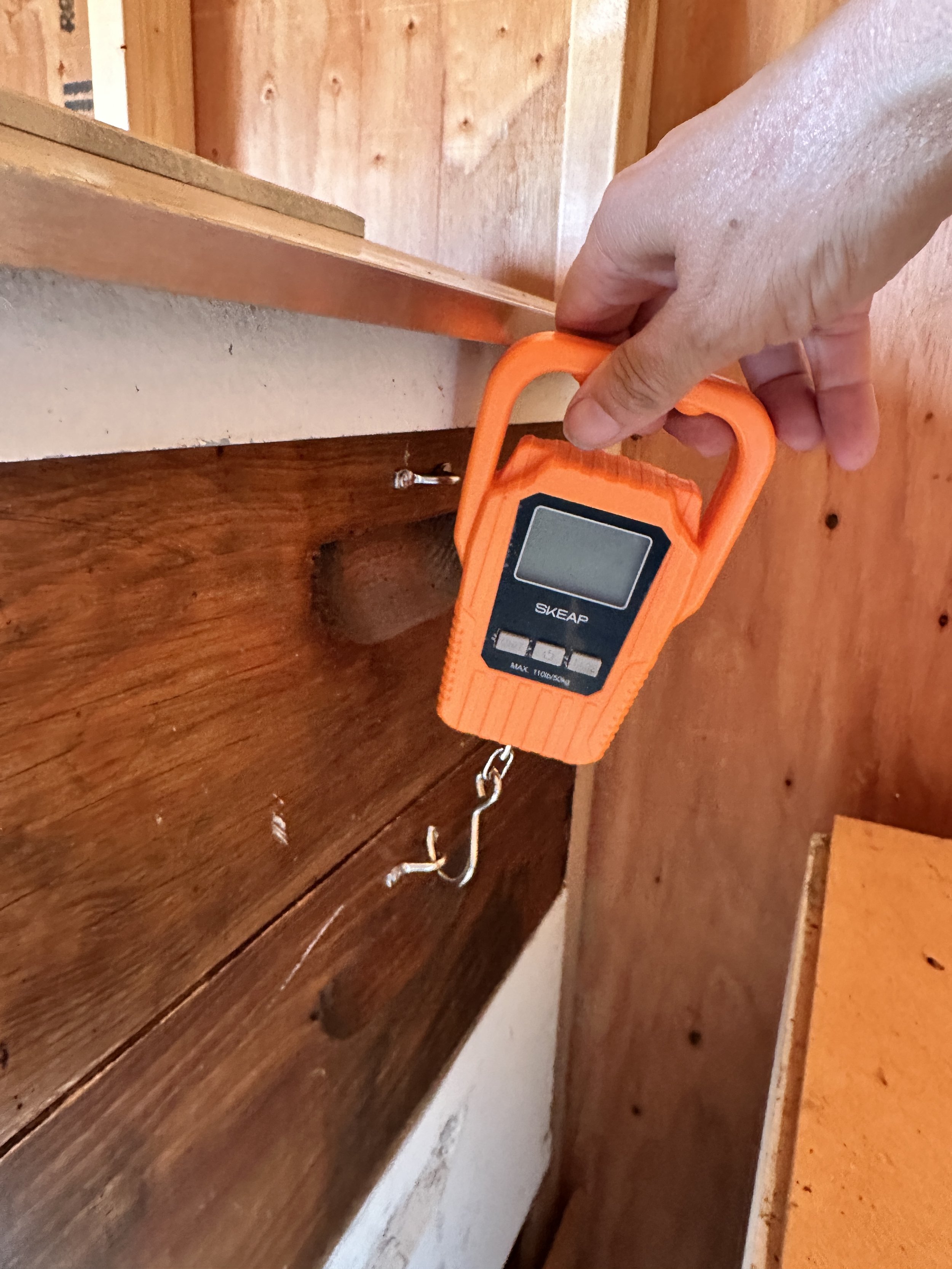
This is a new solution I will be trying next year to determine net weight gain during honey season. This solution was needed because as bees fill the supers with honey, they get AWFULLY heavy, and given their higher position on the hive, I cannot really lift them to get a sense of how “full” they are. Having a sense of weight helps make inspections quicker, because you may not always have to pull out every single individual frame of honey.
So we installed these little metal cleats on the sides of the honey supers. The idea is that we will use the fish scale (below) to lift the right hand side of the super boxes and record a weight. Of course, since it is just lifting the one side and the left-hand side will still be sitting on the hive, that weight will not be the ACTUAL weight. But if I record it each time, it will provide a number that allows me to calculate the NET CHANGE weight, which is really all we are looking for. As I gather that data, I’ll start to get a better feel for what constitutes a 75% “full” net weight, which is when you need to add another super to the stack.
Just another one of the Red Hawk Apiary experiments planned for 2027!