Well, I had quite a “lesson” out in the garden this morning! For background, for years I have equated Calendula with Marigold, as in they are the same group of flowers. They are not! I think the confusion came because the common name for calendula is Pot Marigold.
I purposely ordered a bunch of marigold varieties this year, because I found a farm in Oregon that had so many different varieties, and I thought that would be fun. The poor old marigold doesn’t get much respect these days. It’s so common like carnations. I like an underdog. So I planted three beds with different marigold varieties.
Then I was also excited because as I have started to get into my herbalism experiments, several of them depend upon calendula. Calendula is rich in oil-soluble plant compounds traditionally valued for supporting healthy skin, making it ideal for infused oils, salves, balms, and soaps. Its vibrant yellow and orange pigments also make it a popular natural dye plant for fibers and fabrics. I was so thrilled. How lucky! I already planted a ton of marigolds this year. Plus I had “volunteer” marigolds popping up in some of the other beds where they were planted last year. Herbal Dawn was set!
So I decided to use a little AI out in the garden to help me try to identify some of the specific varieties of marigolds that were blooming. This is one of my fun activities this year. Typically I just plant a bunch of things (e.g. 8 packets of different zinnias), then they grow, I say “Pretty!”, but I rarely track the specifics of any particular varieties. So I gave ChatGPT a photo of my first “calendula”. The good news is that AI was able to immediately declare its variety as Macarena - Great! But the bad news: it is NOT a calendula, it is a marigold. This news didn’t bother me - just AI being picky, after all, they are the same thing. And that’s when, after considerable discussion, I realized that I had them incorrectly intertwined.
At this point I DID panic - I need calendula for at least four of my herbal projects! And I just planted a garden full of marigolds. All of those great calendula properties are not present in any marigolds. Pretty, cute, but useless. But I confirmed it wasn’t too late to plant a bed of late season (actual) calendula, so I hopped on Bakers Seeds website and ordered up a few packets. Whew! I’ll be fine; the herbal experiments will continue this fall.
So, I moved on to my next set of “Identify this plant” photos, and it turns out, after a few iterations - I have A TON of actual calendula out in the garden, volunteers that self-seeded from last year. I actually have MORE calendula then marigold at this point! (I guess I didn’t need that $10 emergency seed order from Bakers after all). So at this point I ran out to the garden, snippers and basket in hand, and harvested a bunch of those precious calendula flower heads to be freeze dried for my herbal projects. Here was my stash, quite a wonderful surprise after the educational roller coaster of the morning!
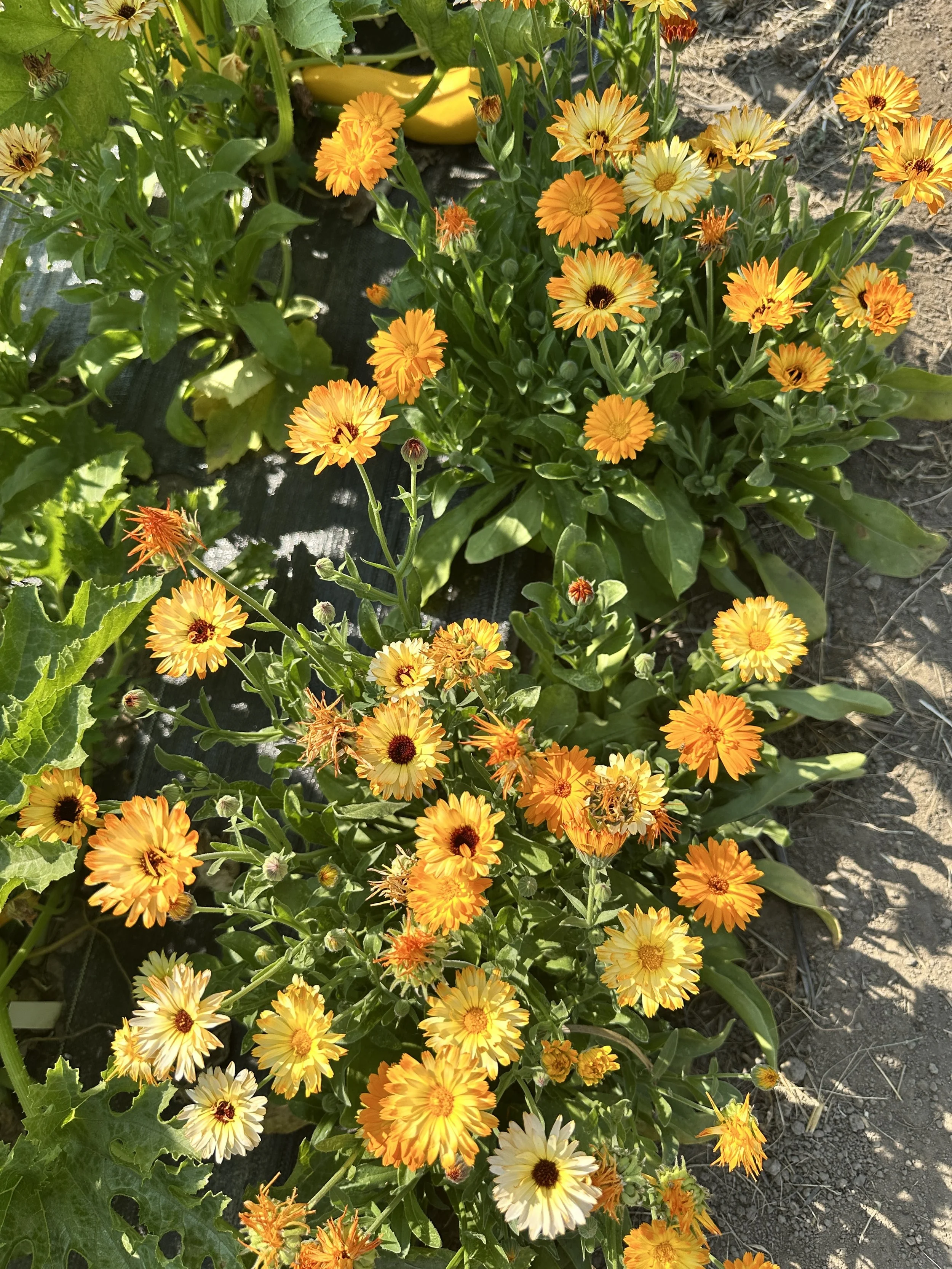
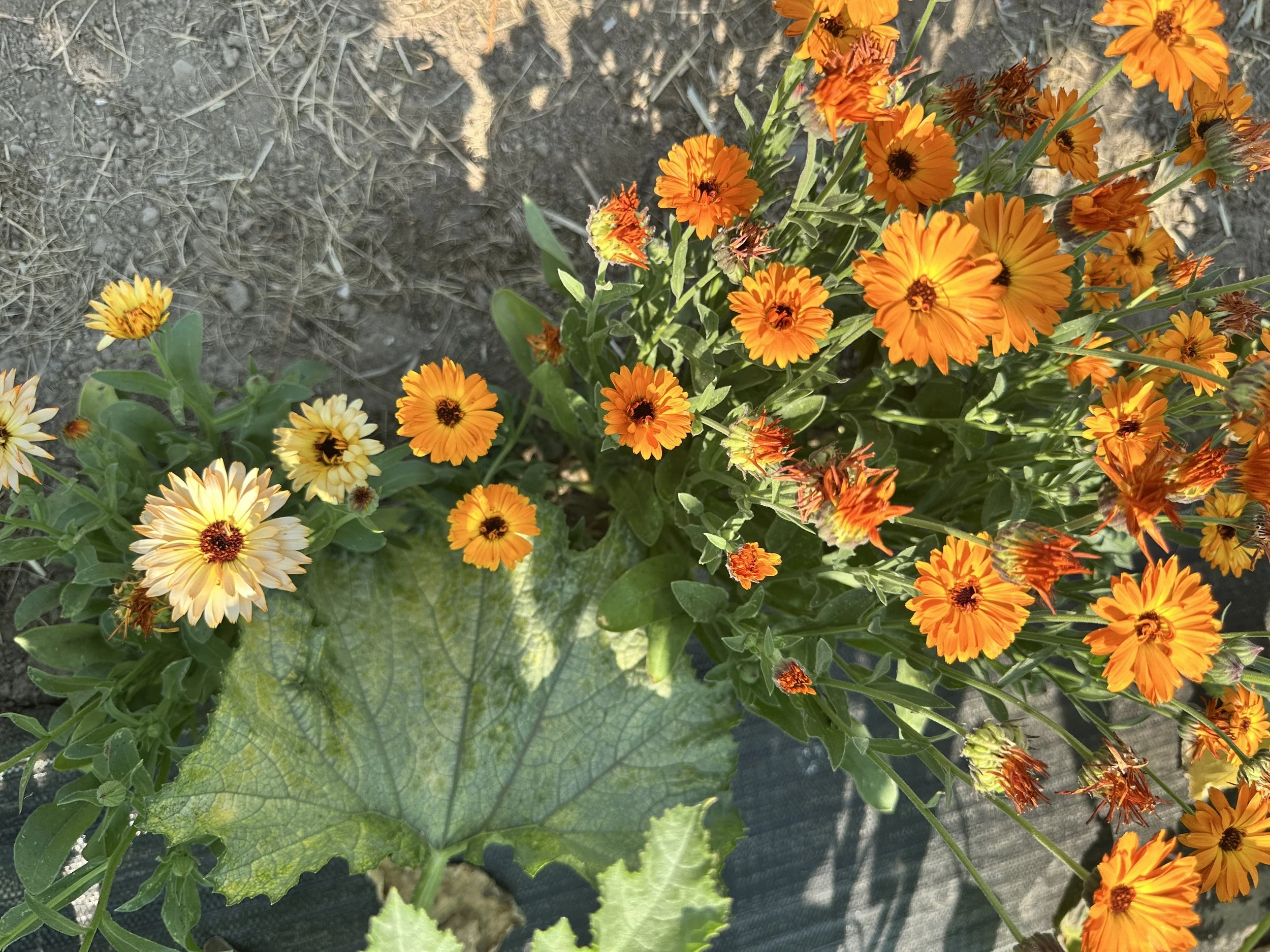
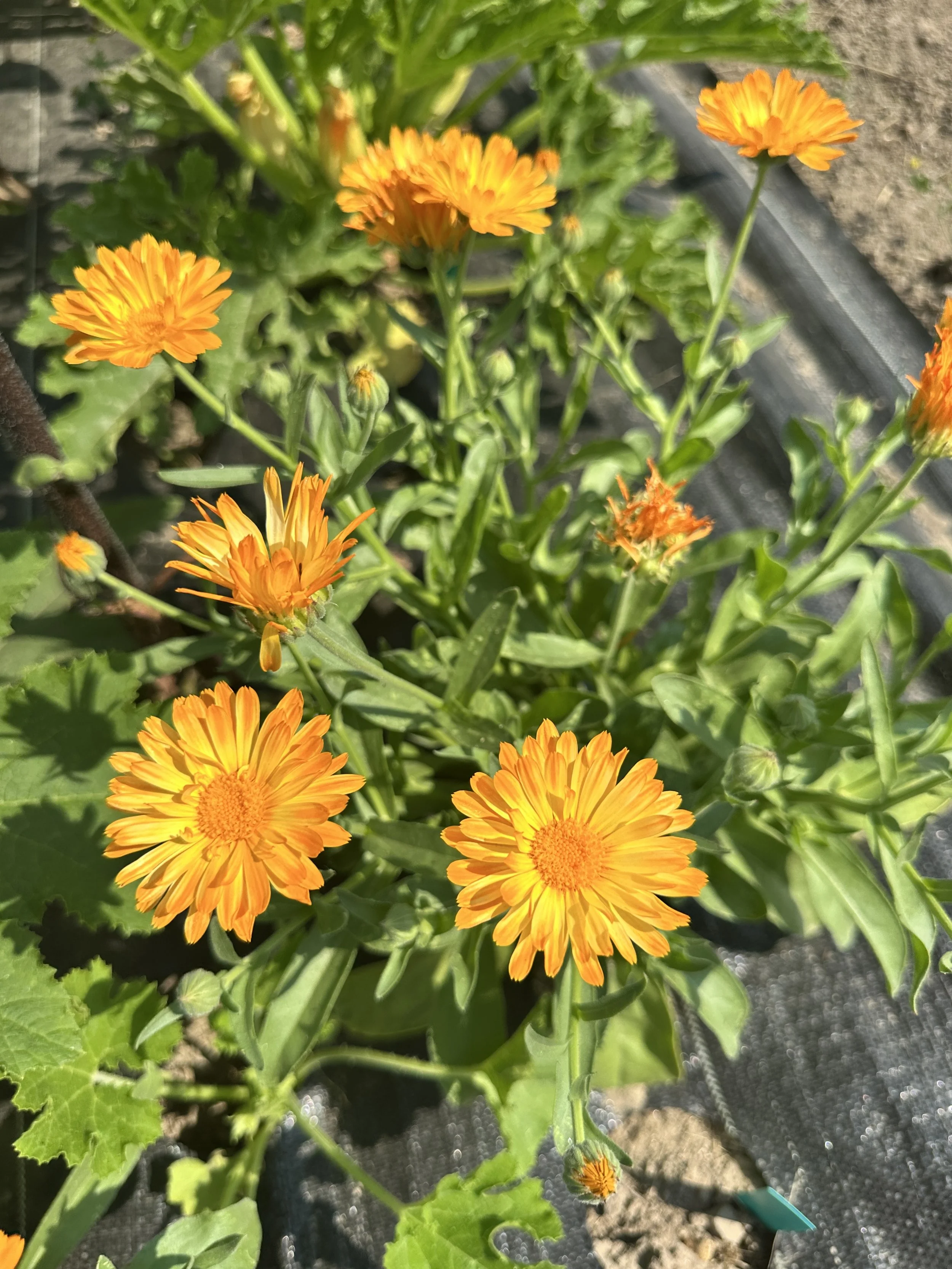
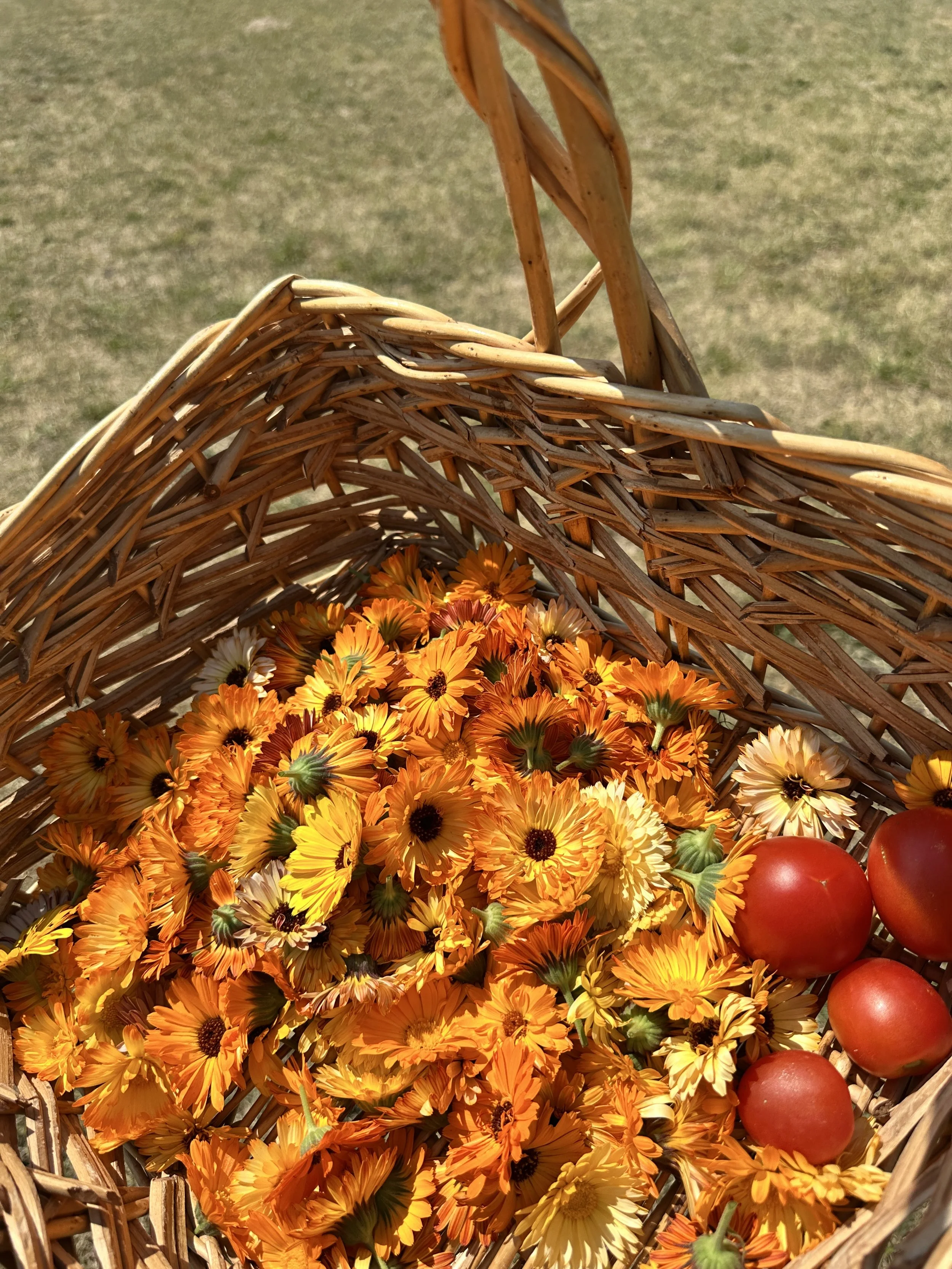
My first calendula harvest. Oh, and also my first tomatoes of the season. I wasn’t even going to plant any tomatoes this year, seeing that I still have a freezer full of processed tomatoes from 2 years ago (when I somehow bought like 25 tomato plants!) But my friend Lou brought me four, so I planted them in one of the raised beds. This variety is called Stupice , an early-maturing, cold-tolerant heirloom variety from the Czech Republic, with small 2-3 inch fruits like these.
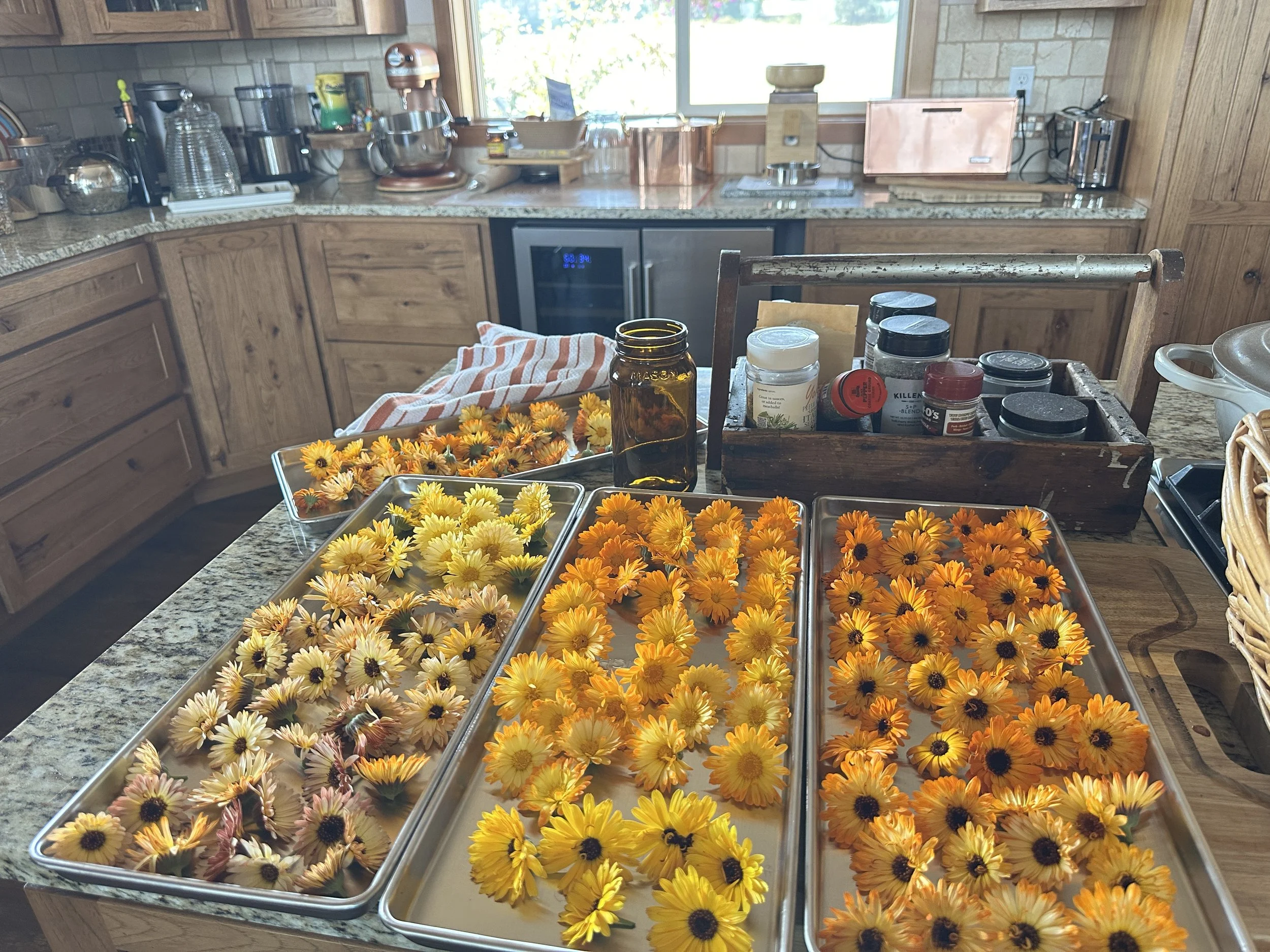
I started separating the blooms by petal/disk (center) colors on the freeze dry trays.
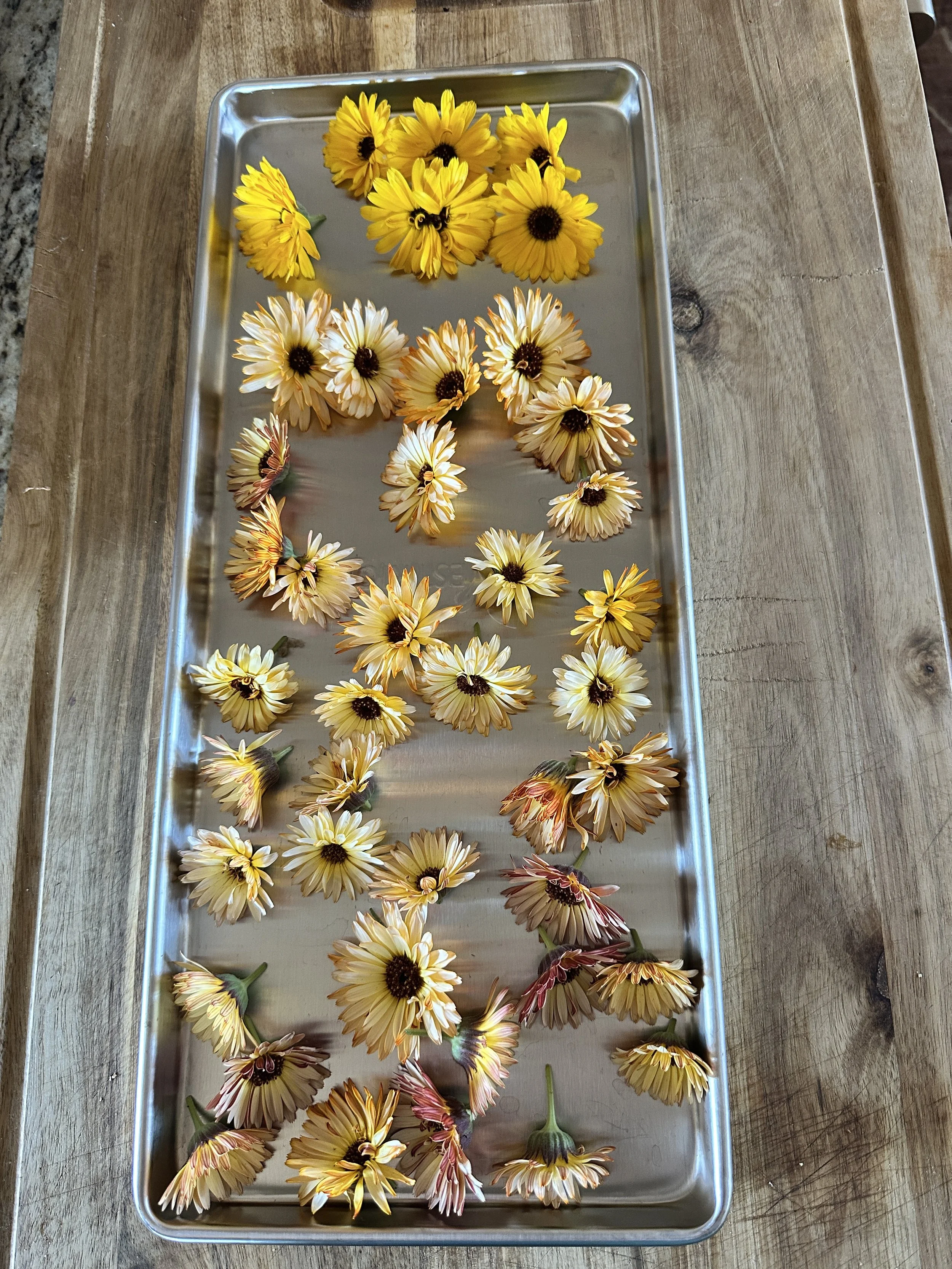
Tray 1 is mostly descendants of Pink Surprise.
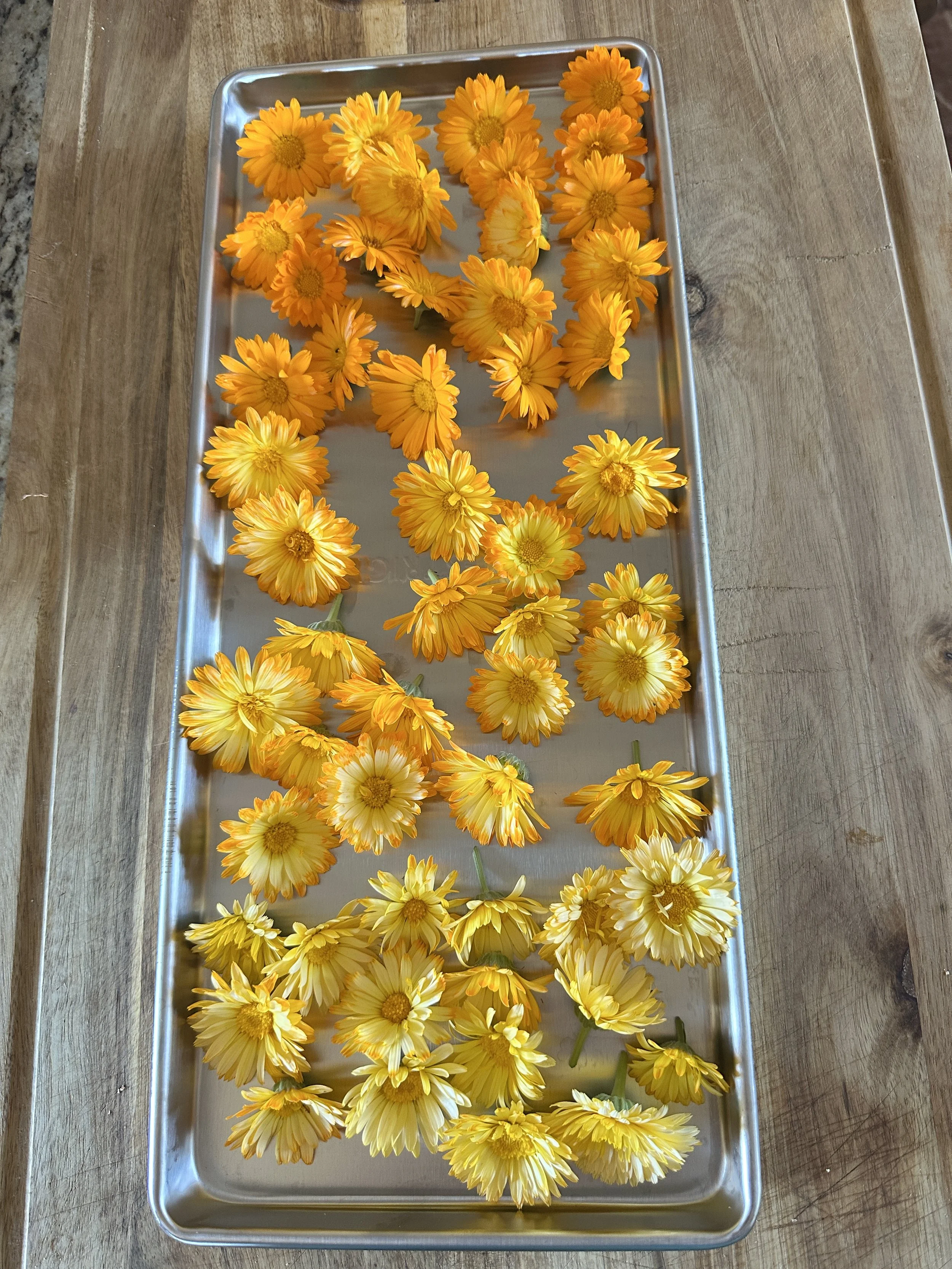
Tray 2 is mostly descendants of Pacific Beauty.
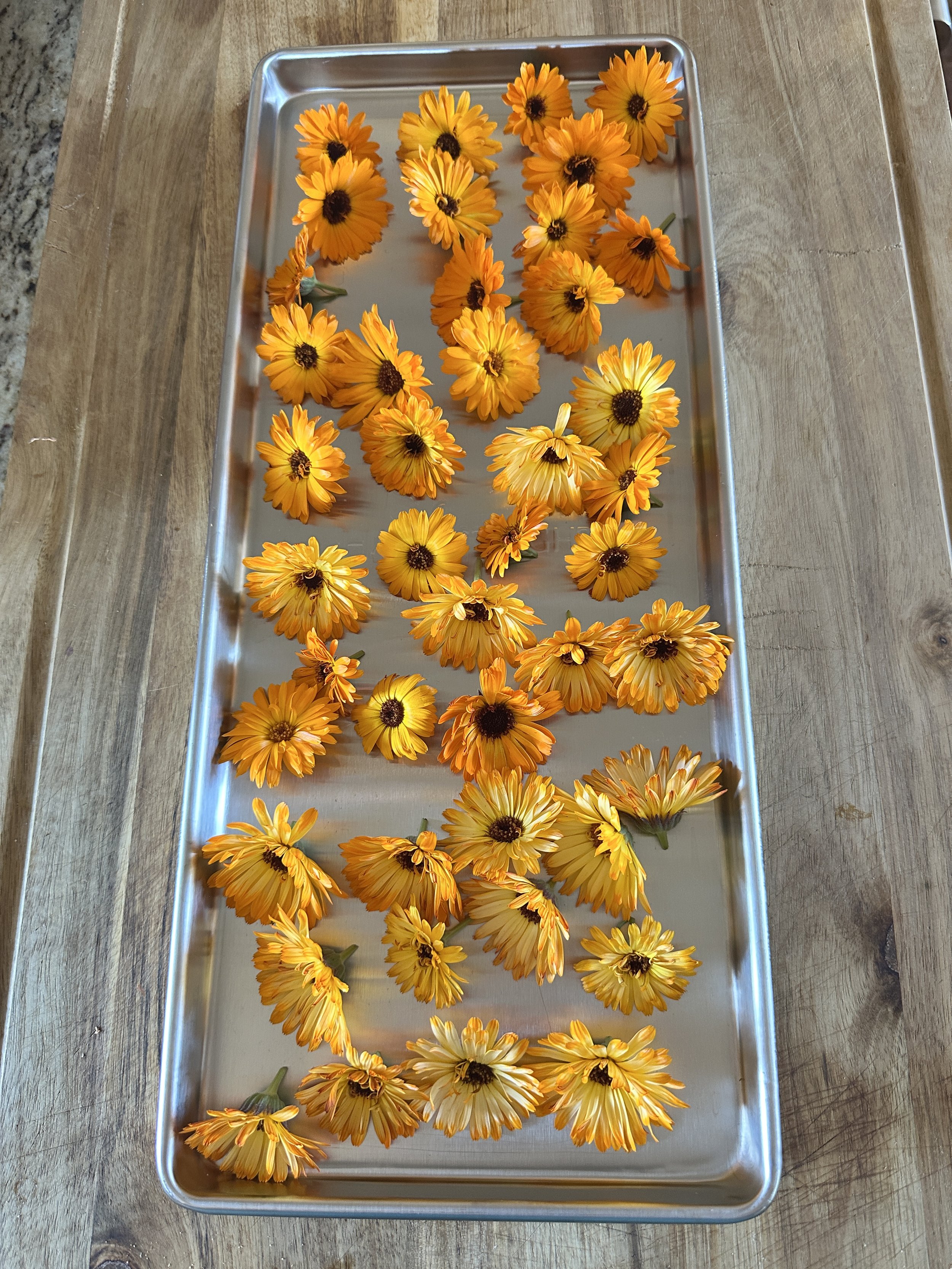
Tray 3 is mostly descendants of Orange King. I typically buy heirloom seeds, I guess I’ve always thought means a seed from X will always produce an identical X. But Heirloom doesn't mean "identical." It means the next generation will usually look a lot like the parent. If bees cross-pollinate different heirloom varieties, you'll get natural variation, but the plants still tend to keep the look and character of their parents. That's why heirlooms are prized by gardeners who like to save seed. So in the case of my calendula, they were all heirloom seed varieties last year, but they’ve all exchanged genes to produce these. EDUCATIONAL!
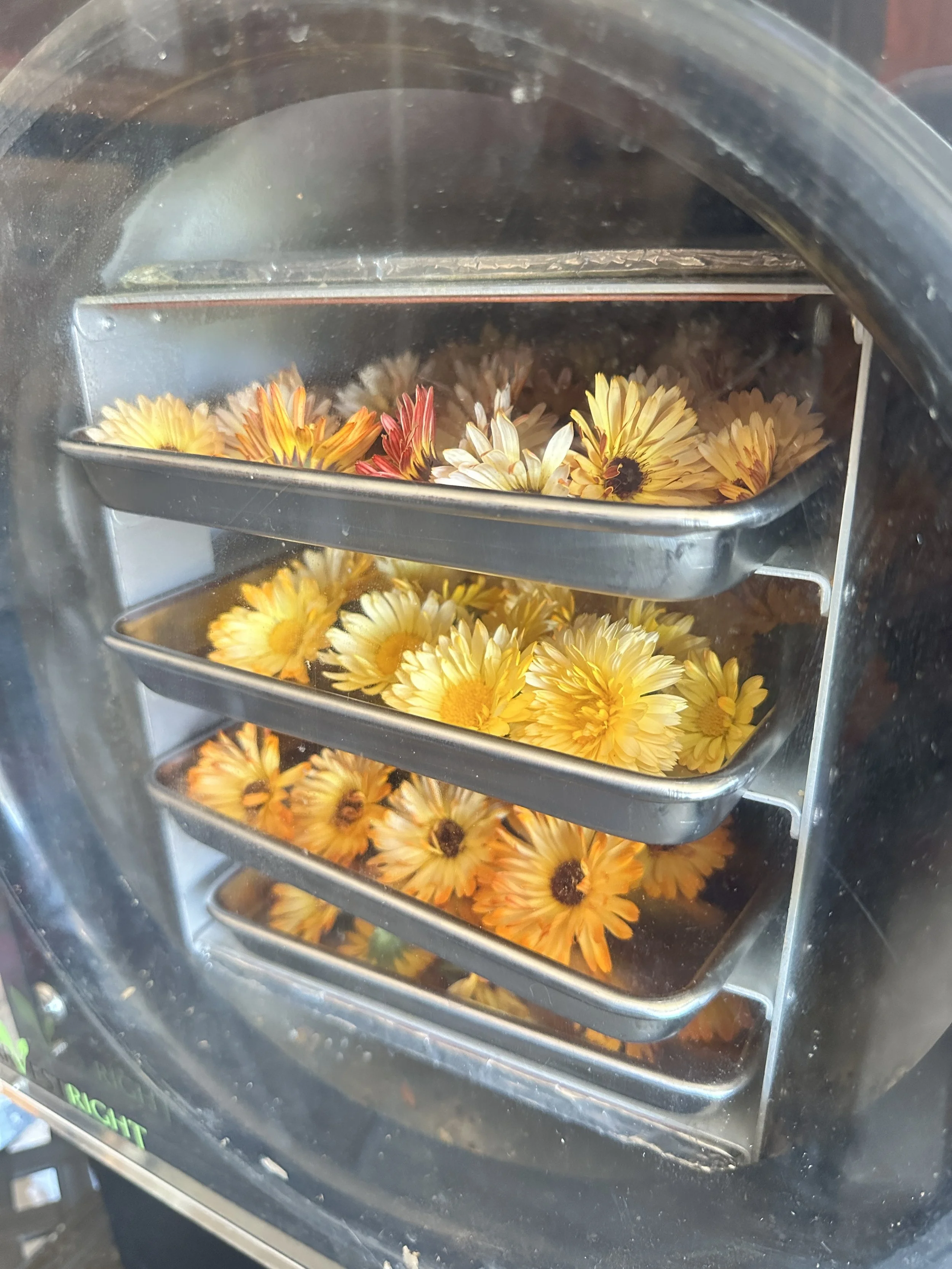
I’ll do another batch in a few days after this one is done. Calendula emergency averted! And my brain just grew by at least one size today.
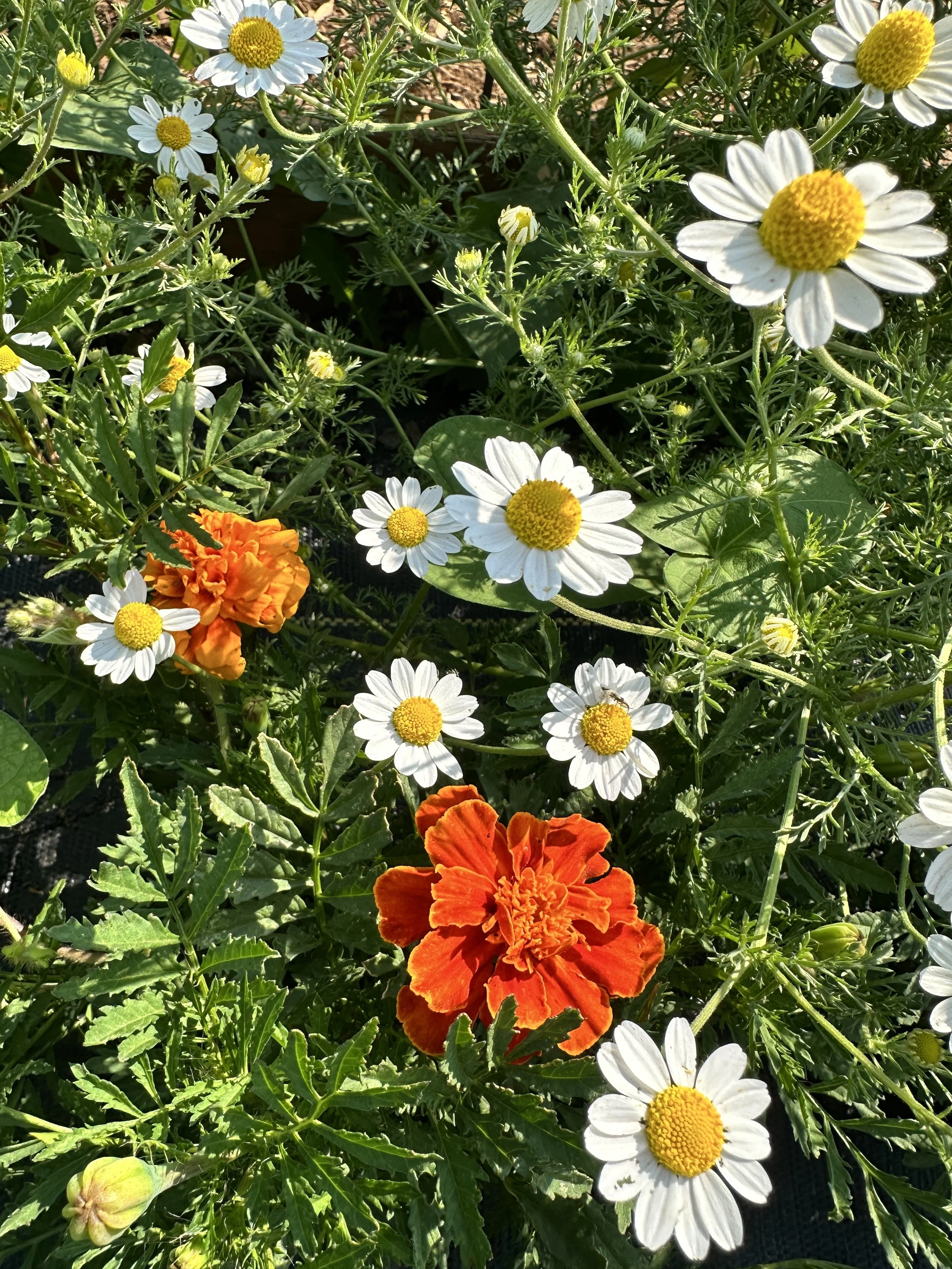
And since this thread originated with Marigolds, here is a little Orange Flame marigold tucked in between some chamomile blooms.
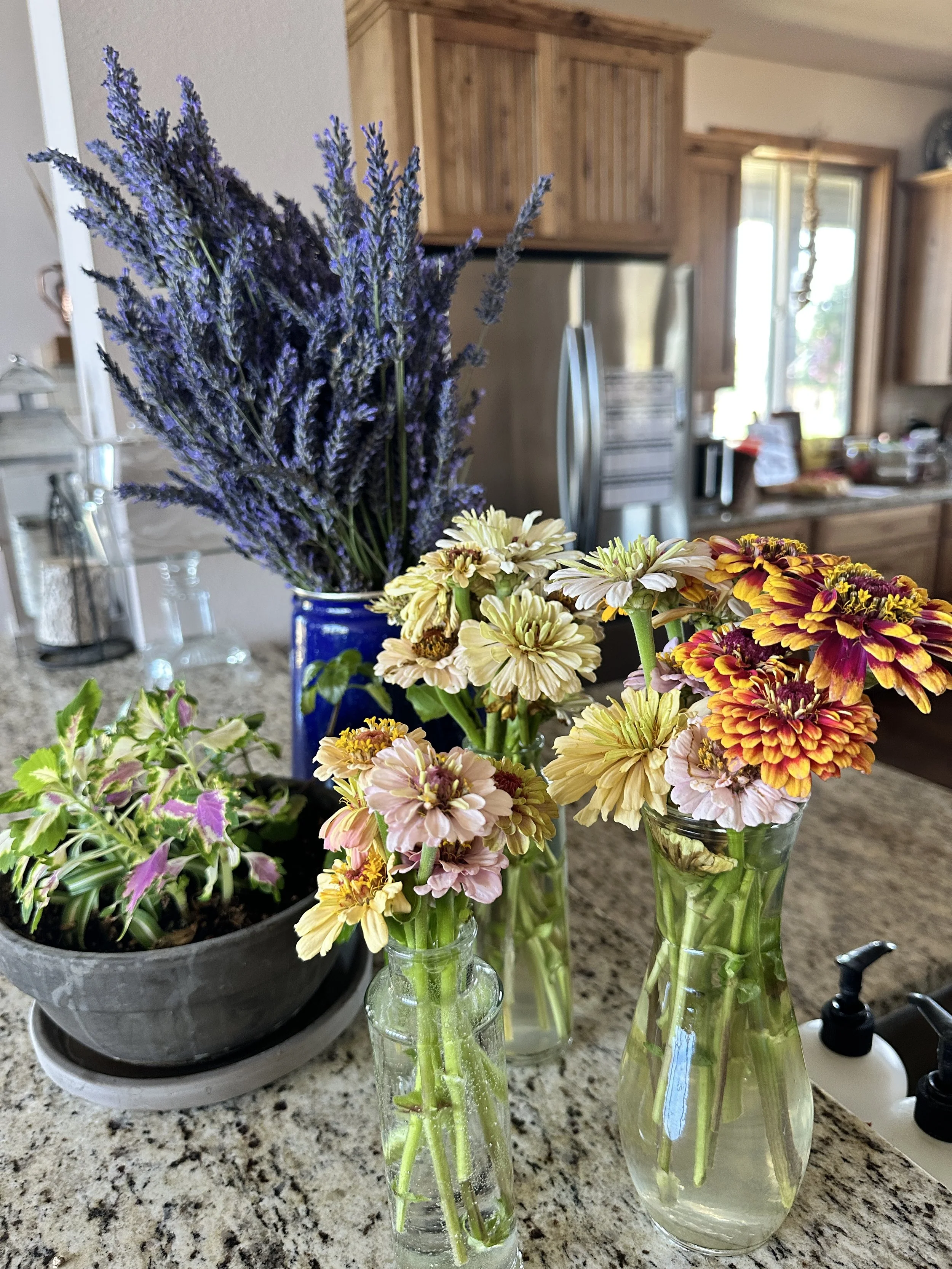
Every day I have to keep pinching those zinnias, so I am building quite a selection on my counter of pinched cast-off zinnia buds!